
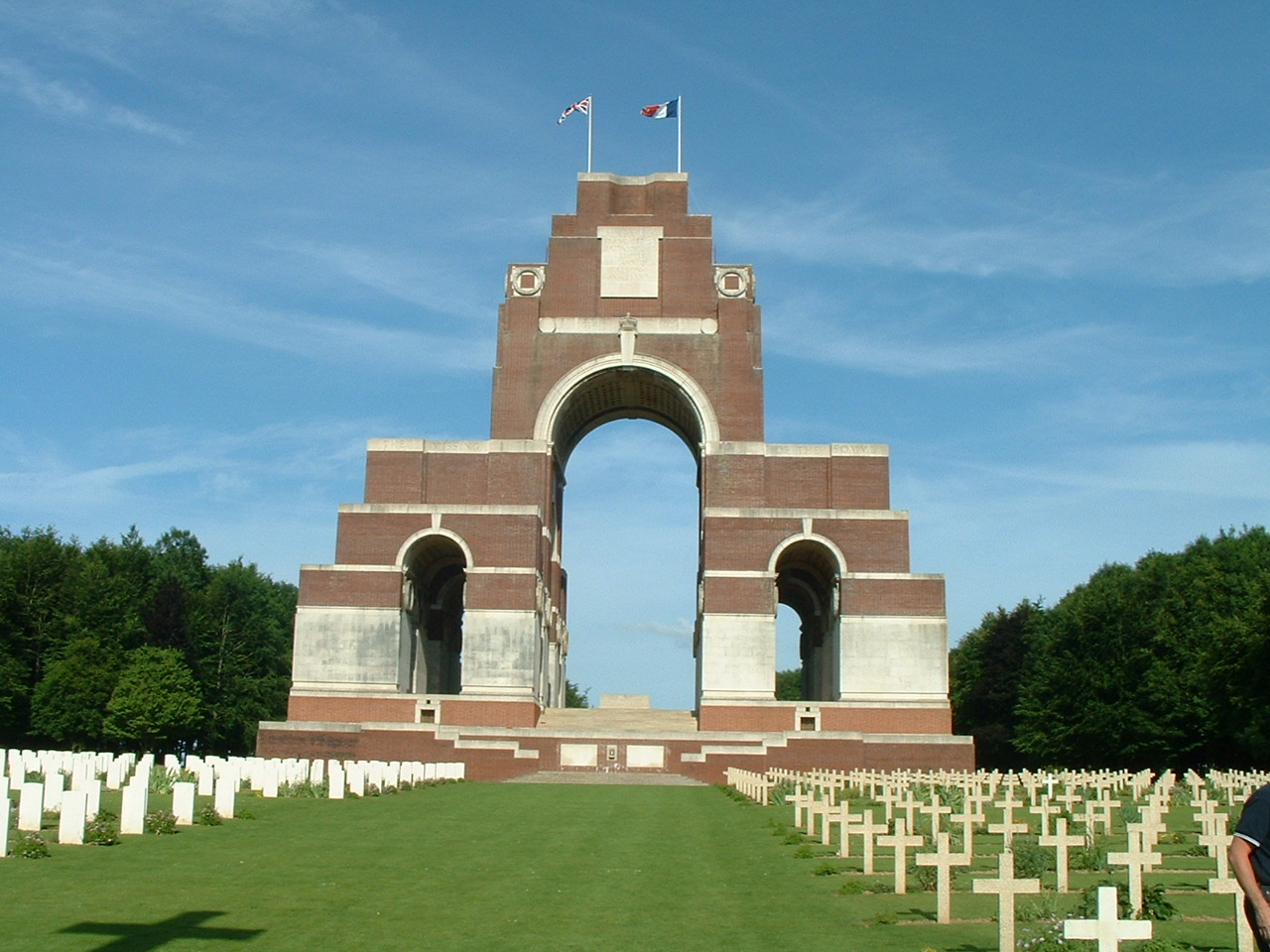
The Memorial to the Missing of the Somme at Thiepval. (Architect: Sir Edwin Lutyens)
Northern France, which I have come to know well over the years, is dotted with the cemeteries of the First World War. The great memorial at Thiepval to the dead of the Somme battles, rises atop the ridge – sixteen great square pillars supporting its arch. These huge pillars are constructed of fine brick and Portland stone. As you approach it dawns on you that the stone has names carved into it, column upon column, line upon line…. Well over 70,000 names, and these of soldiers who fought in the battles of the Somme, but who have no known grave. Their bodies were never recovered, having been blown to pieces or lost in the mud.
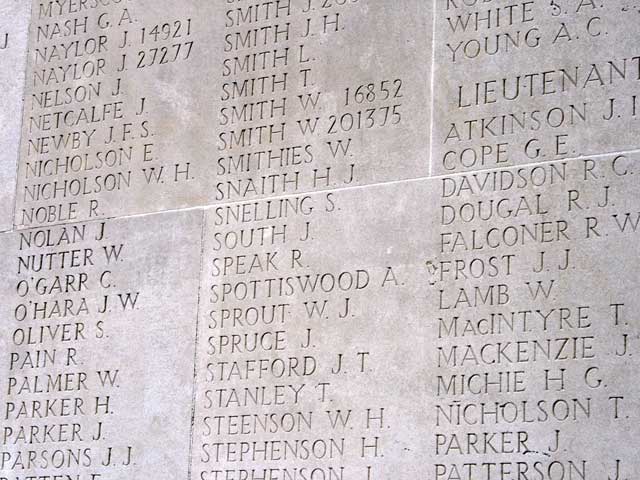
Names of the dead on the Thiepval Memorial
At the heart and centre of this memorial is a stone in the shape of a great altar, a poignant symbol of the offering of life. And beyond the arch is the cross, so familiar to us from the many war memorials up and down our own country. The altar and the cross, stand in quiet witness to the dead, and point us to the sacrifice of Christ, to the offering of his life so that we might have eternal life.

Looking back now from the 21st century the endless slaughter of not one, but two, world wars is heart-breaking. In addition to the death of soldiers in the Second World War, the murder of civilians – most particularly the six million Jews who perished in the Holocaust – is a terrible blot on our civilisation. We must never forget what we human beings have done to each other, lest in forgetting we are doomed to repeat the horrors of war.
In ‘The Church in the Modern World’ the bishops of the Second Vatican Council said this:
‘Peace is not merely the absence of war. Nor can it be reduced solely to the maintenance of a balance of power between opposing forces. Nor can it arise out of government by tyranny. Instead peace is rightly described as ‘the effect of justice’. A peace of this kind cannot be obtained on earth unless the welfare of individual persons is carefully protected and unless men are prepared freely and trustingly to share with each other the riches of their own minds as well as their talents. A firm determination to respect the dignity of other men and other peoples, as well as a deliberate practise of fraternal love, is absolutely essential if peace is ever to be achieved. Hence peace is also the fruit of love, because love goes beyond what justice can provide. ‘Church in the Modern World. ‘
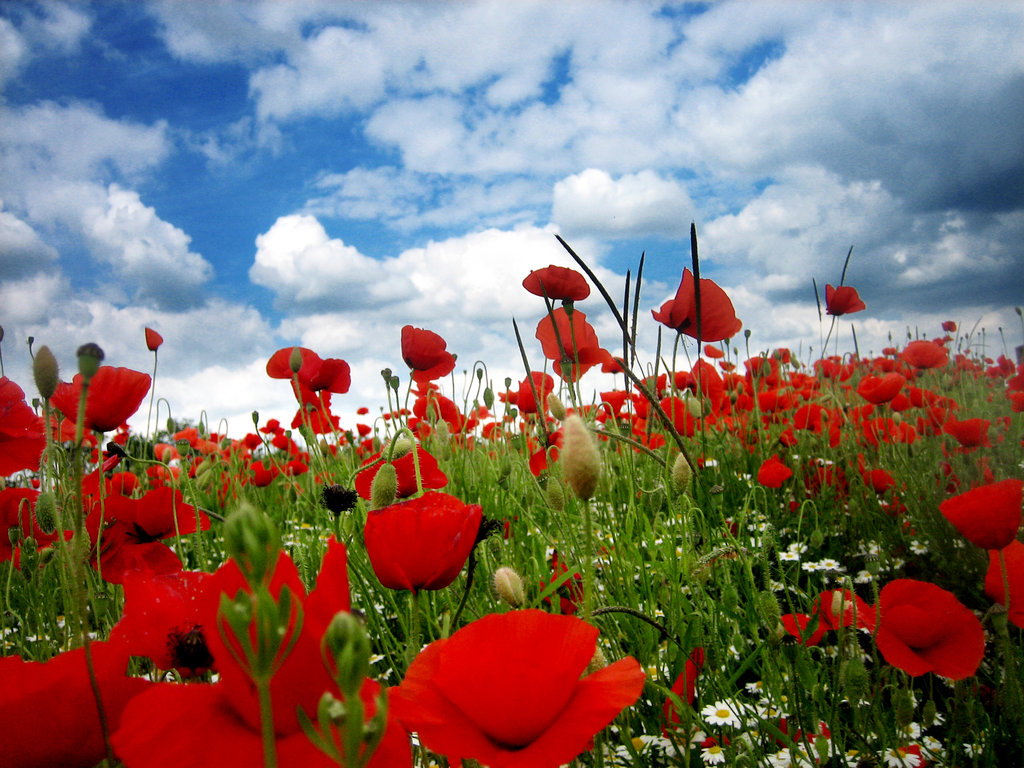
And here are the words of some school children, which they wrote on the four petals of the Remembrance Poppy.
Understanding: I think we can make peace. If we understand one another we will care about each other, so our world would be more peaceful.
Fairness Treating others how we wish to be treated ourselves by being fair: this would lead to peace.
Love By loving one another and God’s creation our world would be peaceful and loving
Forgiveness To forgive and not hold grudges is very important, especially to make our world peaceful.
Both the majestic words of the Bishops, and the simple words of the children, hold true for us and for our world today.

 Ordinariate Pilgrim
The shape of that arch seems strangely familiar – please pray for its familiar, which is temporarily priestless, and for its neighbours, who are generously sharing their priests’ ministry