

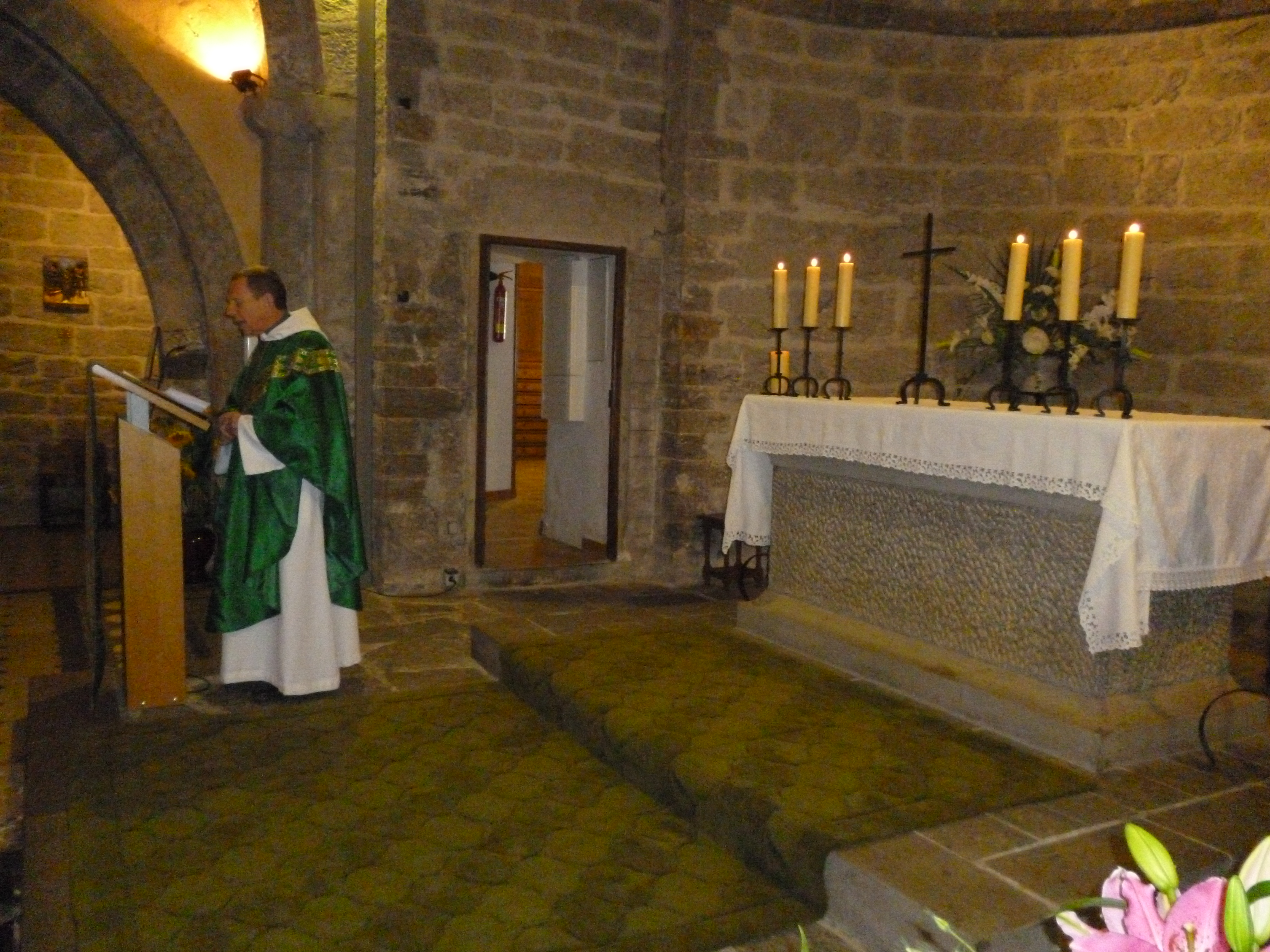
 I imagine that many of us during the confinement will have set ourselves a task or project. I have several, including learning to say the Ordinariate Use of the Mass. Perhaps you are surprised by this, but I have very little opportunity to celebrate this rite. In France I am not able to – it is the Ordinary Form in French, and in the UK it is only on those Sundays when I help out at Warwick Street. But with public celebration of the Mass suspended here, so that all Masses are private (or solitary) I am able to say Mass in English and according to the Ordinariate Use.
Some may ask whether I will have anything useful to say. I am not in an Ordinariate Parish and I have no group. But perhaps I am able to stand back a little, to reflect both on the theory and practise of this rite, and to be critical in the proper sense of that word.
In 2015 Pope Francis promulgated Divine Worship: The Missal for the celebration of the Mass in the Ordinariate communities of England, Australia and North America. In his 2017 presentation to the Liturgical Institute of Mundeline, Mgr Steven Lopes, the American Ordinary spoke of Divine Worship as a distinct form of the Roman Rite, situated within the context of the Ordinary Form, not the Extraordinary Form, bringing in to Catholic worship something of the liturgical patrimony of Anglicanism developed during the years of separation, “so as to maintain the liturgical, spiritual and pastoral traditions of the Anglican Communion, as a precious gift nourishing the faith of the members of the Ordinariate and as a treasure to be shared.” (Anglicanorum Coetibus article 3) .
 The Ordinariate Missal was I think, received with more enthusiasm in the States than in England, and it is important to understand why. By many English Anglo-Catholics of the 19th and 20th century the Book of Common Prayer was regarded, to put it bluntly, as a Protestant liturgy imposed by the monarch and parliament on the National Church. Appeal to the Prayer Book had enabled the Evangelical wing of the C of E to exclude the notion of the Eucharistic offering and prayer for the dead in all revisions of the Prayer Book. In other parts of the Anglican Communion, synodically governed and not by law established, their particular version of the Book of Common Prayer had a much more Catholic feel to it. In the States in particular the American Prayer Book in its traditional language form became a symbol of doctrinal orthodoxy.
Nonetheless, it was the decision of the Anglicanae Traditiones Commission to adopt traditional (thee/thou form) English, and many Prayer Book texts to form the basis of Divine Worship. New liturgical texts were not to be devised, but 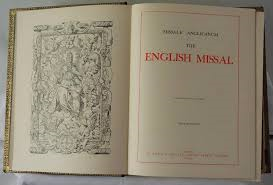 material from the Anglican liturgical books recast and re-directed for the use of those groups now in full communion with the Catholic Church. There was also the significant decision to include material from the English and Anglican Missals. First published about 1910 the English Missal was widely used until the 1960’s. Much of the 1662 Book of Common Prayer was there, with translations from latin of material to supplement it, for example for saints days. The Order of Mass was based on the custom of saying aloud the Prayer of Consecration but preceding and following it by the Roman Canon in English of Latin. When I went to St Margaret’s Leytonstone in the 1970’s, our retired priest, Fr Wilfrid Leeds, who had been Fr Hope Patten’s curate at Walsingham before the shrine was built, said Mass in this way. As the choir began to sing the Sanctus so Fr Leeds would begin the Canon quietly. Aloud he would then continue with the Prayer of Consecration, but after the elevation of the chalice there would be a long silence for the second half of the Canon, before he sang ‘throughout all ages, world without end’. The vicar and I used the so-called Interim Rite, as St Margaret’s at the time had not changed over to the newly published Roman Missal in English. The use of this Roman Missal became standard practise among English Anglo-Catholics, largely on the grounds that here was in fact what the English Missal had always set out to be – an authorised English translation of the Roman Rite. The fact that it was not authorised by the C of E was another matter!
The Anglican Missal was published by the Society of St Peter and St Paul (SSPP) after the First World War. It took for its Eucharist the 1549 rite (the First English Prayer Book) but surrounded it with the ceremonial, vestments and furnishings of the ‘Back to Baroque’ Movement, which was intended as a counterblast to the mediaevalism of the ‘English Use’ Movement which was transforming parish churches and Cathedrals up and down the country. Its illustrations were drawn by the architect and designer Martin Travers, and his ‘Illustrations of the English Liturgy’ might be taken as a companion volume to show the ideal celebration of the Mass according to the SSPP and its followers.
There is yet another strand in this development and that is the work of the considerable number of Prayer Book Catholics. Loyalty to the Book of Common Prayer was important to them; they held to the ‘branch theory’ which proposed that (Roman) Catholicism, Anglicanism and the Orthodox East form branches of the One Catholic Church; they maintained that the Prayer Book Communion service was the Eucharist of the Church and not a ‘Lutheran ordinance’. Their Missal was in fact the 1662 Book with some provision of a minor character for Saints Days. Such a Missal was ‘Altar Services’ published by Rivingtons, together a companion volume with the Epistles and Gospels bound together – a Lectionary as we would understand it today.
Unfortunately, this group is sometimes characterised (and dismissed) as proto-liberal. In fact they were largely orthodox (as was much of the C of E at that time) though independent in theology and liturgy and with a strong sense of Anglican and English tradition. Their liturgical influence is significant for us, I think, for the work of this group in the parish churches and cathedrals has been far more obvious than, say, that of the SSPP. What Pope Benedict in his visit to the UK saw in the service at Westminster Abbey was a quality of the Anglican liturgical tradition developed from scholarly research, tested in many parishes, linked with a powerful pastoral tradition and allied with a musical and aesthetic movement which flourished in the first half of the 20th century.
In subsequent posts I will try to comment upon the texts of Divine Worship that is, the Rite, as it has been given to us – then the ceremonial or action of the Liturgy – and finally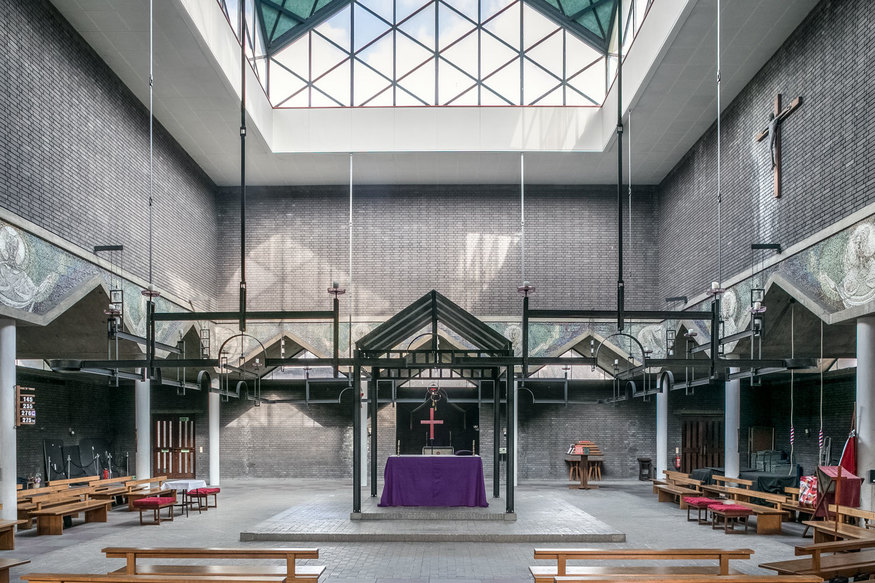 its presentation by means of vesture, ornaments, buildings and furnishings.

 Ordinariate Pilgrim