
People who ask why I became a Catholic usually assume it is because I don’t approve of women priests. Certainly the decision by a majority in the General Synod of the Church of England to permit the ordination of women as bishops was a key moment in my jourey. But I try to explain to my questioners (often lay Catholics who ‘cannot see any reason why women shouldn’t be priests’) that a concern for unity, and an examination of the notion of authority within the Church, precipitated my decision. It is about where authority lies that I want briefly to write today.
I do not frequent the world of social media, except for writing this blog and occasionally visiting others. What I have noticed, and heard tell of, is the increasing intemperance, rudeness and even viciousness in the way that Catholics write and speak about people they disagree with – including the Holy Father. Ironically when this comes from those who hanker for a return to the pre-Vatican II Catholic Church, their position would simply not have been tolerated before the Council: the very freedom to express themselves as they do is one of the most precious fruits of the great Council. But it is a freedom which must not be abused by any group or individual.
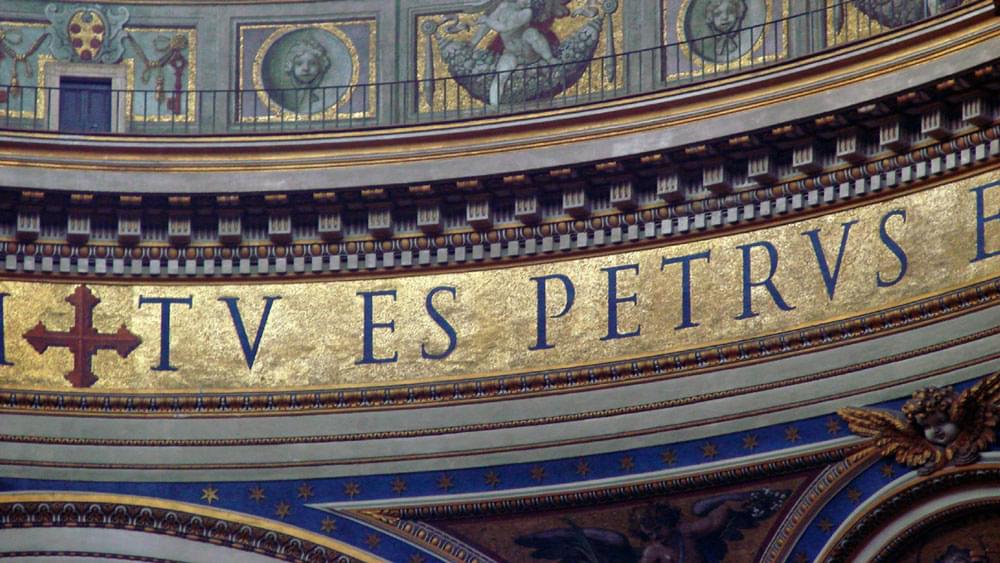
In seeking authority and finding it within the Catholic Church we do not stop thinking! We try to think within the Community. It is I suppose part of what St Ignatius Loyola means when he talks of ‘thinking with the Church’. Authority within the community of the Church is not a dead weight, nor the oppressive regime of the dictator, but rather a living thing. It is freedom and responsibility certainly, both allowing us to participate and yet to share with our brothers and sisters. This wonderful freedom is the very gift of God to his faithful. It is why the Lord has ordered his Church as he has, giving it priests and bishops. It is why Jesus entrusted the guardianship of the Apostles to Peter. It is why the Bishop of Rome has a unique responsibility to guide the universal Church into unity and truth.
Now some Christians do not see authority like this at all: we call them Protestants. We respect them even though we disagree with them. They find their authority in the written Scriptures (the Bible) or in private judgement. And herein lies the problem for Catholics – whether they be on the extremes of traditionalism or liberalism – if they have lost all confidence in the Pope, have they ceased to be Catholic? Pope Francis has the unenviable task of holding together a worldwide Church from societies as wide apart as Africa, America, Europe and Asia. In a world of instant communication his every word is taken, analysed and dissected, and commented on. Much good can come out of this process: but also much harm. Nor is it necessary, it seems to me, to parrot unquestioning agreement with everything he says. Let loyalty be combined with intelligence! Those who discount the Pope’s authority (and liberals can be just as authoritarian in their exercise of private judgement as traditionalists) do real harm to the Church and to the Gospel. Believe it or not, there are even some who claim that the last true Pope was Pius XII (and this in spite of the fact that he authorised the ordination of married men and reformed the Holy Week rites!)

 Ordinariate Pilgrim