
I was brought up – prepared for Confirmation and confirmed – in an Evangelical parish of the Church of England. Catholics, even those who know the C of E well, are often puzzled that within the National Church there can exist groups who call themselves Anglicans but seem to hold opposing views on the Church, the Sacraments, the Eucharist and the Bible. During my nine years in France I found myself trying to explain, though I had moved beyond justifying, as I had become a Catholic because I no longer believed that the C of E’s ‘comprehensiveness’ could or should work.
The recent publication of the Makin Review into the abusive activities of the lawyer and influential Evangelical layman John Smyth over 40 years ago, have led me to reflect on life in the C of E during the 1980’s – by which time I counted myself as an Anglo-Catholic, vicar of a parish with a tradition rooted in the 19th century Catholic Revival, but with several neighbouring parishes with a very different tradition.
As I say, I grew up in an Evangelical parish. Sunday worship followed the Book of Common Prayer with little deviation. Holy Communion (the Eucharist) was celebrated at 8 am, without music. The altar (always referred to as the Holy Table since Evangelicals reject any notion of sacrifice or offering connected with the Eucharist) stood against the east wall, but the clergy stood and knelt at the ends of the table (hence the expression ‘North End Position’ which was shorthand among those in the know for ‘proper’ evangelical) The clergy wore, as they did for all services, the surplice with the hood of their degree and the black scarf. Curiously, this represents a version of mediaeval choir dress for the clergy, but it was in contrast to the rest of the C of E which had adopted the vestments familiar to Catholics during the 19th century.
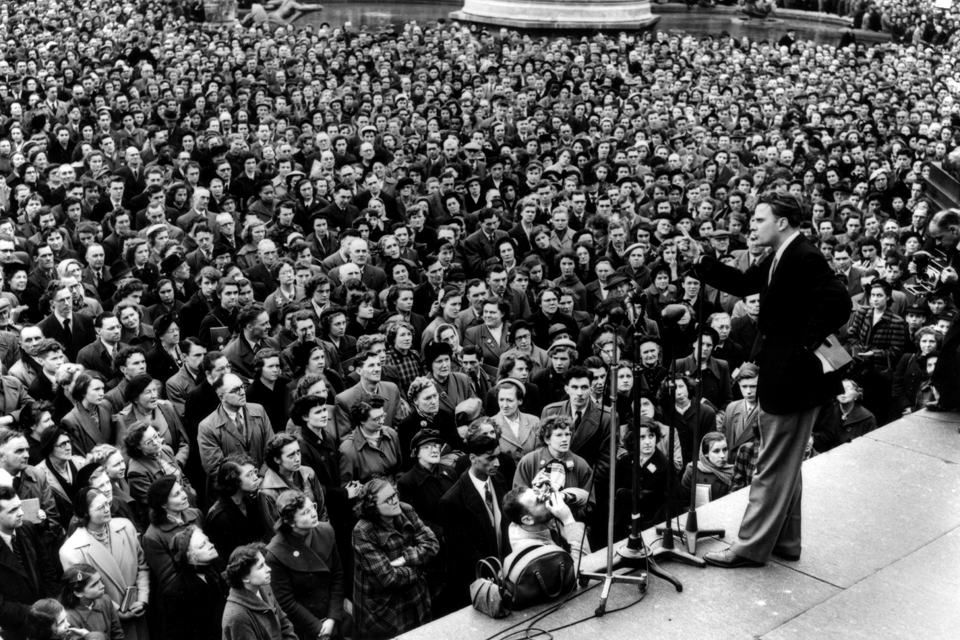
But the Evangelicals were on the move! And they were changing. Historians of the period have pointed to the influence of the Billy Graham Revival Crusades in the 50’s and the increase in ordinations of men who identified as evangelical. Looking back, I recall a new curate, who struck me as more ‘aggressive ‘ . He came one evening to choir practise in shorts and sat on the altar rail. It raised a few eye-brows! I confess to challenging him by asking at the Youth Group whether there were things in the C of E he would like to change. He answered that he wanted to abolish the surplice at services. Did I know then that the extreme reformers of the 16th century called it the ‘rag of Popery’? I have certainly watched over the years the disappearance of ‘robes’ from services and the abandonment of all forms of clerical dress. (Older Evangelical clergy when I was young wore the clerical collar and often a dark grey suit). I once presented a candidate for Confirmation at a well-known Evangelical church. The curate arrived in ‘civvies’ and changed into his clerical shirt and collar in the vestry
In the 1960’s I discovered Anglo-Catholicism. As a teenager it attracted me for two reasons. I had been going to the early Communion service with my mother for several years before my Confirmation: I ‘believed’ in the Eucharist. Now it came alive for me as I experienced it celebrated as the main Sunday worship with music, colour and rich ceremonial. Secondly, I started going to Confession. Here I was able to explore the doubts and fears of adolescence, in a way so different from the respectable conformity of the curate’s sofa. I was free to ask questions and struggle with the answers. For a lad who felt himself to be ‘different’ (as surely all adolescents do) there was something ‘non-conformist’ about the Catholic way – it was a larger room, and there was room for me!
The confident modern Catholicism of my Kelham days and my first curacy with the Company of Mission Priests in Sheffield quickly gave way to the crisis years of the 80’s within the C of E – and Anglo-Catholicism in particular. Catholic Renewal, new hopes for the Church Union, the Charismatic Movement – all seemed to come and go. The movement to break with Catholic order and ordain women to the Sacred Ministry was taking up more and more time and energy; and the wind of secularism was blowing through our nation.
Looking in from the outside, the Evangelicals seemed untroubled: indeed, one got the impression that they felt that their time had come. They were confident, and they believed that they were growing. Certainly, their influence in Synod and in the hierarchy was more obvious and more respected. There was little evidence of any attempt to ‘contain’ the Evangelical influence as the Anglo-Catholics had claimed to experience (though in private the liberals chuntered: one senior cleric complaining that the young evangelical clergy were not really Anglicans at all, but found the C of E the best denomination to fish from. But it certainly raises the question of Anglican ‘identity’ and if there is now or ever has been, such a thing!)

The ‘flagship’ churches – Holy Trinity Brompton, St Helen’s Bishopsgate, and outside London in the university towns and cities – were important. Here one could point to ‘success’ in terms of numbers and young people at a time when the C of E in general seemed to be failing. (The irony is perhaps that many Catholic churches had much larger congregations – worth reflecting on why and how, instead of the automatic dismissal reflex which so often happens in discussions about church growth and evangelism). The Alpha Course, developed by Holy Trinity Church, Brompton (the Anglican church behind the London Oratory) was destined to spread across the world. It became popular in France and indeed, I have met quite a few enthusiasts who were quite unaware of its roots in Protestant Anglicanism.

The Evangelicals were producing a ‘house style’. Worship was moving away from traditional forms of Anglican liturgy, and especially the ‘Parish Communion’ with which it had briefly flirted in the 60’s. Choirs were disbanded and the organ replaced (the organ at St Mark’s, Battersea Rise was dismantled and re-built for Precious Blood Catholic Parish, under the care of the Ordinariate, because of a perceived need for ‘office space’) by groups of musicians playing various instruments such as guitars and percussion – the ‘Worship Band’. Out went traditional hymns with their four part harmony – in came ‘choruses’ – later called ‘worship songs’ – in a sort of contemporary ‘popular’ style (with the singers unconsciously adopting American accents as in British pop music since the 1950’s.) Where possible churches were refurbished with comfortable chairs and carpet, the band took centre stage in the chancel, together with the overhead projector screen so that the congregation could dispense with books. The use of this modern technology meant that Evangelical churches became less grim and a note of colour was introduced. This did not of course, extend to the vesture of the clergy who abandoned the cassock and surplice in favour of lay dress, sometimes with a clerical collar.
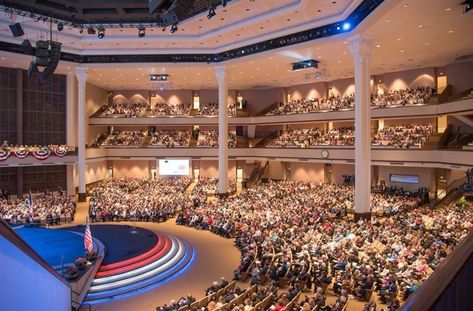
The Evangelicals were plainly influenced by the American mega-churches and this became more and mpre difficult to reconcile with the parish/local community organisation of the C of E. In fact the notion of the parish as the pastoral unit had been under strain since the 19th century, especially in the cities where it was comparatively easy for people to cross parish boundaries to a church where they felt ‘more at home’. Anglo-Catholics could hardly complain as they had been doing it for 100 years! But there was a difference. In the 19th century the Anglo-Catholics had often built their churches in the slum areas of the cities. Here they were less likely to come to the attention of the diocesan bishop or articulate but disgruntled parishioners. So wealthy Anglicans from Belgravia drove east to Holborn or north to Paddington, and well-connected curates like Basil Jellicoe pestered their rich friends for money to fund their housing projects.
What was puzzling to many of us was why this new-style Evangelicalism seemed to be attractive and successful. I do not think it ss unfair to say that the Evangelicals were more strategic especially in the ‘planting’ of new congregations. Areas of south and east London were of little interest to them until gentrification began: once they were assured of sufficient lay-people of a particular class and temperament, having the skills and financial resources to spear-head the plant, then they would move. One can hardly criticise this missionary zeal: but it was beyond the comprehension of clergy and laity locked into the parish/pastoral care model. And the once-great Anglo-Catholic shrines were quite unable to give any sort of leadership in missionary endeavour. ‘Oh, Father, the High Mass at St Ichabod’s is quite unique. I couldn’t imagine going anywhere else.’ Thus were our parishes colonised and taken over.

I think back to the Clergy Chapter meetings of the 80’s; the Evangelicals were assured but they struck many of us as terribly naïve. Given their horror of ‘Popish’ penitential practises in the 19th century, and their suspicion of convents and monasteries; it is amazing that people like John Smyth were able to get away with flogging adolescent boys. They just could not imagine a predator in their midst. The division of their fellow Christians into ‘sound’ and ‘unsound’ allowed a wall to be built around new converts. Their nervousness about sexual matters left them ill-equipped to deal with the new age in which ‘anything goes’ as far as sex is concerned.
Should ‘they’ – should ‘we’ – have known? Archbishop Sentamu refused to accept that he should have done more in a safeguarding case because he did not have authority over the diocesan bishop. That is not the way the C of E works, he argued. And his diocesan bishop, now he is retired, refused to allow him to function in her diocese, for this unwillingness to take the blame.
And will the Evangelical Movement suffer because of this notorious case? Probably not. The movement is in any case splitting over the issue of acceptance (and therefore ‘blessing’ ) of same-sex partnerships. Like the Anglo-Catholics in the 90’s Evangelicals are asking for an alternative structure of oversight, where their diocesan bishop believes that sexual conduct outside heterosexual marriage is not sinful. (I don’t think it would be enough for a bishop to say, ‘I will not myself celebrate ‘gay’ marriages … ) So will the big churches detach themselves ? Unlike the Anglo-Catholics of the 90’s they have the resources to do so, and they are much less susceptible to secular disapproval and church bullying which drove so many Anglo-Catholics out of the C of E.


 Ordinariate Pilgrim