
The Deputy Prime Minister, Angela Rayner MP, spoke recently at the 80th anniversary of the liberation of Auschwitz. She asserted her belief in the fundamental goodness of human beings. This was a brave thing to do at the site of the former death camp, where countless thousands of people were murdered simply on the grounds of their race or religion or sexuality. The vast majority were Jews who suffered under the persecution of the Nazi regime in Germany during the 1930’s and the Second World War. Catholics honour the heroic sacrifice of Fr Maximilian Kolbe, the Polish Franciscan, who gave his life in exchange for another condemned prisoner. His feast day, August 14th, has for many years been significant in our family, as the anniversary of the death of my father, Michael, who fought in the War and lost all his family in the Plymouth Blitz.
But was Ms Rayner right to espouse a belief in the fundamental goodness of human beings? From a secular point of view it is difficult to see what evidence there is for such a belief. And belief it is, something to be taken on trust, for concepts like goodness, evil and right (or wrong) behaviour are way outside the realm of scientific proof. (As indeed is much of the most important and valuable human experience.)
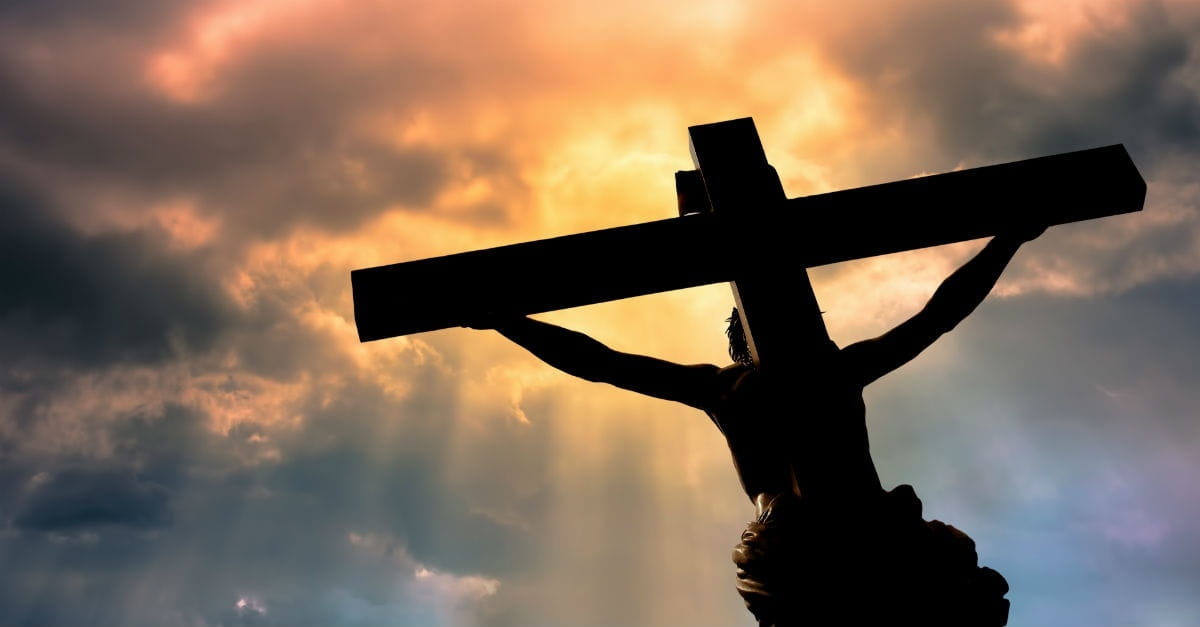
The doctrine of Original Sin is often attacked by secularists and by some Christians. Although it is complicated and poses further questions, it asserts that a tendency to do the wrong thing rather than the right – to be bad rather than good – seems to be part of human experience at every level. St Paul’s observation ( more of an anguished cry ) that ‘ I do not do the good I want, but the evil I do not want is what I keep on doing.’ (Romans 7:19) still rings true.
Yet the Christian believes that sin and evil do not have the final word: God does. The death and resurrection of the Son of God which we celebrate during this Easter Season marks the triumph of goodness over the degradation of sin. But this is redemption not progress. It is God’s work not ours. The liberal hope in the 19th century of the natural evolution of the human race into a state of harmonious peace and justice, was definitively smashed by the 20th century descent into war and genocide. I think it was G K Chesterton who remarked that the amazing this was not that men and women believed in God, but that God continued to believe in the human race. Perhaps my question to the atheist is this: can you honestly believe in human goodness in the face of all the evidence to the contrary?
While preparing for Good Friday I came upon this prayer. Found in a concentration camp and in the face of this unspeakable evil it rises to a level of forgiveness and hope which I can hardly conceive.
O Lord, remember not only the men and women of good will, but also those of ill will. But do not only remember the suffering they have inflicted on us, remember the fruits we bought, thanks to this suffering: our comradeship, our loyalty, our humility, the courage, the generosity, the greatness of heart which has grown out of all this. And when they come to judgment, let all the fruits that we have borne be their forgiveness.
(Richard Foster, Prayer: Finding the Heart’s True Home. HarperOne, 1992. pg 224)

 Ordinariate Pilgrim