
THE LITURGY OF THE WORD
The Celebrant and Deacon turn to the right and go to the sedilia. The Deacon assists the Celebrant to sit (useful with heavy and full vestments) and then sits himself. They listen attentively to the Word of God without fidgeting or talking to each other.

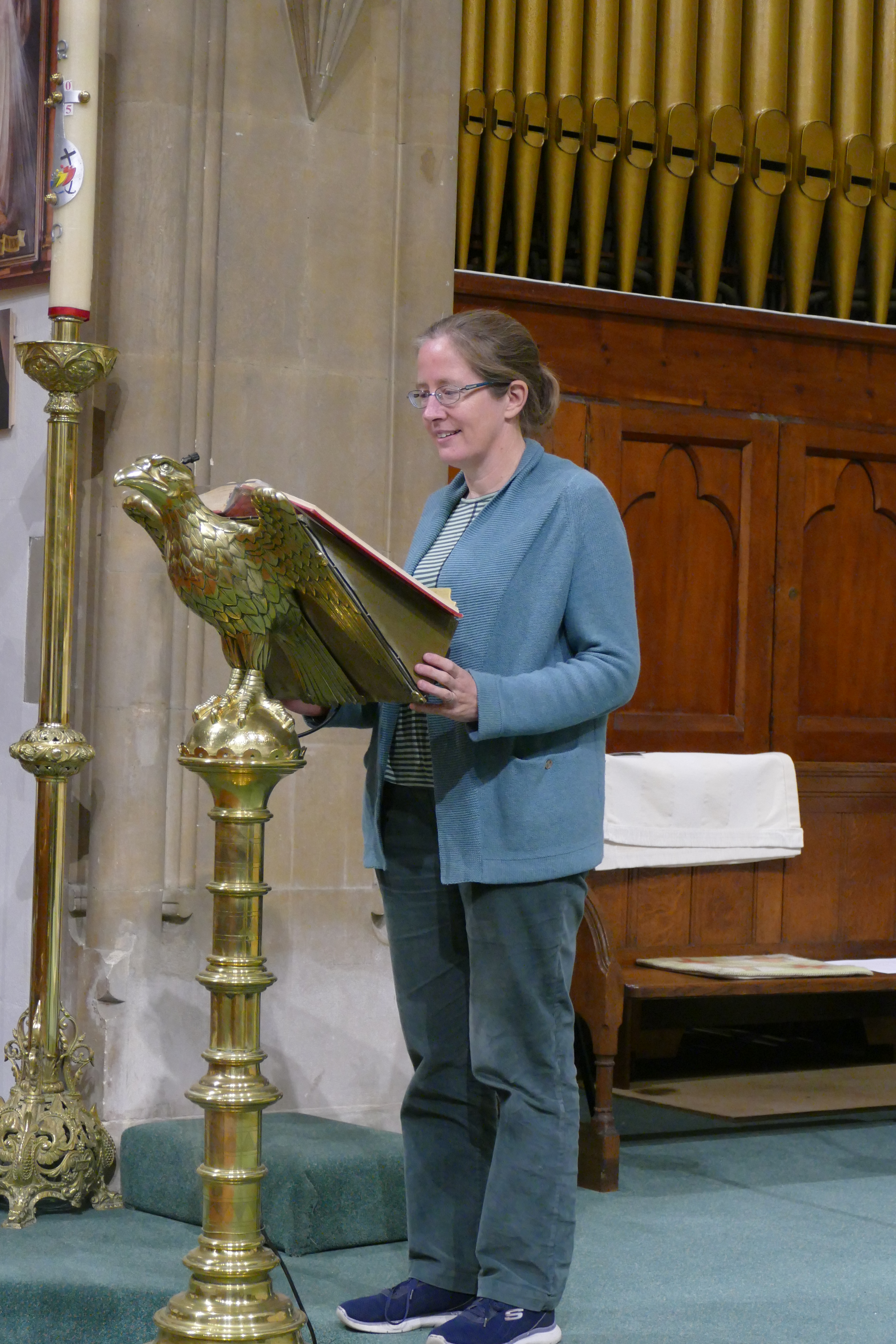
The Reader goes to the ambo (lectern) and proclaims the First Reading, Psalm, Second Reading where ordered, and the Gospel Acclamation is sung.
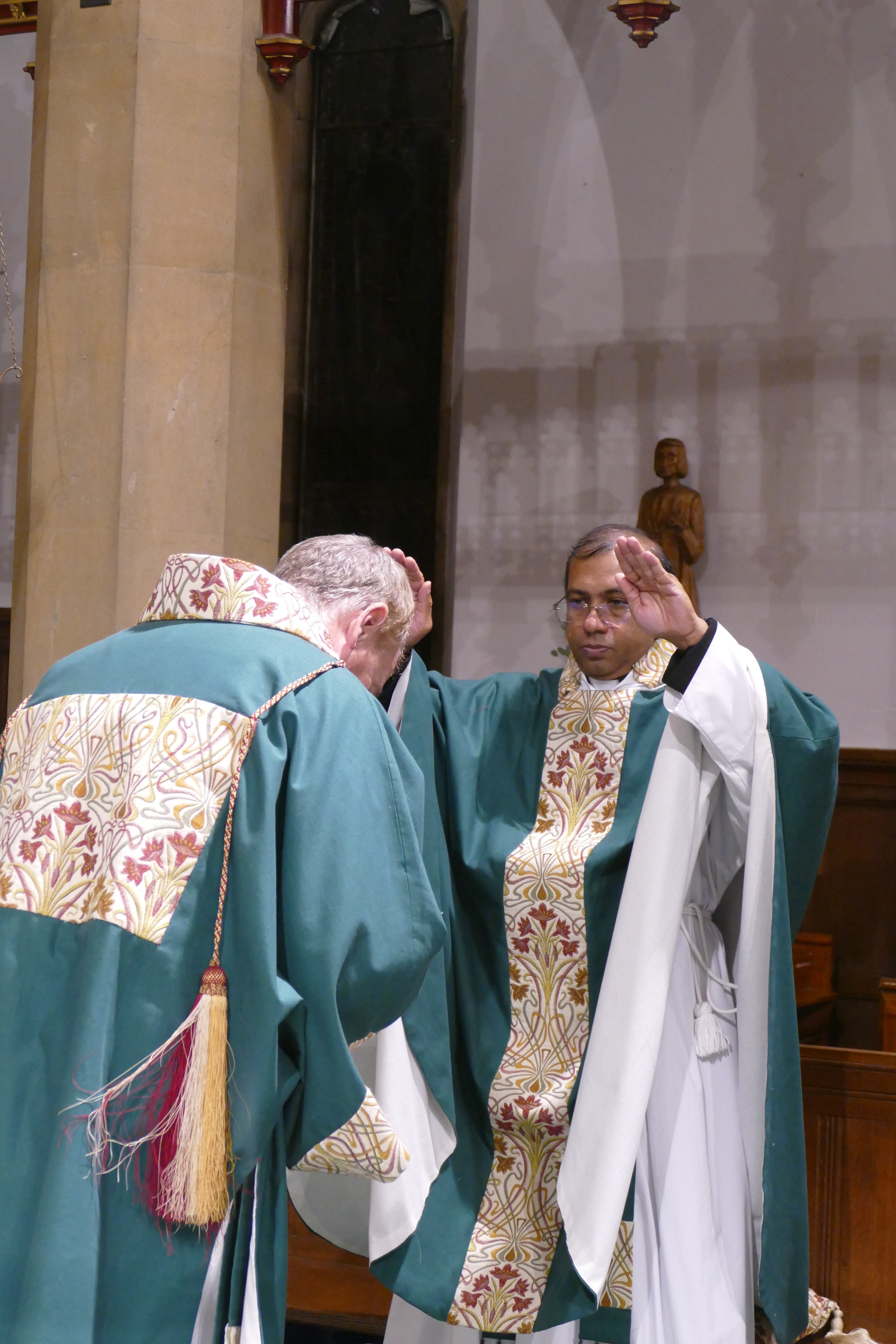
As the cantor or choir begins the Acclamation, the thurifer approaches the sedilia. (The custom of doing this during the Second Reading is to be deprecated: it disturbs the people and is disrespectful to the word of God which is being read. If necessary let the blessing of incense be done in silence before the Acclamation begins.) The Celebrant stands, spoons incense into the thurible and blesses it in silence making the sign of the cross once over it with the right hand.
The taperers move to their candles at the altar step, take them up and wait. The thurifer meanwhile closes the thurible and goes to stand in the centre of the sanctuary. The Deacon asks and receives the Celebrant’s blessing, and then goes directly to the centre of the altar where he picks up the Gospel Book. He inclines moderately with the servers, turns and goes to the ambo.


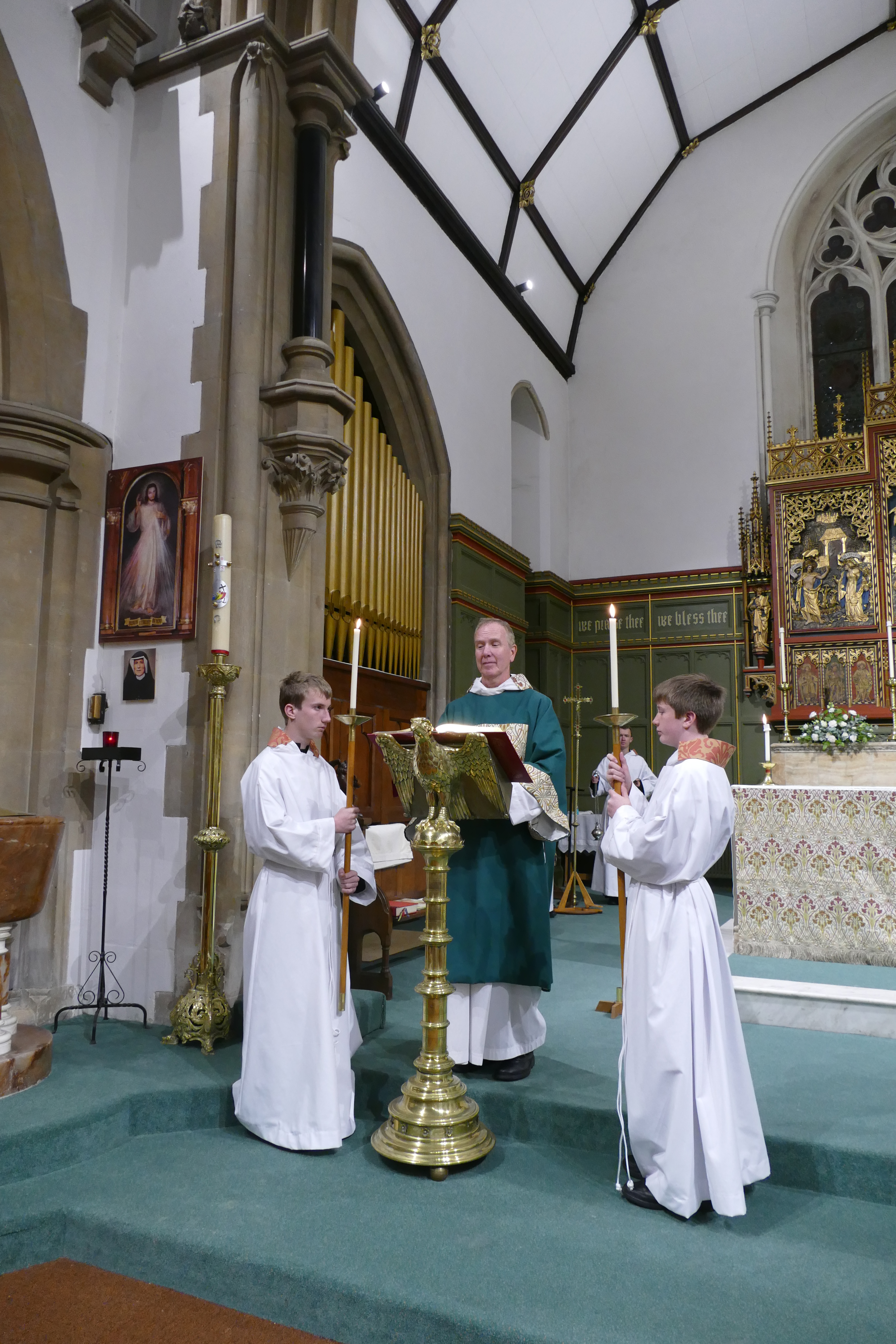
The taperers go left and right of the lectern standing, as it were, to light the Gospel book, and the thurifer to the right of the Deacon. The Deacon greets the people (with hands joined) and announces the Gospel. Then he receives the thurible, censes the book, and returns the thurible to the thurifer who goes to stand at a distance behind the Deacon. During the reading of the Gospel he gently swings the thurible on the long chain. (Any thing which distracts – excessive smoke, clanking of chains – is to be avoided. )
The Deacon now reads or sings the Gospel, kissing the Book at the end. He then returns to the sedilia, unless he himself is to preach at the ambo.

The Celebrant or Deacon preaches the homily from the ambo (or the Celebrant may preach from the chair)
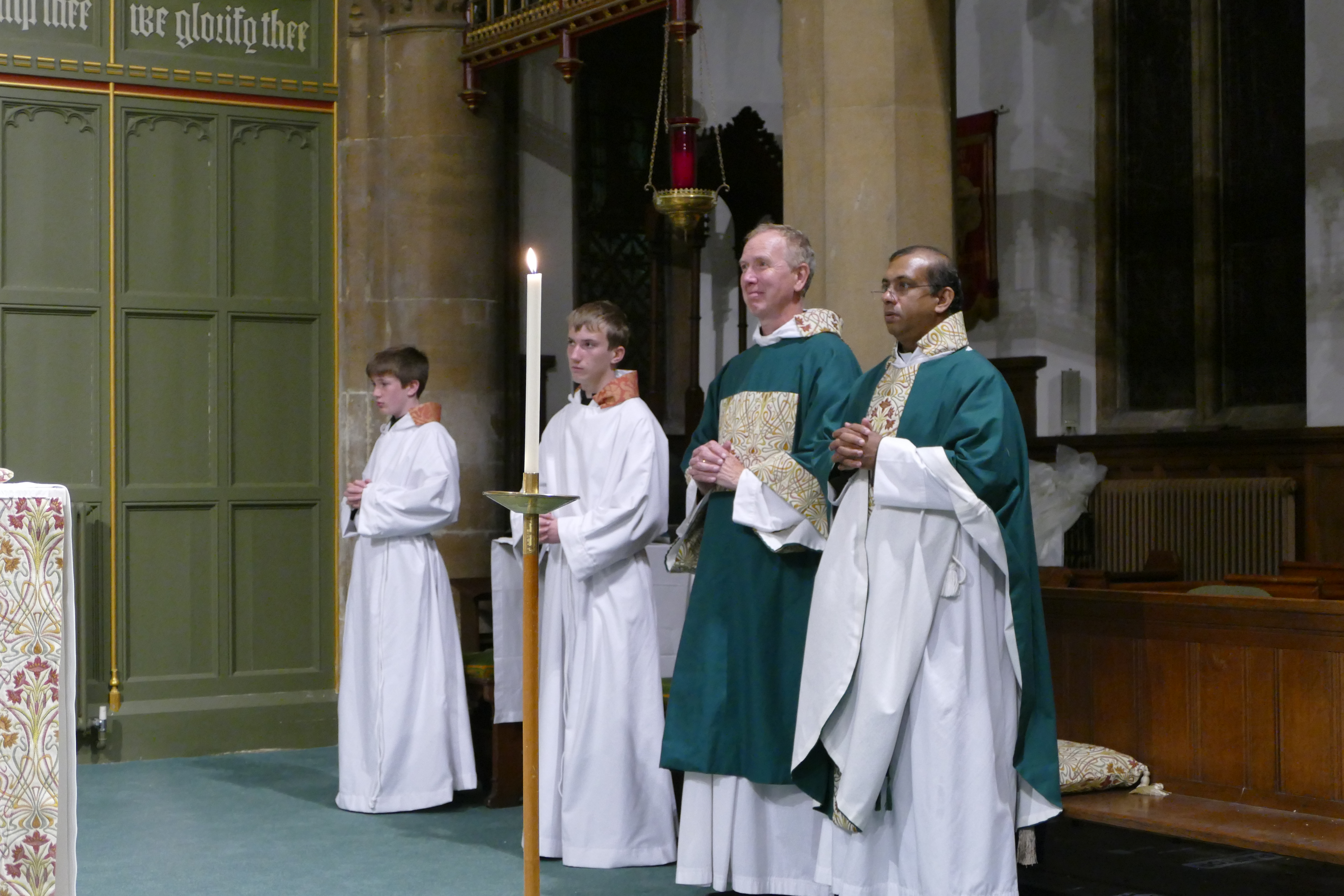
If the Creed is to be said the Celebrant and Deacon remain at the sedilia, genuflecting at the Incarnatus; and making the sign of the cross at the end, as ordered.

The Book of Common Prayer of the Church of England restored an ancient feature of the Eucharist which had been largely lost during the mediaeval period, that is the Prayer of the Faithful. This BCP prayer was called The Prayer for the Church Militant as it reflected the belief of the Reformers that prayer for the dead was not an ancient Christian practice. (They were mistaken, though prayer for the dead had become scandalously perverted over the preceding centuries) The Divine Worship Missal provides several alternatives. There is tacit permission for the long-established custom of the Prayer of the Faithful being written according to the needs of the time and place. There should be no need to compose in thee/thou form (with all the complications of verb endings) if the rule is observed that the petitions are addressed to the people i.e. ‘Let us pray for …. ‘ and not cast as prayers i.e. ‘Heavenly Father, we pray that …’ which form is reserved to the Celebrant at the Eucharist. Traditionally the Prayer of the Faithful is part of the Deacon’s liturgy.

The Prayers of the People being ended the servers and congregation kneel at the behest of the Deacon and pray together the Confession.

 Ordinariate Pilgrim
Ooops! No clanking! I well remember being scolded by Andrew for “clanking” (and for “swinging” at the wrong time) Well, what did he expect ? It was probably twenty years since I’d “thurified” except in outdoor peace processions! I think that I was “allowed” to be slightly confused – ? I’m really enjoying this , and have sent it on to people here to show them, in particular, what we miss by having no servers and no incense
https://www.avast.com/sig-email?utm_medium=email&utm_source=link&utm_campaign=sig-email&utm_content=webmail Virus-free.www.avast.com https://www.avast.com/sig-email?utm_medium=email&utm_source=link&utm_campaign=sig-email&utm_content=webmail <#DAB4FAD8-2DD7-40BB-A1B8-4E2AA1F9FDF2>