
The deacon goes to the foot of the altar steps, bows to the altar and ascends to the centre. The Celebrant remains seated at the sedilia. The clerk moves the Missal to its position left of the corporal and the taperers bring from the credence the chalice, pall and purificator
The chalice veil, and with it the burse, seem to have made a comeback in recent years. The Roman Missal does not mention the burse, but mandates a veil of white or the colour of the day over the chalice. The use of the burse to hold the corporal(s )(hence the ‘corporas case’ of the inventories) is older than the veil which did not come into widespread use until the 16th or 17th centuries. It seems hard to justify in these days where several chalices are placed on the credence to be used for communion in both kinds, to veil just one of the empty chalices. Certainly the chalice should not appear on the altar until the Offertory, nor should the burse be propped up between the candlesticks. If either burse or veil are used they should be taken away to the credence as soon as the deacon has prepared the Table.
The deacon spreads the corporal in the centre of the altar, unfolding it carefully , not shaking it out, and making sure that the edge of the corporal is aligned with the front edge of the altar. He places the chalice and purificator to the right beyond the corporal, and then, if there is to be an Offertory Procession, turns and goes to the sanctuary step to receive the bread and wine from the people. He receives all the bread including that which will be broken and consumed by the Celebrant. Unleavened bread is always used in the Western rites, but the wafers should not be inordinately thin like rice paper. Any suggestion that the priest has his ‘own’ wafer should be avoided, several medium sized wafers being available to be broken, say, into four, or a large ‘concelebration’ host broken into pieces at the fraction. It is desirable that a large deep paten be used with all the bread in it, rather than a small paten for the ‘priest’s host’, and a closed ciborium containing wafers for the everyone else. He may be assisted by the taperers, passing them the wine cruet.
In the meantime, the Celebrant goes directly to the centre of the altar and receives the paten from the deacon who comes up to his right. The taperer with the wine cruet goes to the right of the altar where he is joined by the second taperer who has brought the water cruet from the credence. Together they assist the Deacon who fills the chalice and adds a few drops of water, saying ‘By the mystery …’ The Celebrant for his part begins the Offertory prayers ‘Blessed art thou, Lord God of all creation …


Note on the Offertory prayers: The Divine Worship Missal provides the familiar prayers for the Celebrant and Deacon. It also provides the prayers which were used at this point (though in English) in the 1962 Missal. Liturgists have pointed out that these prayers appear somehow to anticipate the Eucharistic Prayer, which is turn seems to have led to a muddling of the Offertory as the preparation of the bread and wine on the altar at this moment in the liturgy, and the offering of the Body and Blood of Christ in the Eucharistic Prayer by which the perpetual offering of the Son to the Father is set forth in time.
___________________________________________________________________________________
Having mixed the chalice, the Deacon hands it to the Celebrant who prays, ‘Blessed art thou… ‘ and places the chalice on the corporal. The thurifer approaches, hands the boat to the Deacon, who holds it while Celebrant spoons incense into the thurible and blesses it with a single sign of the cross. The thurifer closes the thurible and hands it to the Celebrant. He censes the gifts, and then the crucifix and altar as at the beginning of Mass. Returning to the centre of the altar, he gives the thurible to the Deacon who turns, retires to the right of the altar (off the footpace) and censes the Celebrant. The Deacon then goes (with the thurifer) to the entrance to the sanctuary, and censes the people, bowing to them before and after. He returns the thurible to the thurifer.
While the Deacon is censing the people the taperers come with bowl, jug and towel to the right hand end of the altar and the Celebrant washes and dries his hands. ( Hands mean hands, not tips of fingers)
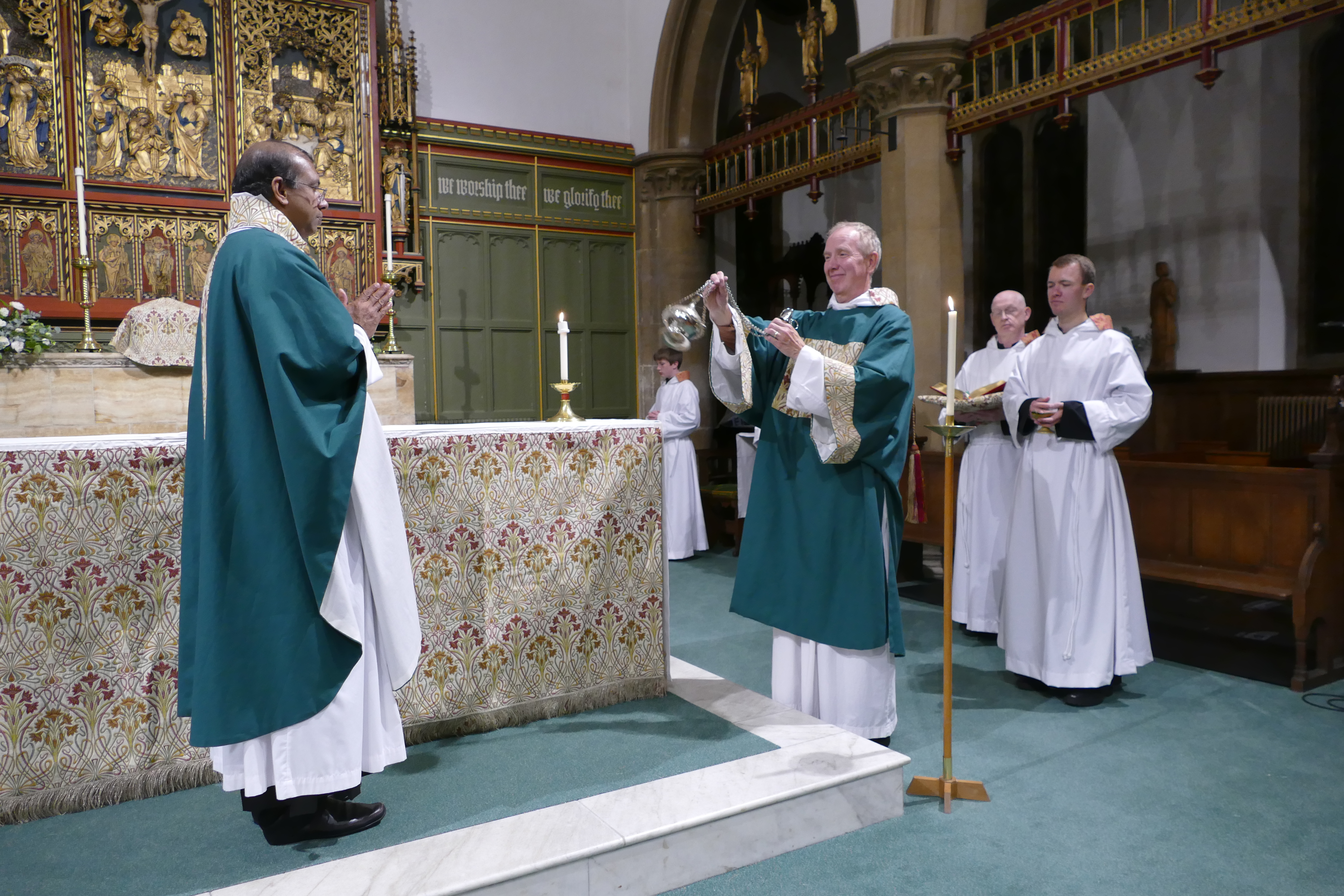
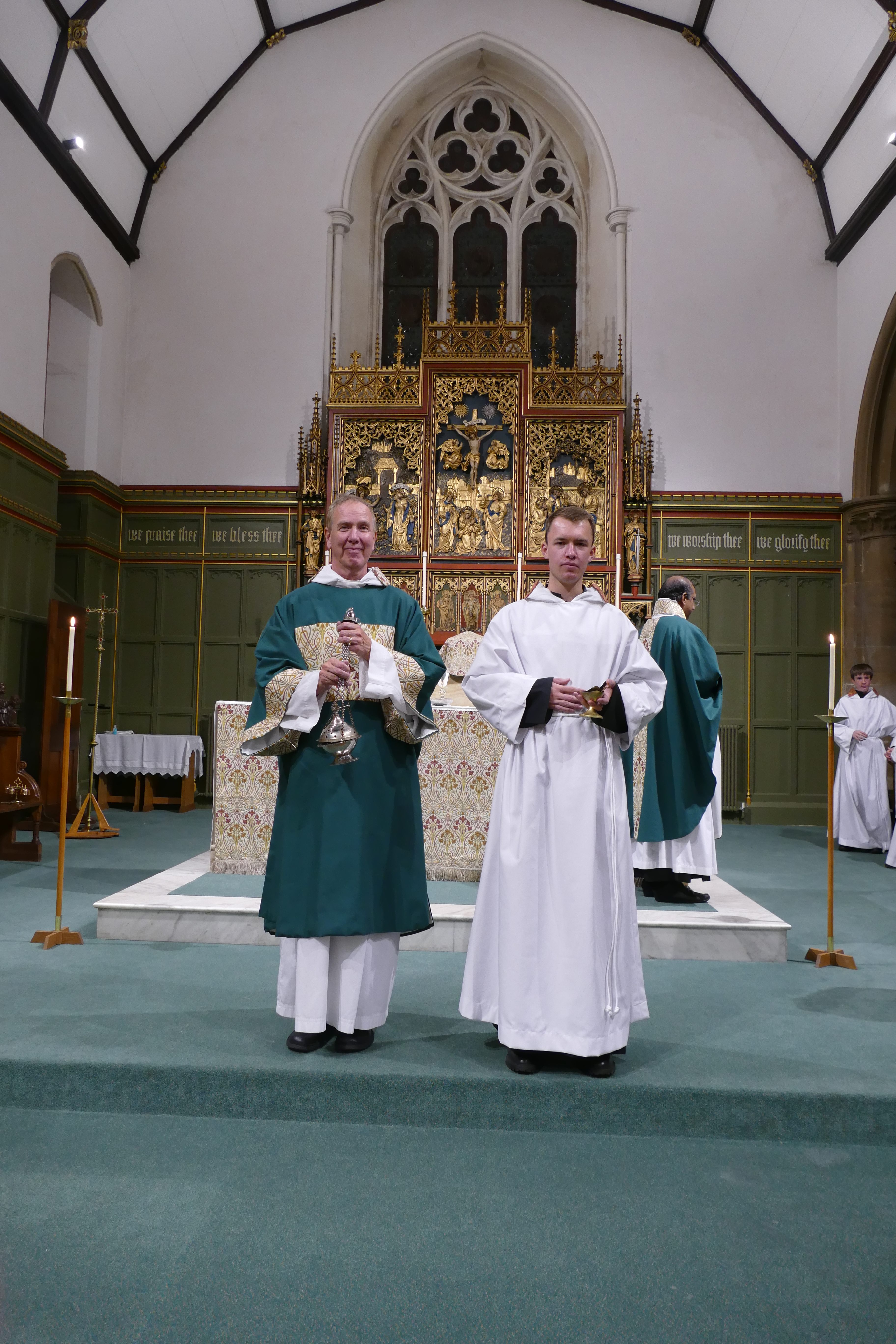
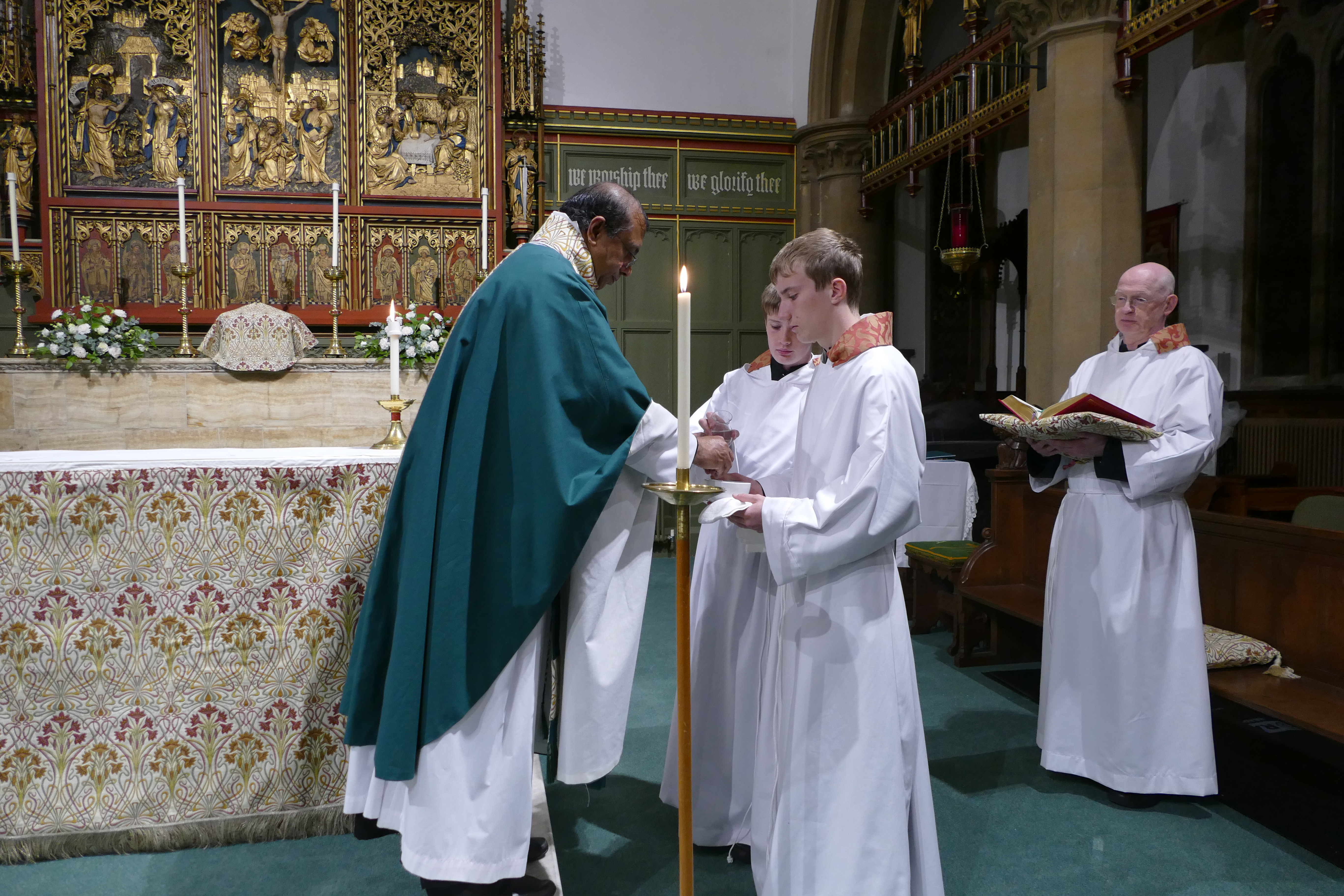
The Celebrant, at the centre of the altar, turns to speak to the people with the ‘Pray brethren ….’. The deacons turns to the right and then turns inwards. The clerk, having brought the Missal on its cushion to the Celebrant’s left, remains there to turn the pages of the book. The Celebrant remains facing the people while they make their response ‘May the Lord accept …’ and then turns again to the altar where here says the Prayer over the Gifts. The Deacon moves to stand behind him.
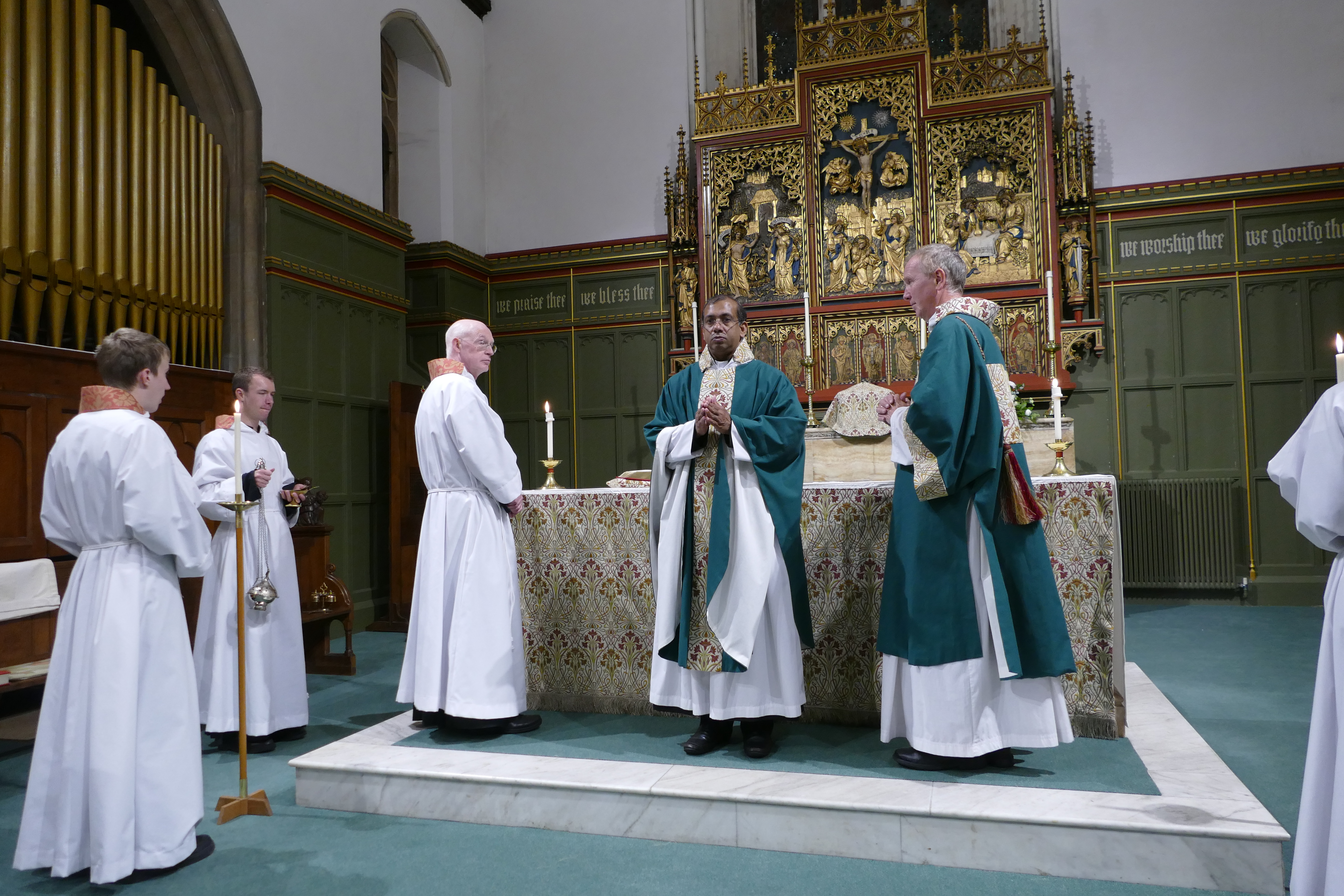
After a reverent pause the Celebrant begins the Sursum Corda. The general opinion is that this dialogue should be sung facing the altar without turning to the people. As the Sanctus begins the Deacon steps up to the Celebrant’s right. At the same moment the taperers leave their places at the credence, go to the centre of the pavement before the altar, bow and go to stand at their tapers (not picking them up) The thurifer, (having added a small amount of incense in the thurible at his place if necessary ) goes to the centre of the pavement or entrance to the sanctuary carrying the thurible. No exaggerated swinging of the thurible on the long chain is necessary and only disturbs the people.
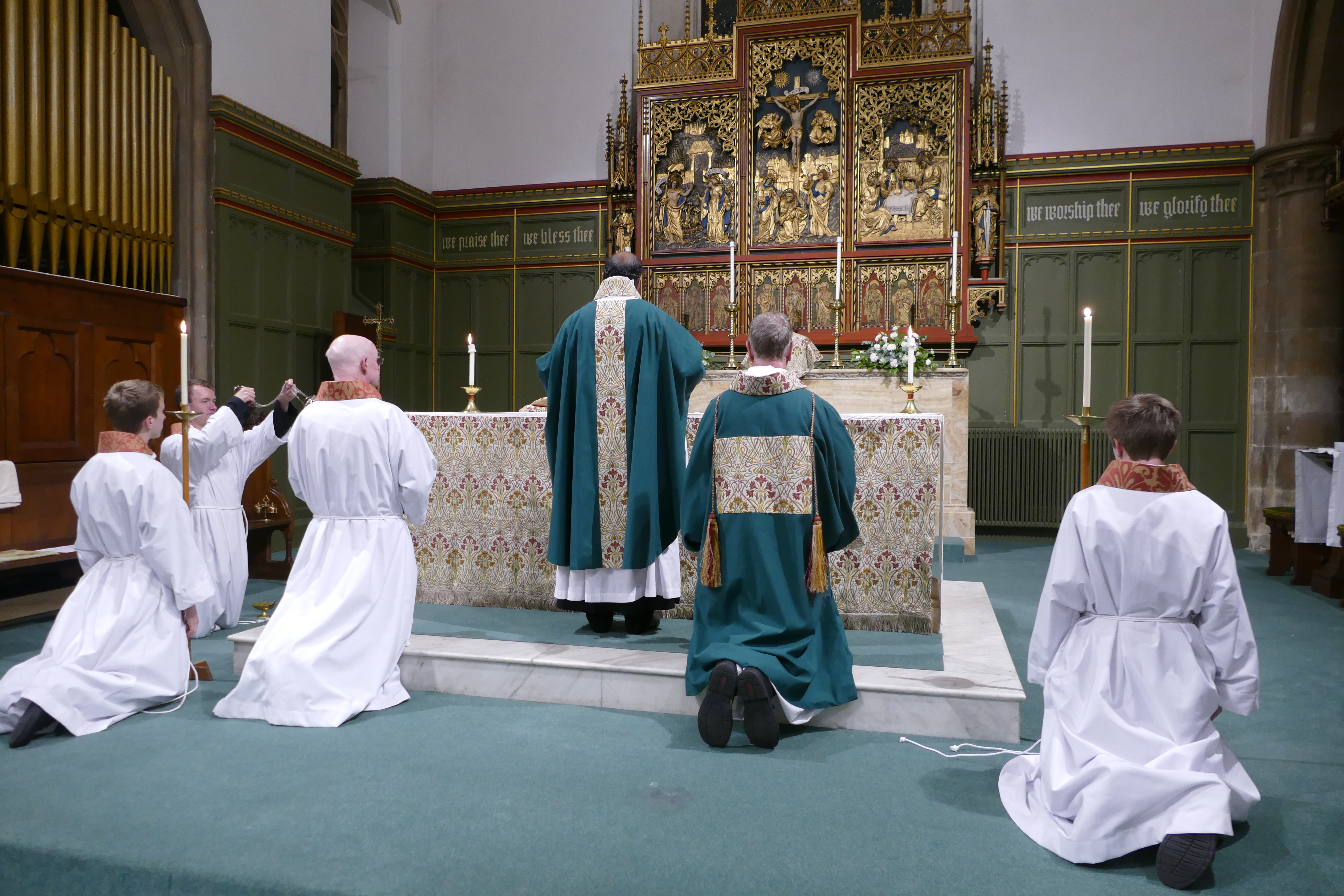
At the end of the Sanctus the people kneel and the servers may do the same. The Deacon and clerk remain standing until the Invocation of the Holy Spirit, when the Deacon removes any palls and lids from the vessels, and both ministers turn and kneel of the edge of the footpace.


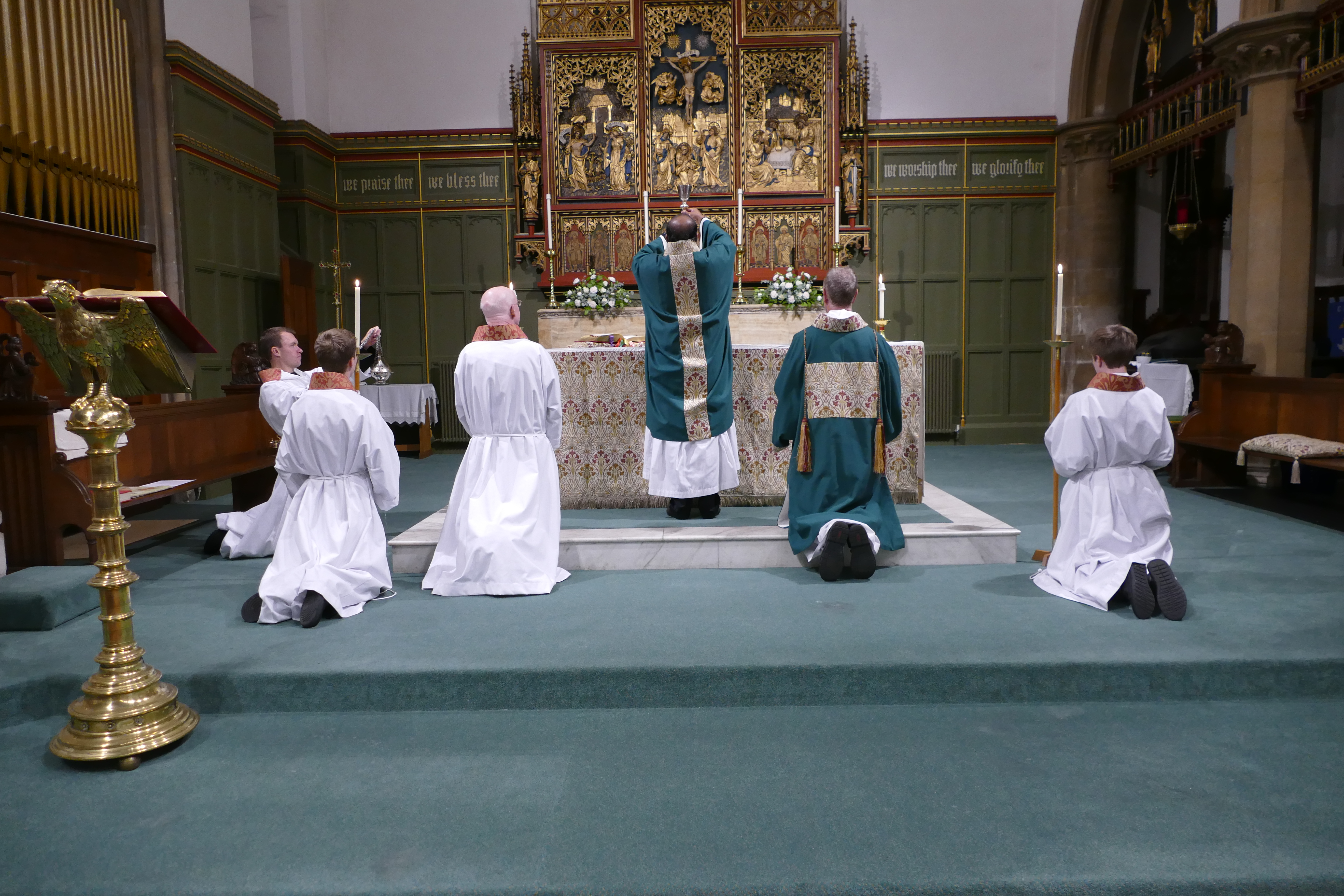
It should be noted that the Celebrant in the Divine Worship rite genuflects both before and after the Elevation of the Host and chalice. The Words of Institution are to be said clearly and naturally. This is the more important where the ad orientem position if adopted. The ‘silent Canon’ of the pre-Council Mass has not been re-introduced via the back door of the Ordinariate
At the Elevation of the Host and again for the Chalice the servers and ministers look up, but any sort of showy prostration is out of place. One of the servers may gently ring the bell at the elevations, and the thurifer censes the consecrated Sacrament. This should be done discretely, on the short chain, and without any clashing of the chains. Single or double swings are used but the rubrics do not anywhere prescribe a triple swing.
As soon as the Celebrant has elevated the chalice, the Deacon and the clerk stand and go to their places left and right of the Celebrant. The Deacon covers the chalice (and ciborium/paten) , the Clerk makes sure that the Missal is correctly set for the continuation of the Eucharistic prayer, and the Celebrant with the Deacon and Clerk genuflects. The Celebrant extends his hands and continues the Prayer.
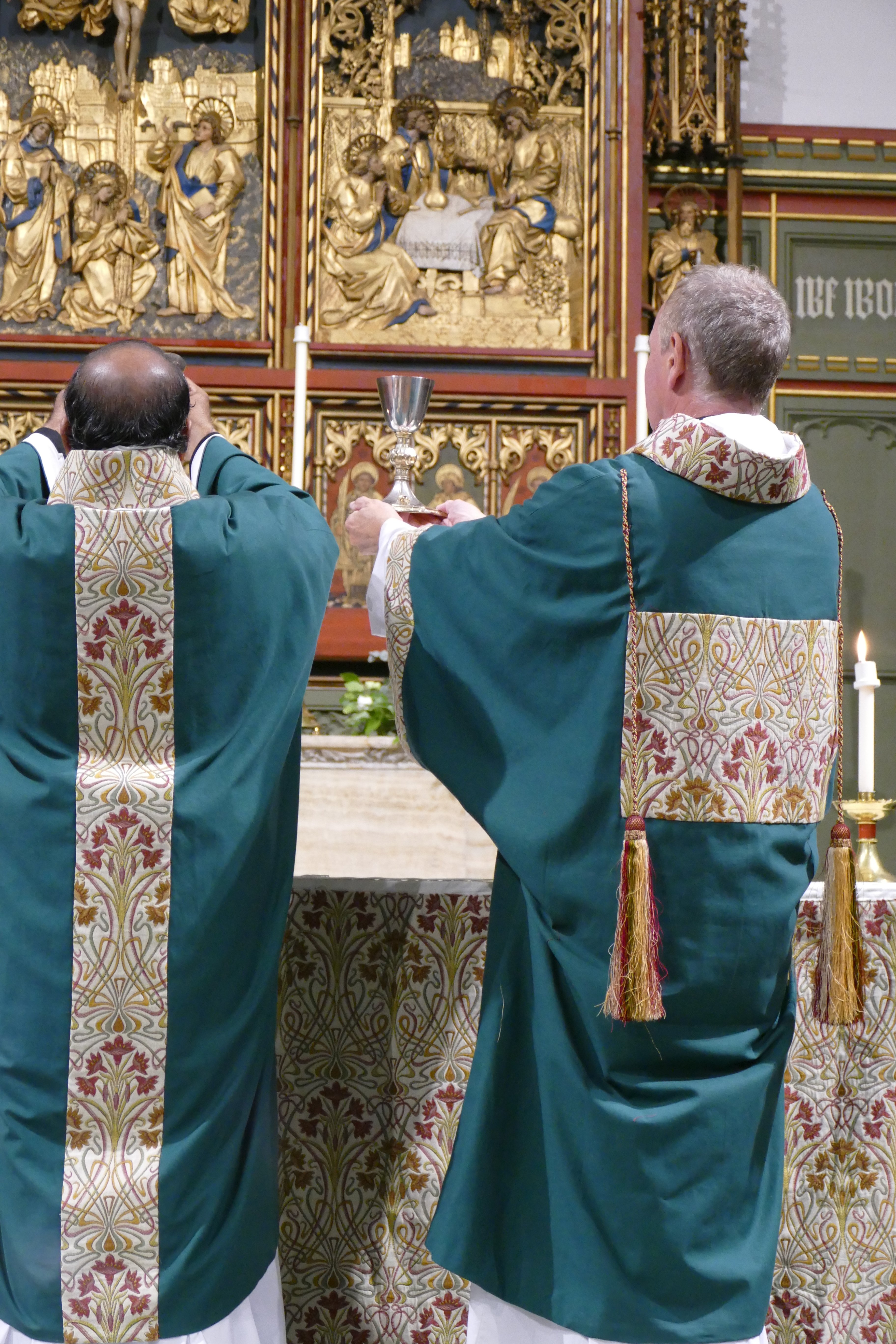
The Celebrant joins his hands, the Deacon uncovers the chalice and elevates it as the Celebrant elevates the paten. They replace the vessels on the corporal and both genuflect.
The taperers stand and so does the thurifer. The taperers move to the centre of the pavement where they genuflect together with the thurifer. The the taperers turn to the right and go to their places at the credence. The thurifer turns to the left and goes to his place where he hangs up the thurible (or returns it to the sacristy if this can be done discretely.) The deacon turns and goes to stand behind the Celebrant
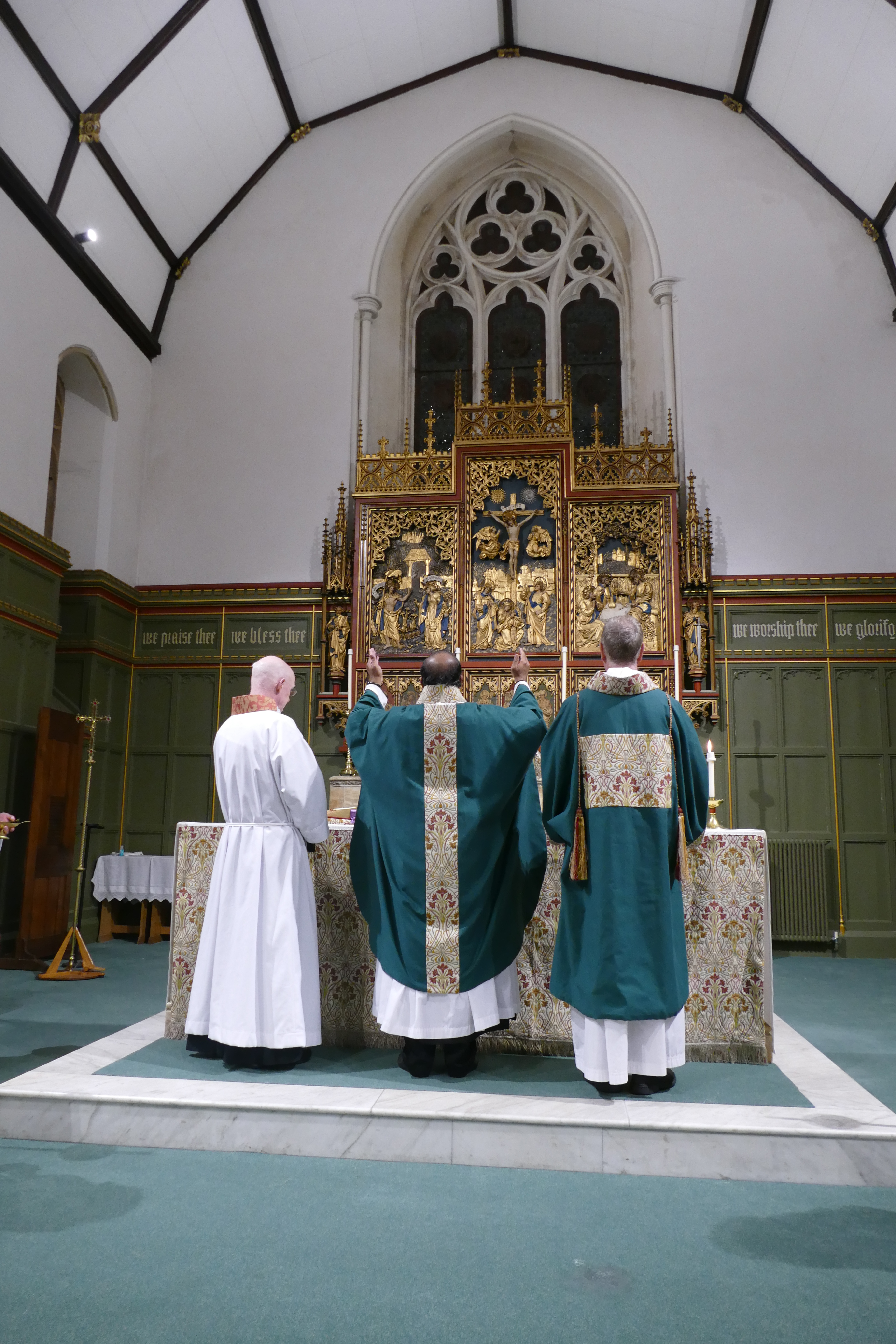
The servers having returned to their places and, facing the altar; the Celebrant invites the people to say the Our Father., and then continues with the Libera nos and the Prayer for Peace.
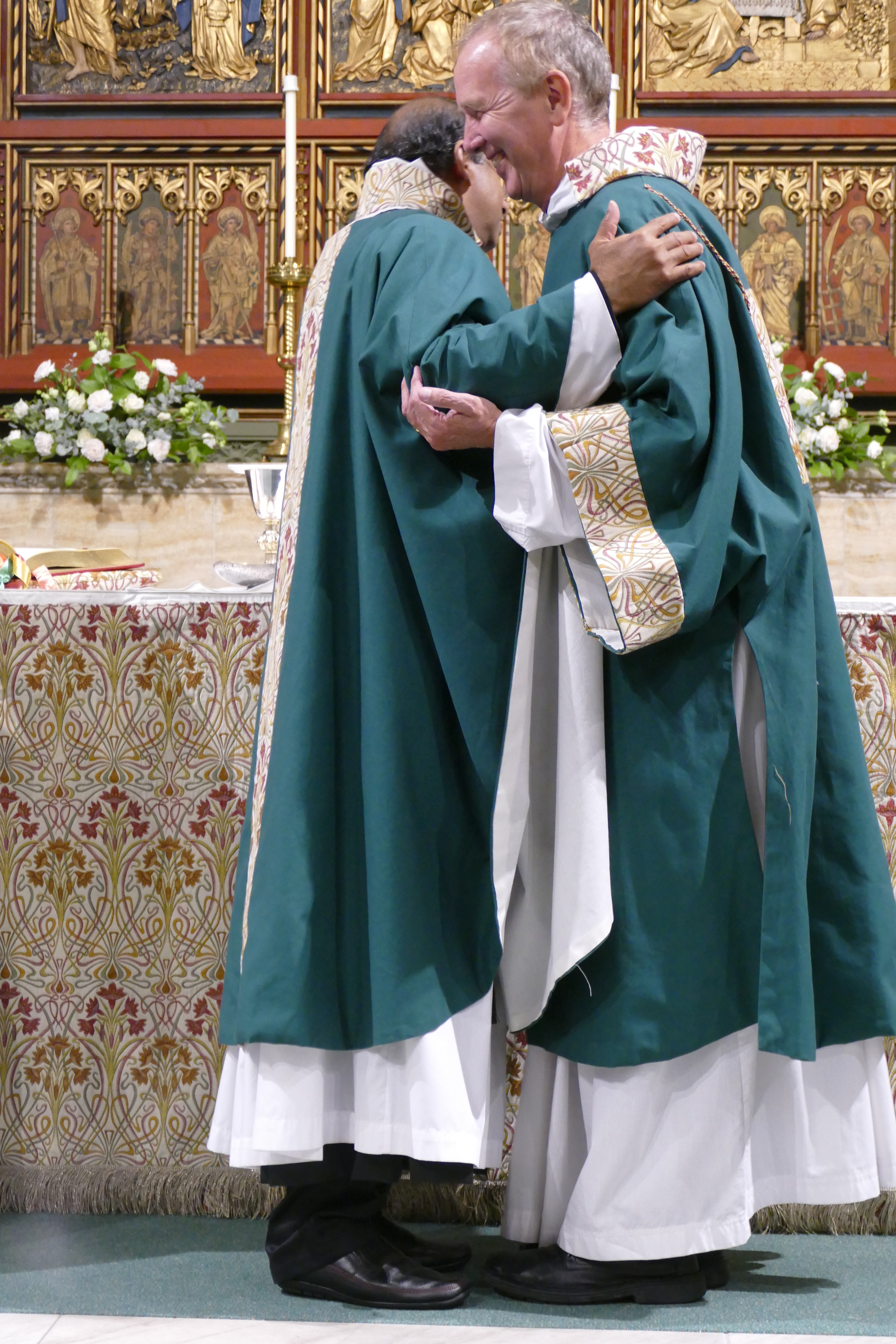
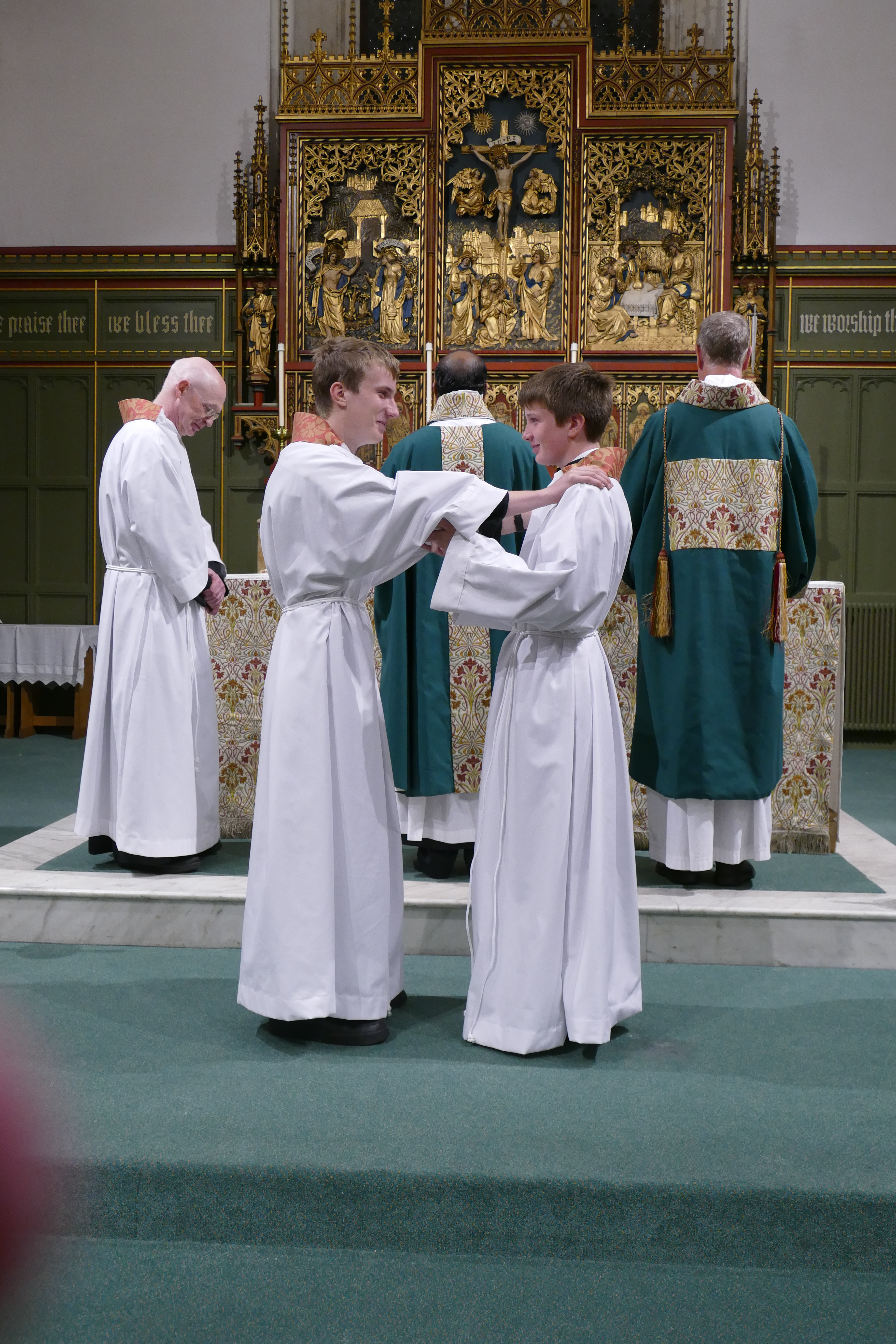
As the Celebrant turns to say ‘The Peace of the Lord …’ the Deacon withdraws to the right and then turning to face the people invites them to exchange the Peace. He goes to the right of the Celebrant and exchanges the Peace with him. If this is done formally then the two Ministers bow to each other, the senior places his hands on the shoulders of the junior, inclines, withdraws and they then bow to each other. The Deacon and Minister may descend to the step or pavement and exchange the Peace in like manner, the servers and people turning to the person next to them and greeting them. It will be better if the people do not leave their places or cross the sanctuary or church.
Deacon and Clerk return right and left of the Celebrant who recites ‘Christ our Passover …’ with the people responding. The Celebrant then performs the fourth action breaking the Host deliberately in two and then continuing to break up the Hosts for Communion. The Deacon may, if necessary go to the Place of Reservation, opening the tabernacle, genuflecting and returning to the altar with the ciborium. The Agnus Dei is sung or said.
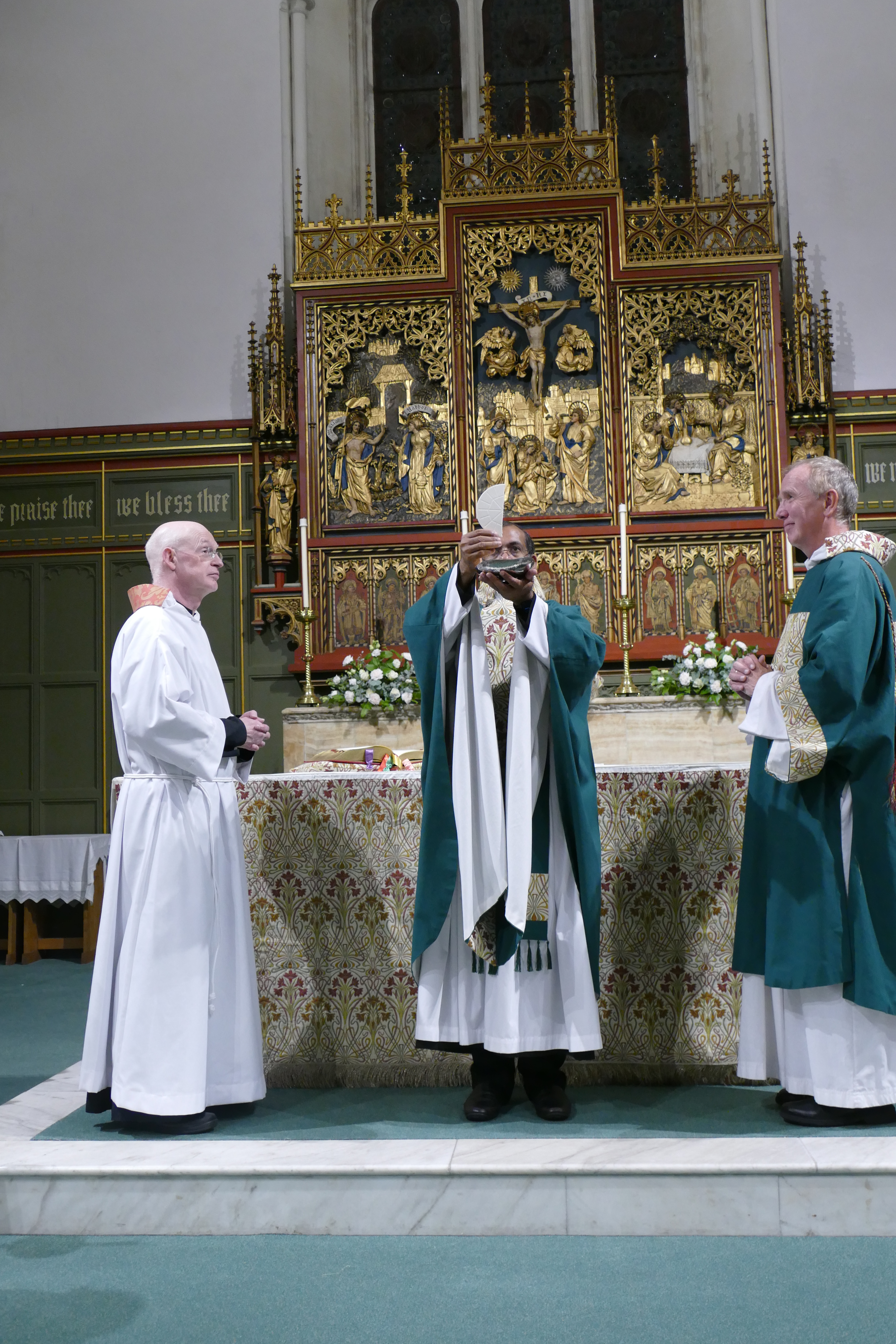
The Prayer of Humble Access is recited, and then the Celebrant turns to the people, showing them the Host (and chalice) and saying ‘Behold, the Lamb of God …’ The people respond, ‘Lord, I am not worthy …’
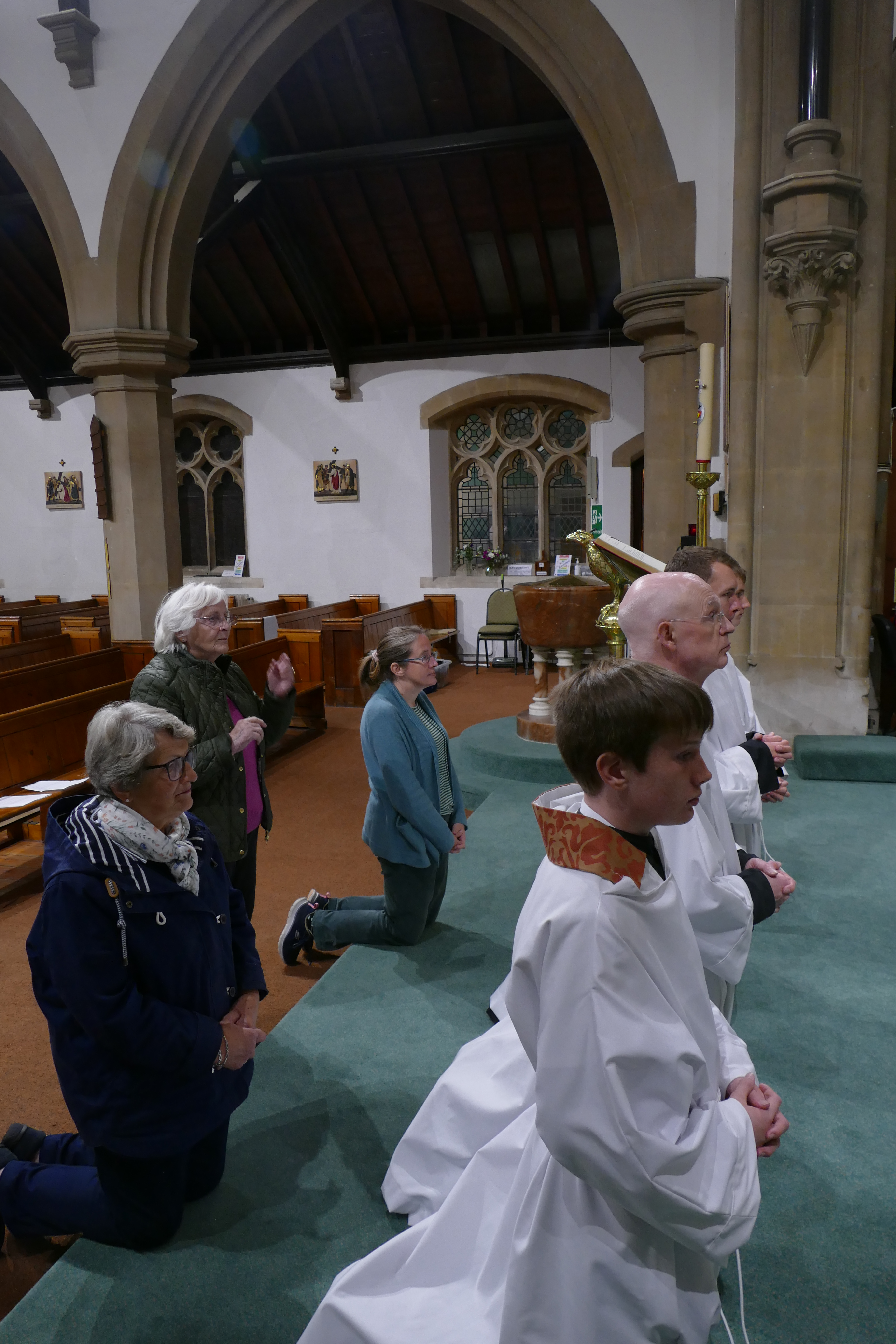
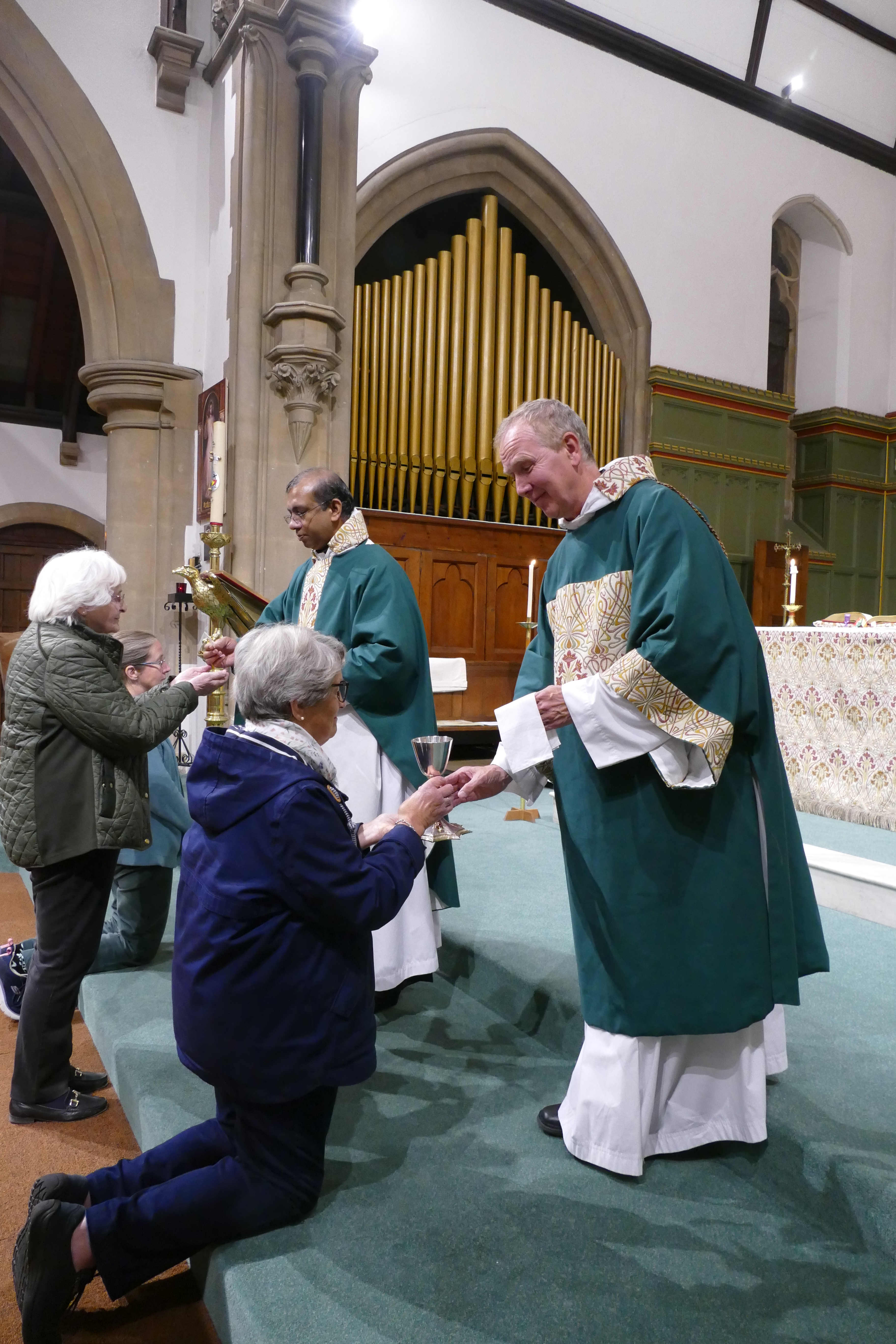
The servers and people receive Holy Communion.
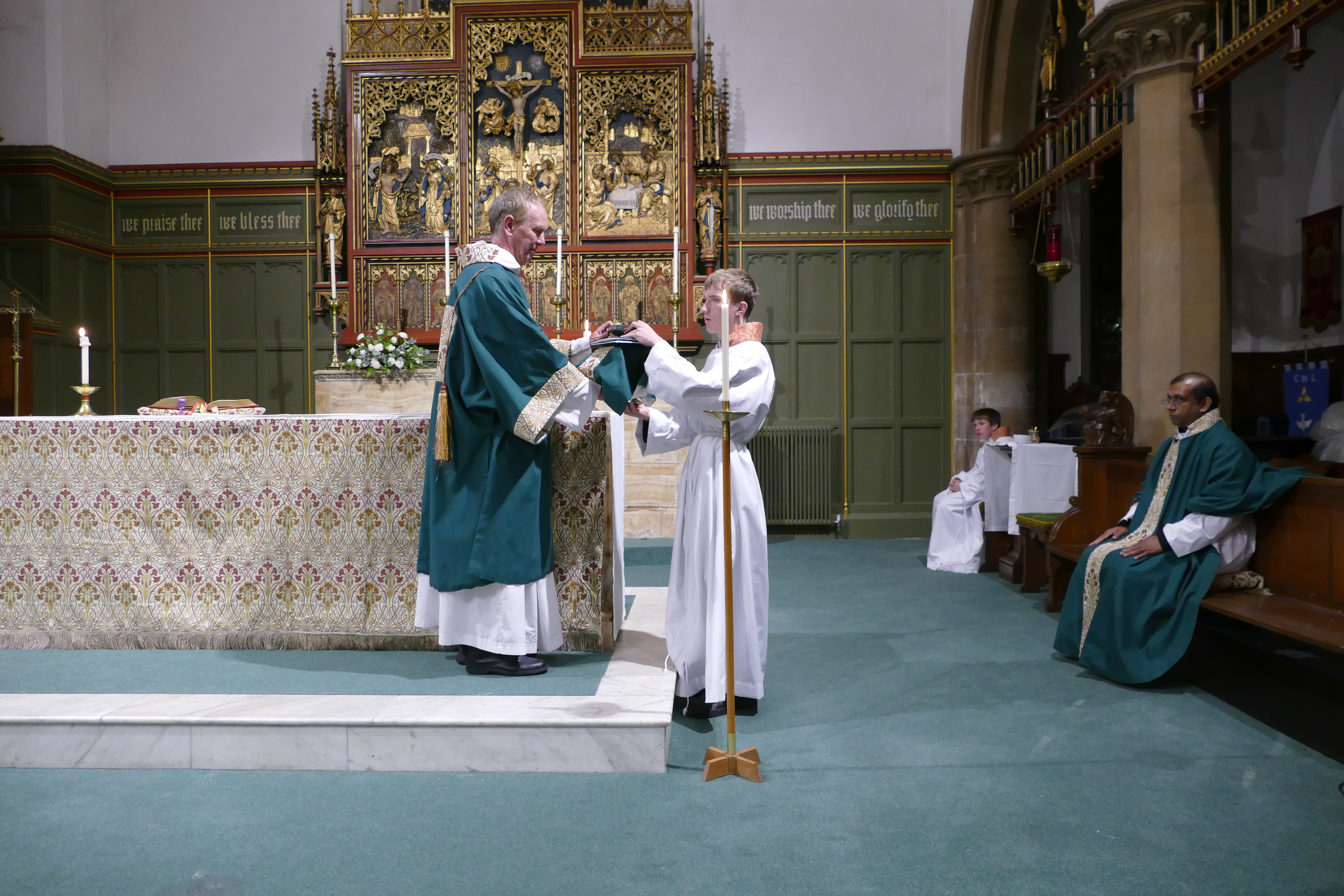
After Communion the Celebrant returns to the sedilia and the Deacon cleanses the chalice (and other vessels) assisted by the servers. He covers the chalice with the veil, folds and places the corporal in the burse. All vessels are removed to the credence table.
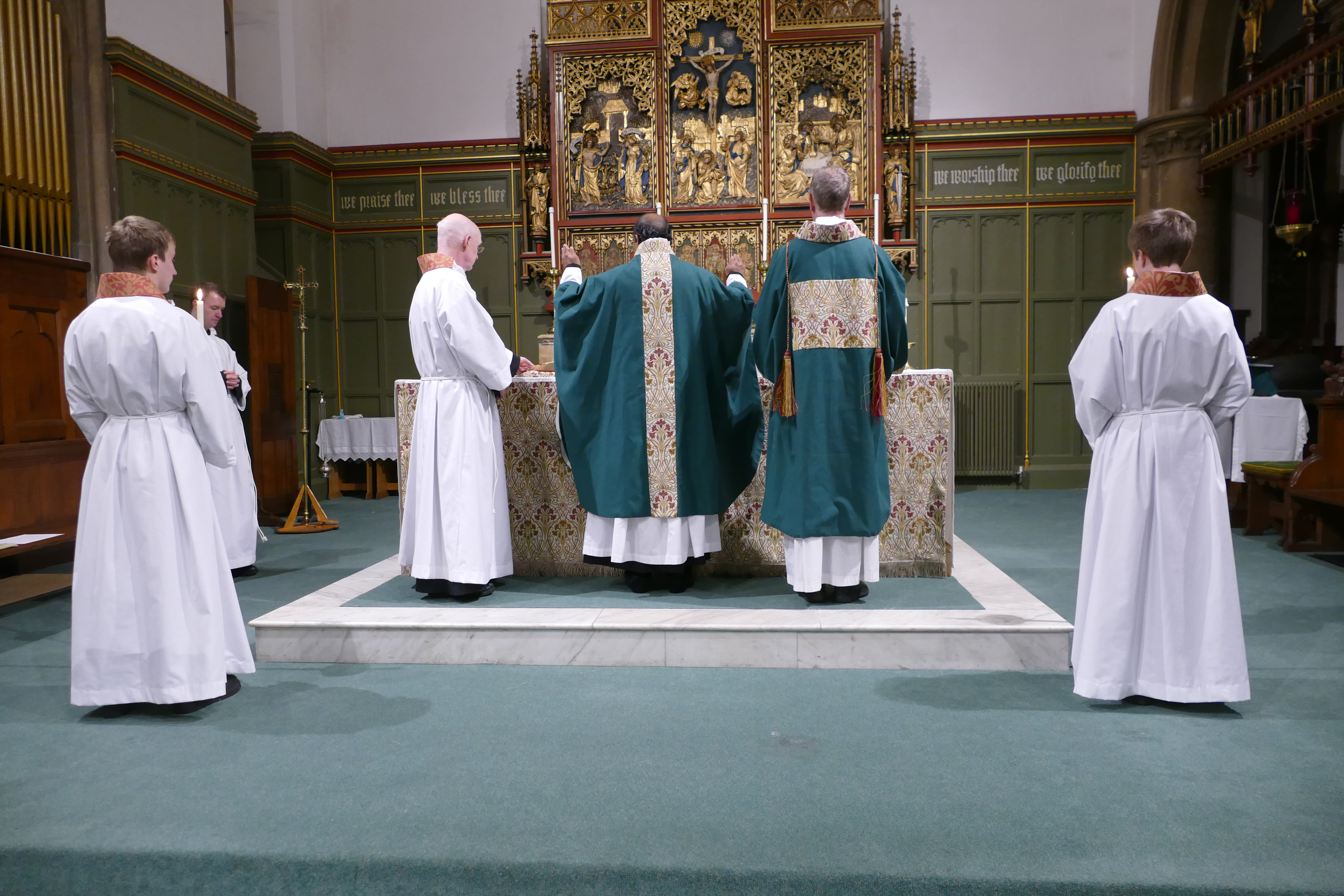
At the end of the silence the Celebrant and Deacon rise. The taperers go immediately to the centre of the pavement before the altar where they bow and go to stand by their torches. The clerk stands close to the credence with the processional cross and the thurifer stands at his place on the left of the altar (without the thurible.) The Celebrant and Deacon make their way to the foot of the altar where they bow. The Celebrant ascends to the centre of the altar, and the Deacon takes his place. The Celebrant recites ‘Almighty and everliving God …’ alone or with the people. Then he says, ’Let us pray’ and the Post Communion Prayer.
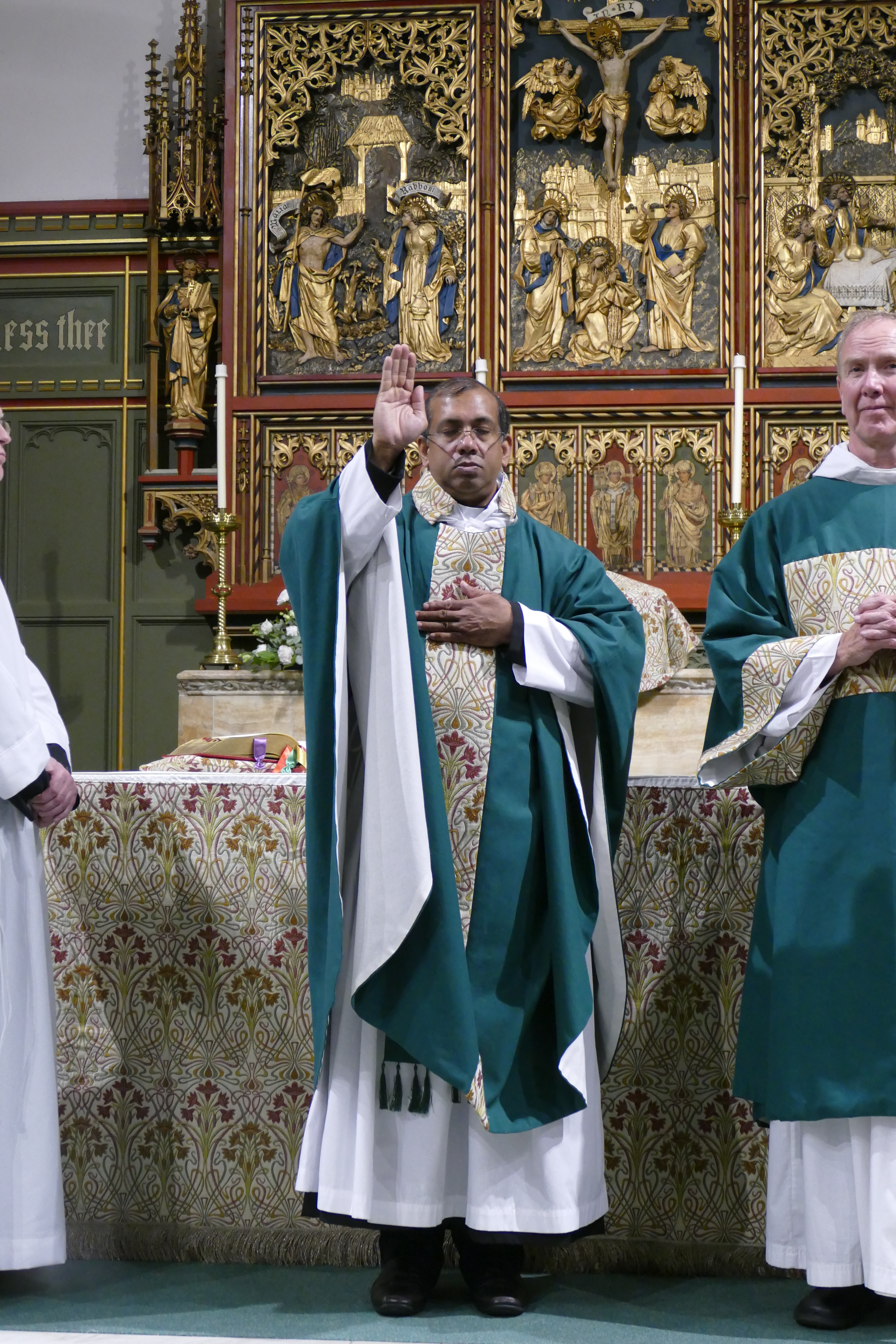
The Celebrant turns to face the people. The Deacon turns to his right, so as not to obscure the Celebrant and then turns inward. The Celebrant greets the people and blesses them. The People respond ‘Amen’.
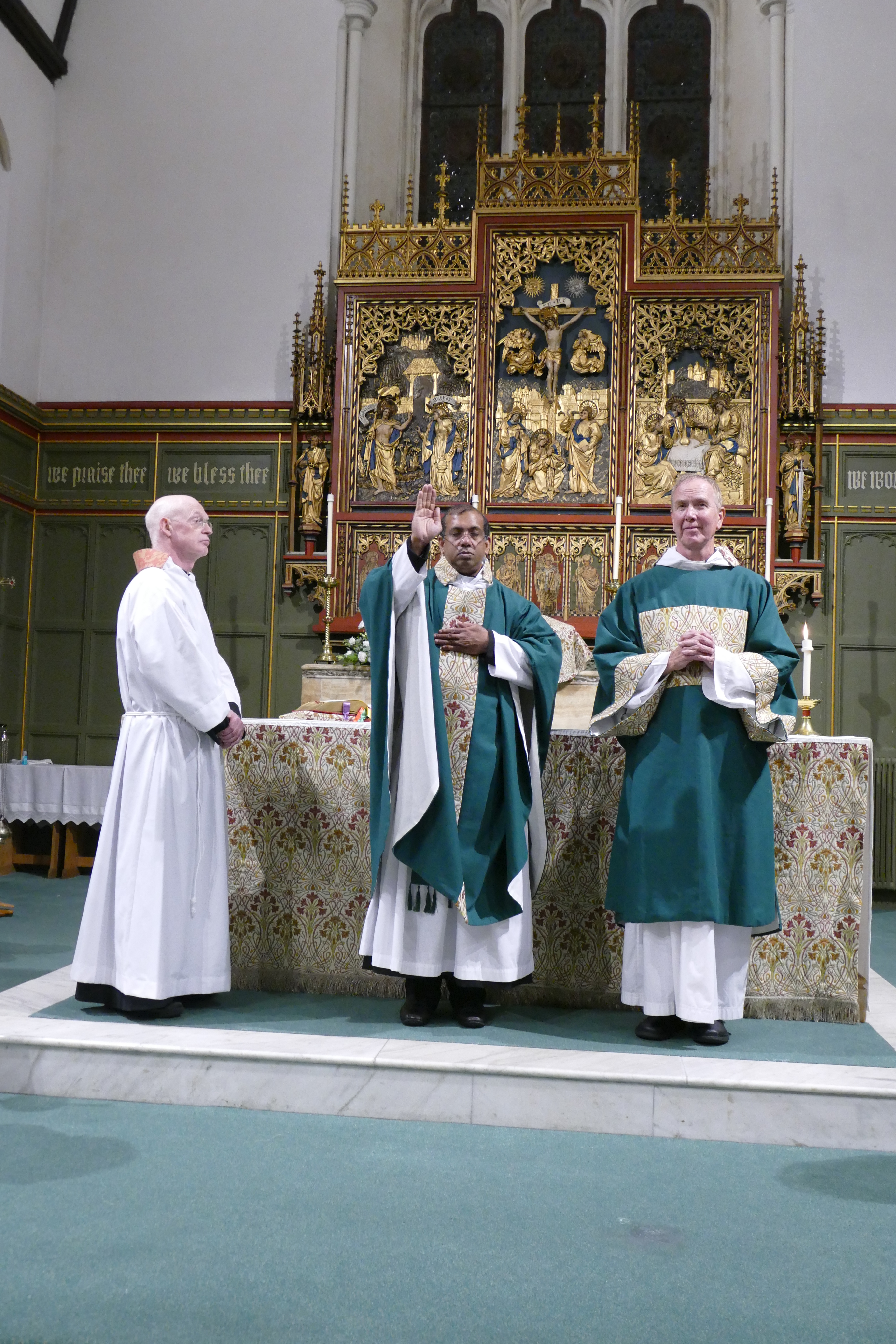
The Deacon turns to face the people and announces ‘Go forth in peace’ (with hands joined) and the people respond.
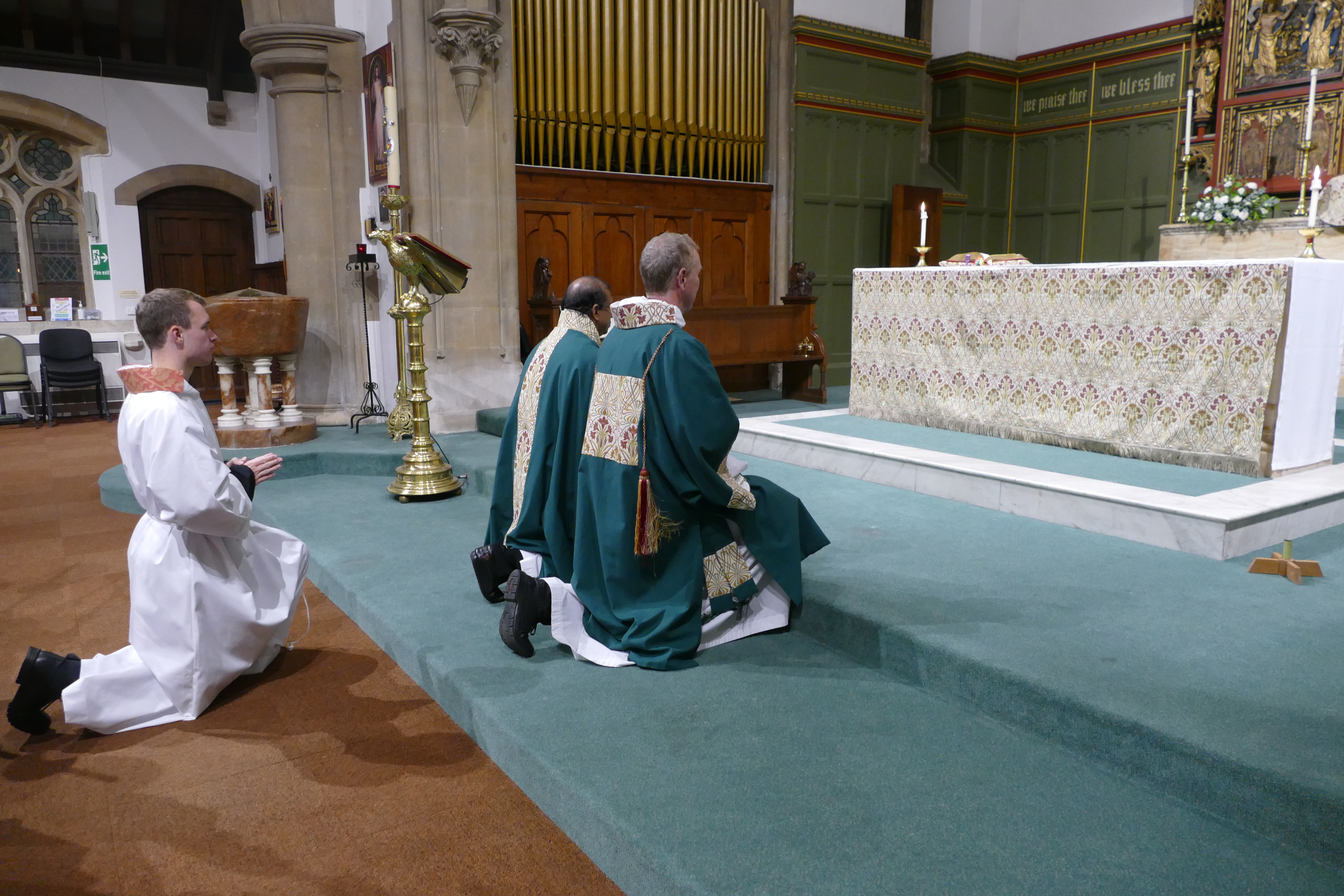
Celebrant and Deacon turn back to the altar and kiss it. Then they turn and descend to the pavement where they make the appropriate reverence with the servers and depart.

 Ordinariate Pilgrim