The Ordinariate: child of ARCIC – a response

I’m grateful to Monsignor Andrew Burnham for the following comment on my last post, which I publish with his permission.

”   On each side of the dialogue there has been a conventional interpretation of the ARCIC process which goes something like this.  From the Catholic point of view, Anglicans have not been able to articulate a clear Anglican position on essential doctrinal points and, despite warnings, have created further difficulties by proceeding to ordain women to the priesthood and episcopate.  From the Anglican point of view, the Congregation for the Doctrine of the Faith has constantly asked for fresh elucidations in a way that undermines the consensual ARCIC method.  Both viewpoints would agree probably that ARCIC I showed a brilliance and verve that has not been sustained subsequently.  That is partly because of the outstanding individuals involved at that point and partly because of the prevailing culture.  These were days of convergence – for example the movement towards the unification and integration of Europe – and contrast with so-called post-modern tendencies to divergence and disintegration.

There had been great excitement over convergence.  The World Council of Churches’ document, Baptism, Eucharist and Ministry, Lima Peru 1982, had articulated a consensus that felt very Anglican and that document, together with ARCIC I, seemed to suggest to a divided Christianity that all the churches had to do was to accept something like the breadth and tolerance of Anglicanism.   The liturgy and witness of the Taizé Community seemed to bear this out.  This, of course, was the Anglican view.  From a Catholic perspective, all that was needed, it seemed, was for Anglicans to become a bit more consistent and unified in their thinking.  The Free Church perspective was that Anglicans and Scandinavians needed to break free of Erastianism.  For about a decade, all of this seemed conceivable and even possible.

In the Anglican-Catholic dialogue, the warning shots remembered are the Holy See’s demand for elucidations and the correspondence exchanged at the highest level on the subject of women’s ordination.  Less often remembered, but no less important in my view, was the polite roar of the Open Letter to the Anglican Episcopate published by Grove Books, Colin Buchanan’s lair, in 1988.  Leading Evangelicals expressed their misgivings about the conclusions of ARCIC I and by 1988 Evangelicalism was becoming steadily ascendant in English Anglicanism.  This fresh proof that Anglicans would not be able finally to gather round an ARCIC consensus, despite the assurances of the Lambeth Conference 1988, was probably the motive force behind the content of the much-delayed Catholic Response to ARCIC in 1991.  That response was seen at the time as ungenerous but nowadays seems to have been accurate and finely judged.

I have yet to meet any Catholic-minded Anglican who, since 1991, has regarded ARCIC as a reliable vehicle to bring about the unity of Anglicans and Catholics and, since the ordination of women priests in 1994, those minded to seek unity with the Catholic Church have pursued this either as individuals or, more recently, in response to Anglicanorum coetibus 2009.

In 1994 there were many Anglicans, longing for union with Rome, who were unable to proceed to entering the full communion of the Catholic Church.  Some were fearful about their future material circumstances.  Others were conscious of their responsibilities to family, parish, and community.   Most were reassured by the promises of the Church of England that ‘traditionalists’ would continue to have an honoured place.  The ‘flying bishop’ ecclesiola seemed worth a try, especially if it maintained and developed an ecumenical momentum.  Unsurprisingly, with the erection of the Ordinariates in 2011, there have been those who have stayed and those who have gone.  Charity requires that neither speaks ill of the other or their motives.  What is inescapable, however, is the fact that the Ordinariates have been born out of the ARCIC process and represent a fresh initiative in ecumenical dialogue and theology, even if this is yet to be recognised and realised by many Anglicans and Catholics.

The ARCIC process, set up following the meeting of Pope Paul VI and Archbishop Michael Ramsey in 1966, produced an optimism about church unity which was to last a quarter of a century.  Looking back, to quote Wordsworth ‘Bliss was it in that dawn to be alive. But to be young was very heaven!’

Mgr Andrew Burnham   “

Posted in Uncategorized | Leave a comment

The Ordinariate: child of ARCIC

Anglo-Catholic success: a Cathedral Altar restored

Anglo-Catholic success: a Cathedral Altar restored

There was in the C of E to which I was ordained in the 1970’s a sort of ‘Catholic dynamic’. What I mean is that feeling that the Oxford Movement, the Catholic Revival, had permeated almost everywhere, and was now going to gather in the harvest. Church unity was seen in terms of mending the 16th century breach, which had separated England from the rest of Europe. It was high time to put this right. And the setting up of the Anglican Roman Catholic International Commission was the way forward.

In the 1920’s the Malines Conversations (led on the Anglican side by Lord Halifax, President of the Church Union, and Cardinal Mercier, Archbishop of Malines-Bruxelles in Belgium)  had foundered because they were essentially informal discussions with just one part of the C of E: the Anglo-Catholics. Yet by the 1960’s the C of E as a whole was looking much more like the ‘Church’ as envisaged by Halifax; moreover, with the Second Vatican Council the Catholic Church itself was looking much more like the ‘Church’ as Anglicans had now come to understand it. The signs were good on both sides, and the Commission (ARCIC) got down to the serious business of clarifying doctrinal belief on both sides. They seemed to make progress, and on divisive questions like the priesthood, the Eucharist and the place of authority in the Church, their reports found a common language. Anglo-Catholics, at least, were hopeful that corporate reunion (some talked about Uniate status) would be in sight by the Millennium.

In the memory of the C of E nowadays it was ‘Rome’ who first poured cold water by demanding ‘elucidations’ of points of doctrine: and making the language ‘sharper’. But we should not forget that the Evangelicals in the C of E, who were by now experiencing growth in numbers and influence, rejected ARCIC from the beginning, as representing what they believed as Anglicans . The liberals too, were uneasy. They were beginning to swim with secular concerns about the ‘equality of the sexes’ and to question the 2,000 year old tradition that only men could be priests. The Catholic side was discovering that, lacking any central teaching authority, it was impossible, to pin down what Anglicans believed. Anglo-Catholics had anticipated this difficulty, but believed that their influence was on the brink of tipping the Anglican Communion over into the Catholic way of believing and behaving. As the last fifty years have shown, they were wrong.

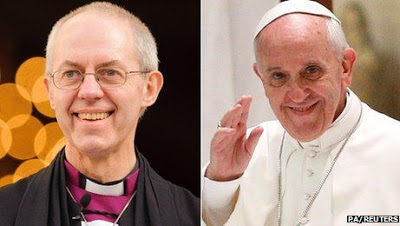
Pope Francis and Archbishop Justin Welby

Pope Francis and Archbishop Justin Welby

As the Provinces of the Anglican Communion began to act unilaterally, ordaining women first to the priesthood and then as bishops, so the whole  ARCIC process went  ‘on to the back burner’.  This is often dismissed (by some Catholics as well as Anglicans) as the influence of conservative forces at Rome. But Anglo-Catholics were dismayed to see years of work for unity coming to an end. Nor were they willing to be told that it “could never have happened”. If the will had been there, as it was with other issues, of course it could – and would – have happened. Determined that the call to unity should not fail, they continued their approaches – and the result, to cut a long story short, was Pope Benedict’s setting up of the Ordinariates. Here was a form of corporate reunion. He was offering it, as Bishop of Rome, to all Anglicans: but if all would not enter this new relationship of restored communion, then it remained for those who would to take action. And we did!

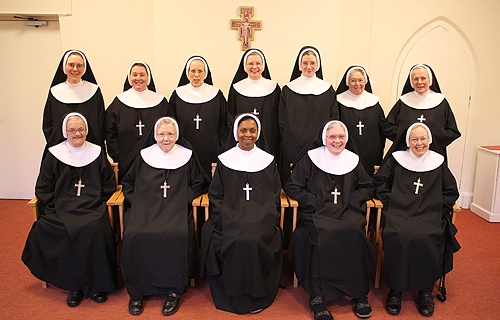
Religious sisters in the Ordinariate

Religious sisters in the Ordinariate

Those who have entered the Ordinariates – and those Anglicans of a previous generation (and today) who come to the fullness of Catholic unity by other routes – are truly the children of the Oxford Movement, the Malines Conversations, and the ARCIC process. They are urgent in their desire for unity, and they point rightly to the desire of the Lord that his Church should be one as their motivation. No other issue may take priority over this one.

The ARCIC discussions continue, and Pope Francis and Archbishop Welby meet on good terms. They encourage joint projects in which Anglicans and Catholics may cooperate. But the understanding of what it means to be ‘Church’ is clearly now different, (and therefore ARCIC is conducted on a different basis)  Anglicanism has entered on a new path, and Catholics now look to the East. Perhaps now the C of E is more at ease with itself, as a church of the Reformation, a church in which there is no central doctrinal authority, where individual judgement is exercised, and, it is claimed, the ‘Spirit blows where he (or she) will’.

Posted in Uncategorized | 1 Comment

Mission Stations or Rest Homes (part 2)


I want to be clear what I was and was not saying in my last post. A (kind) friend remarked that it was a bit like the writings of  a former Archbishop of Canterbury – sounded good, rather long, and in the end you were not really sure what it all meant!

First, let me emphasise that no one pattern can be appropriate for every Ordinariate Group (I speak of the UK). How the Group organises itself must depend on its circumstances, its numbers and it resources. But the decisions about this must be based on the Group’s Mission, to live the Catholic life, to tell the Good News of Jesus Christ, and to grow by drawing others to faith. Although the worship of the Group will be a key to its life, it is not the reason for the Group existing. We know from our previous life that Anglo-Catholics could be obsessive and reactionary about liturgy: there is no place for that now. We did not become Catholics to worry about maniples!

Church Growth theory suggests to me three modes of operation, all of which are valid in different circumstances.

(1) THE INTERNAL PLANT … where with the encouragement and support of the Catholic Parish Priest the Group takes responsibility to renew an existing Sunday Mass, or to start a new one – with the express purpose of drawing back the lapsed and converting those who do not believe. The worship will be simple, engaging, and beautiful. The preaching will be carefully planned, thoughtful, provoking – and evangelistic in style. The Group will be the core of the congregation, active in the welcome of newcomers, enthusiastic and attentive in worship.

(2) PLANTING INTO AN EXISTING PARISH … where with the agreement of the local Bishop and the Ordinary a Group with its Pastor re-locates to an existing Parish where the numbers are down and the congregation struggling. Already in some Dioceses of the UK we are seeing this model working well. Although there is a hard work to be done initially balancing the needs of the Parishioners and the Group, growth happens quite quickly. The distinctiveness of the Ordinariate is maintained  in all sorts of ways, even though for Sunday worship it is likely that the Ordinary Form of Mass will be used.

(3) THE EXTERNAL PLANT … which I was attempting to describe in my last post. Here the group moves into a School Hall or other similar building, away from the Parish Church. I am clear that this needs considerable resources, not least a determination on the part of all the Group to focus on growth, welcoming new people, and nurture in Catholic life and faith. This was the reason for my title, in that any Group (or Pastor) which is not so focussed, but concerned rather with preservation of itself, becomes a Rest Home, not a Mission Station. And people go into Rest Homes in order to die!

Posted in Uncategorized | 3 Comments

Ordinariate Groups: Mission Stations – or Rest Homes

The late Bishop Brian Masters

The late Bishop Brian Masters

Those of us who had the pleasure and privilege of knowing the late Bishop Brian Masters (Area Bishop of Edmonton in the Anglican diocese of London) have a fund of his witty  – and very much to the point – remarks. He was once asked what the policy was in Edmonton Area about retrenchment in the face of falling numbers – and what to do about the large number of church buildings. ‘Our policy is to close the ugly ones’, said Bishop Masters. He was not just being amusing, and certainly not flippant. But he was having a dig at the years and years of reports, consultations, guidelines and meetings which have filled the life of the British Churches for over half a century. The patterns of growth and decline in Europe generally, and the UK in particular defy clear analysis. In my experience there may be pointers: there are certainly things which create conditions for growth, and there are certainly factors which lead to decline. But there is no one ‘ecclesiastical business plan’ which will lead to the setting up and inevitable growth of Christian congregations: there are plenty of books (most of them from America) which will claim to do this for you. By all means read them, as I have, and find some useful ideas – pointers to growth and decline again – but do not imagine that they provide much in the way of a blue print for the Church in Britain. And in the meantime we might as well adopt Bishop Master’s policy as well as any other, and close some of the ugliest of our church buildings!

The Festival Prayer for the UK Ordinariate asks that we ‘might be restless until Christ is known to all in this land and all are one in him.’ The Ordinariate is to have a special concern, and a unique role in the conversion of these islands to the Christian Faith, and to the restoring of unity to the Church. The two are intrinsically linked: serious ecumenists know that Christian mission is seriously compromised because Christians have broken unity, and often seem unwilling to do much about it.

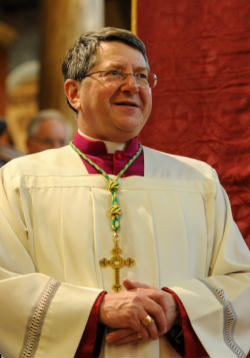
Mgr Keith Newton

Mgr Keith Newton

In his Chrism Mass sermon, Monsignor Keith Newton said that the Ordinariate had not grown in the first years since its establishment as we hoped it would. This statement seemed to me simple, honest, and the springboard for renewed discussion and planning for the next stage of this project in the life of the Church. What surprised me was the reaction of some parts of the Catholic press who seemed to be delighted at Monsignor Newton’s ‘admission’. Two things occur to me. The first is to ask what, then, is the practical future plan for the reuniting of Christians in one Church? And the second is to remind people, again and again, that the appeal of Pope Benedict XVI was not to a group of ‘anti-women dissidents’, nor simply to ‘Anglo-Catholics’ but to all Anglicans. The Ordinariate is a way of unity, so that the Anglican Communion may enter into Communion with the holder and guardian of Communion, that is the Bishop of Rome.

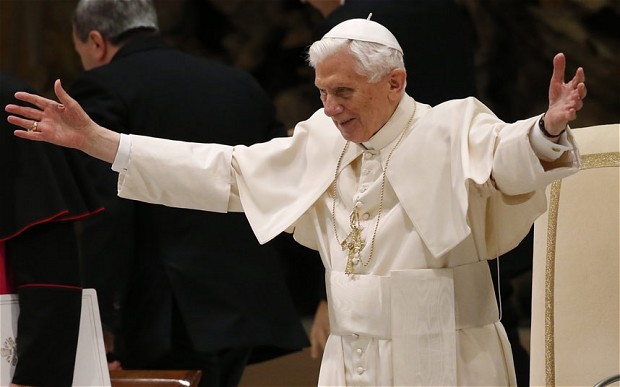
Pope Emeritus Benedict XVI

Pope Emeritus Benedict XVI

The initial response to Pope Benedict’s appeal was small: that is sad both for the Catholic Church and for the Anglican Communion. If the headlines had appeared in the British newspapers, ‘Church of England to unite with Catholics’ more would have been achieved for the Gospel in our land than half a century of ‘unity committees’ and ‘United Services’ in freezing January! But it hasn’t happened like that and, as well as asking why not, we must discern God’s purpose for those small groups of clergy and lay people who have pioneered the way of reunion.

I have argued for the use of a ‘church-planting model’, by which and Ordinariate group with its priest is placed in a failing Diocesan parish in order to help the parish to renew and rebuild. We are able to point to significant achievements in the small number of cases where that has happened. It should be happening more often. But the intention is that the Ordinariate should have its own identity, that the groups should be established as congregations with their own life, liturgy and buildings, so that …

So that what? The title of my post sums up two possible responses: the first leads to growth and life, it involves everyone in the group sharing a vision and working for it; the second is comfortable and easy, but it is a way of decline and death. The model for the Ordinariate Group which is serious about its future is that of the Mission Station. Once again, I maintain that this is within the understanding of ‘Church Planting’, but now involves the Ordinariate Group leaving behind its ‘12.30-Sunday-Mass-slot-with-hymns-and-incense-at-Holy-Rosary-Catholic-Church’ and moving perhaps to a School Hall, to a closed Mass centre, or to a building once used by another Christian denomination, which it is able to rent or lease. No doubt there will be lengthy meetings to discuss finances, a stewardship campaign maybe, accommodation for the priest or his travelling time. Now important though financial viability is, and the importance of auditing the resources of the group, of far greater importance is the missionary viability of the group and the need to audit these resources for mission. ‘Evangelii Gaudium’ is the 2013 Apostolic Exhortation of Pope Francis, and it is a peerless guide to Mission and Evangelism. It, or a summary and quotes, is required reading for every Ordinariate Group.

Pope Francis

Pope Francis

‘The Church which “goes forth” is a community of missionary disciples… An evangelizing community knows that the Lord has taken the initiative, he has loved us first (1 John 4:19) and therefore we can move forward, boldly take the initiative, go out to others, seek those who have fallen away, stand at the crossroads and welcome the outcast.’ (Ev.Gaud. 24) Pope Francis speaks of the New Evangelisation in what we might picture as a series of rings around a centre. At its heart the life of the group is “animated by the fire of the Spirit, so as to inflame the hearts of the faithful who regularly take part in community worship and gather on the Lord’s day to be nourished by his word and by the bread of eternal life.” Around this core of missionary disciples are to be gathered “the baptized … who lack a meaningful relationship to the Church.” These may be men and women, taken to a Christian church as babies whose faith has never grown and matured, or Catholics who have not completed their sacramental initiation beyond baptism and first communion. And in the next circle “those who do not know Jesus Christ or who have always rejected him … all of them have a right to receive the Gospel.” Finally the Pope reminds us just how evangelism works. ‘Instead of seeming to impose new obligations, (Catholic Christians) should appear as people who wish to share their joy, who point to a horizon of beauty and who invite others to a delicious banquet. It is not by proselytizing that the Church grows but “by attraction” .'(Ev.Gaud. 14) Here is the blue print for the Ordinariate Group.

We learn from our past, and it is not always encouraging. For the Anglo-Catholic experience of the past fifty years has often been one of decline. The “religious rupture” of the 1960’s brought an end in Britain to centuries of growth through the culture, by which at least a basic knowledge of Christian stories and customs was passed on. The Anglo-Catholics had built some of the loveliest churches in the country but the preservation of these now became a burden – and even an obsession. The cry for “young people” was often “to take over the jobs from us” – but when anyone new arrived they were seen as a threat to the established order. Of course, it was not like this everywhere, and many Anglo-Catholics genuinely believed that they were remaining firm in the face of destructive change, and attempting to preserve the genuine heritage and tradition of a great Movement. Inspired by the renewal in the Holy Spirit which flowed from the Second Vatican Council there were model parishes, in which Sunday worship was done with beauty and flare, true to the tradition and yet refreshed and attractive. Catechesis, work with young people, pastoral care, outreach in the community, pilgrimages, made these parishes a joy to belong to, and an inspiration to visit. They exhibited what the Holy Father calls “missionary joy”. (Evan.Gaud. 21)

Mgr Newton in his homily was surely calling us to live in the present: there is an Anglo-Catholic fantasy world, in which the thuribles are stoked, the doors firmly bolted, and backs turned on the uncomfortable reality of the 21st century. Such a fantasy world is as thin and fragile as the stage-set reredoses of the “Congress Baroque”. Pope Francis speaks to us when he says:  ‘I prefer a Church which is bruised, hurting and dirty because it has been out on the streets, rather than a Church which is unhealthy from being confined and from clinging to its own security.’ (Evan.Gaud. 49)

A warning to us all

A warning to us all

Posted in Uncategorized | Tagged , , , , , , , | 4 Comments

You shall love your neighbour as yourself

Father Basil Jellicoe and his celebrity helpers

Father Basil Jellicoe and his celebrity helpers

My father grew up in a middle-class family in Plymouth in the 1930’s. One experience of this era as a child clearly remained with him all his life. His nurse, taking him for his afternoon walk, had asked my grandmother if she could call on her family. My father recalls stopping at the house, but instead of going to the front door, as he expected, they went down the steps to the basement: in fact it was little more than a cellar. In these two semi-underground rooms lived a large family, and their conditions were typical of hundreds of thousands of families at this time.

Roy Hatterley’s immensely readable book ‘Borrowed Time – the Story of Britain between the Wars’ contains a sympathetic picture of one Anglo-Catholic priest who tackled the housing problem in his own parish: his name was Basil Jellicoe.

In 1921 Basil Jellicoe was sent to Somers Town, a parish close to Euston Station in London. He quickly found the slums. They had, he believed, been ‘produced by selfishness, stupidity and sin and only Love Incarnate can put it right. The slums produce something much more terrible than mere discomfiture and discontent. They produce a kind of horrible excommunication, a fiendish plan by the Powers of Evil to keep people from the happiness for which God made them.’

Jellicoe founded the St Pancras Housing Improvement Society, and used his society connections to raise the money to buy eight properties which were then renovated and rented to families. In 1926 more houses were bought up for improvement and fifty-two new flats were built. Jellicoe was something of a showman, and knew how to use the press and media for publicity for his work. There is fascinating newsreel footage of the ‘Solemn Dynamiting of Sydney Street’, complete with immense papier-mache models of cockroaches and bedbugs. Another shows the blessing of the new flats with Bishop Winnington-Ingram liberally splashing everything in sight with holy water! The Society rarely had enough money, and borrowed and built in faith again and again.

private_flats

It is true that the work received considerable approval, and gave practical expression to Lloyd George’s promise of ‘homes for heroes’ made in the aftermath of the First World War. But the promise was only partially fulfilled, the house-building boom benefited the middle classes disproportionately, and the slums remained largely untouched. In any case, by the 1930’s austerity as the answer to the worldwide slump in trade had become the government’s first priority. Jellicoe was faced with a deeper challenge for many still believed that the poor were “feckless” and that the answer to their condition was to be found in hard work and a more entrepreneurial spirit! Better housing was one of those “benefits” which other people had to pay for: surely better to let the market create wealth which would then trickle down and be of benefit to the lower levels of society.

Nearly a hundred years later there are many echoes of the problems faced by Fr Jellicoe, although outwardly much has changed. The government took over, as it did in many areas of social welfare, after the Second World War, and there was massive re-planning of the housing stock. But the wholesale removal of people to new estates, and especially into the tower blocks of high-rise flats, was a mixed blessing. There was an arrogance on the part of the planners, but there was also a determination by local councils to meet the desperate need for homes in the post-war period. But no-one doubted that the Government was the biggest player in the provision of housing, and that this would be (and should be) rented housing.

Both of these principles were challenged by the Conservative government of the 1980’s under Margaret Thatcher. The ‘property owning democracy’ linked two concepts in people’s minds (thought it is difficult now to see why renting property cannot also be part of democracy) and then added a third factor: which was to have dire effects thirty years later. For this third factor was the notion that property is an ‘investment’ rather than a ‘commodity’. In other words when you buy a house you ‘invest’ your money, and expect, when you sell your house that you will sell it for more than you paid. This is not the case when you buy a car, for example, for it ‘depreciates’ as you use it. For a couple of decades a generation of home-owners were able to buy and sell, making money as they did so, and thus ‘improving’ their lives. Those with some money were now able to buy their council houses, as local councils lost control over the homes which had themselves been built with tax-payers money a generation before! But the net effect was to decrease dramatically the number of homes available to the poorer (and therefore renting) sector of society, as well as concentrating those homes which were still available in the more run-down estates. Thus the downward spiral of these areas became ever more rapid. Unemployment, the break up of the family, the loss of the common currency of ‘respectability’ among the working class, and the problems which became associated with immigration, all added to this toxic mix.

With the recent recession and yet another house-price crisis it might have been expected that the UK would have learnt its lesson. Not a bit of it! House-price inflation is now up to 30% in London, Vince Cable expresses concern, and Lloyds Bank is restricting mortgages in the capital. Underneath all this is a crisis of principle. It is this which the Church must ‘speak out’ on. The Catholic Church has said much on the Common Good, and it is able to speak without the pressure of the middle-class establishment which has too often in recent years set the agenda for our National Church. Here too is something for the Ordinariate in the UK to get its teeth into. It is beginning to find its feet, its liturgy is pretty well settled and can be left to bed in. It has priests and people ‘on the ground’ so to speak, as well as people with good brains and analytical minds. In uniting over social policy, and especially housing, it will ‘punch above its weight’ and be a true challenge to the Church and to society – true to the legacy of a great Anglo-Catholic priest, Fr Basil Jellicoe.

Posted in Uncategorized | 3 Comments

That they may be one

In the parish lounge at Most Precious Blood, the Ordinariate church in South London, we are building a collection of photographs. They are images of Popes and Archbishops of Canterbury, meeting each other: they are a constant reminders of the vocation of the Ordinariate to pioneer the reunion of the Church of England (and the whole Anglican Communion) with the Catholic Church. This is to happen, not by absorption, but by the re-making of the Communion of the Church. For this unity and communion, the Bishop of Rome, the Successor of Peter, has a special care and concern.

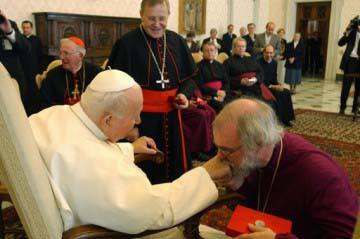
Pope John Paul II & Rowan Williams, Archbishop of Canterbury

Pope John Paul II & Rowan Williams, Archbishop of Canterbury

The picture above shows one such meeting. Pope John Paul II, is clearly weakened by advancing Parkinsons. The Archbishop, younger and stronger, kneels to kiss his ring. (And immediately afterwards the Pope kisses the ring on the hand of the Archbishop, given to Archbishop Michael Ramsey by Pope Paul VI) What is so moving about this image is how it reverses the power structures of the world. The Pope is weak, bowed over in his chair – yet he is a living witness to St Paul’s cry, “For when I am weak then I am strong”. The Archbishop is not there to “submit” to a worldly image of Papal power, but he acknowledges by his gesture the moral authority of one who is now sharing the weakness and humiliation of Christ. “I when I am lifted up will draw all men to myself.”

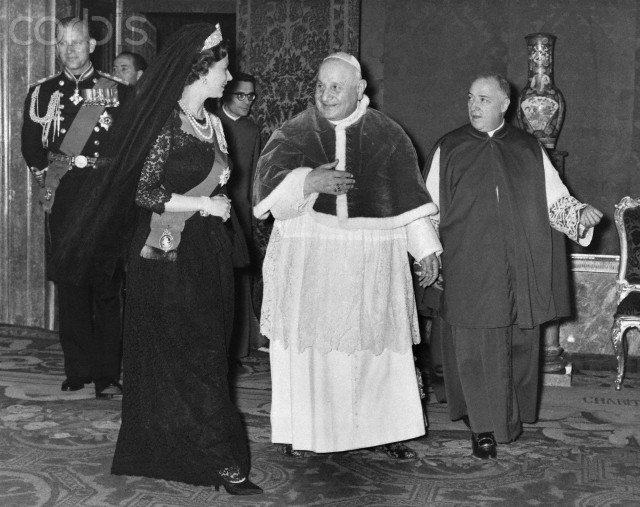
Queen Elizabeth II and Pope John XXIII

In this photo Pope John XXIII meets the Supreme Governor of the Church of England, Queen Elizabeth II. The photographer has caught the animation and the smiles as they walk together, in spite of the (to our eyes) splendour and formality of their dress. Many Anglicans – and Anglicans-who-are-now-Catholics – revere John XXIII for his vision and courage in calling the Second Vatican Council. The renewal of the life of the Catholic Church, brought about by the Council, was a godsend on the path to unity. Undoubtedly Vatican 2 opened the doors to the reconciliation of many Christians, and to their embrace within the communion of the Church.

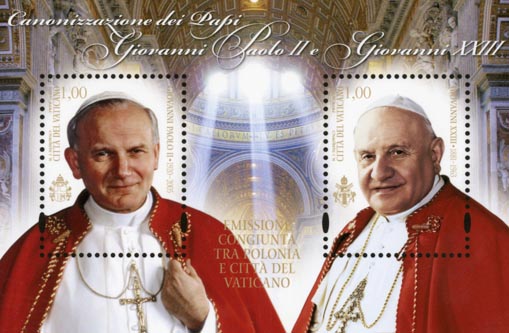
One-euro sheet features two popes to be canonized

Thank God for Saint John XXIII and Saint John Paul II.

Posted in Uncategorized | Tagged , , , , , , | 2 Comments

Good Friday

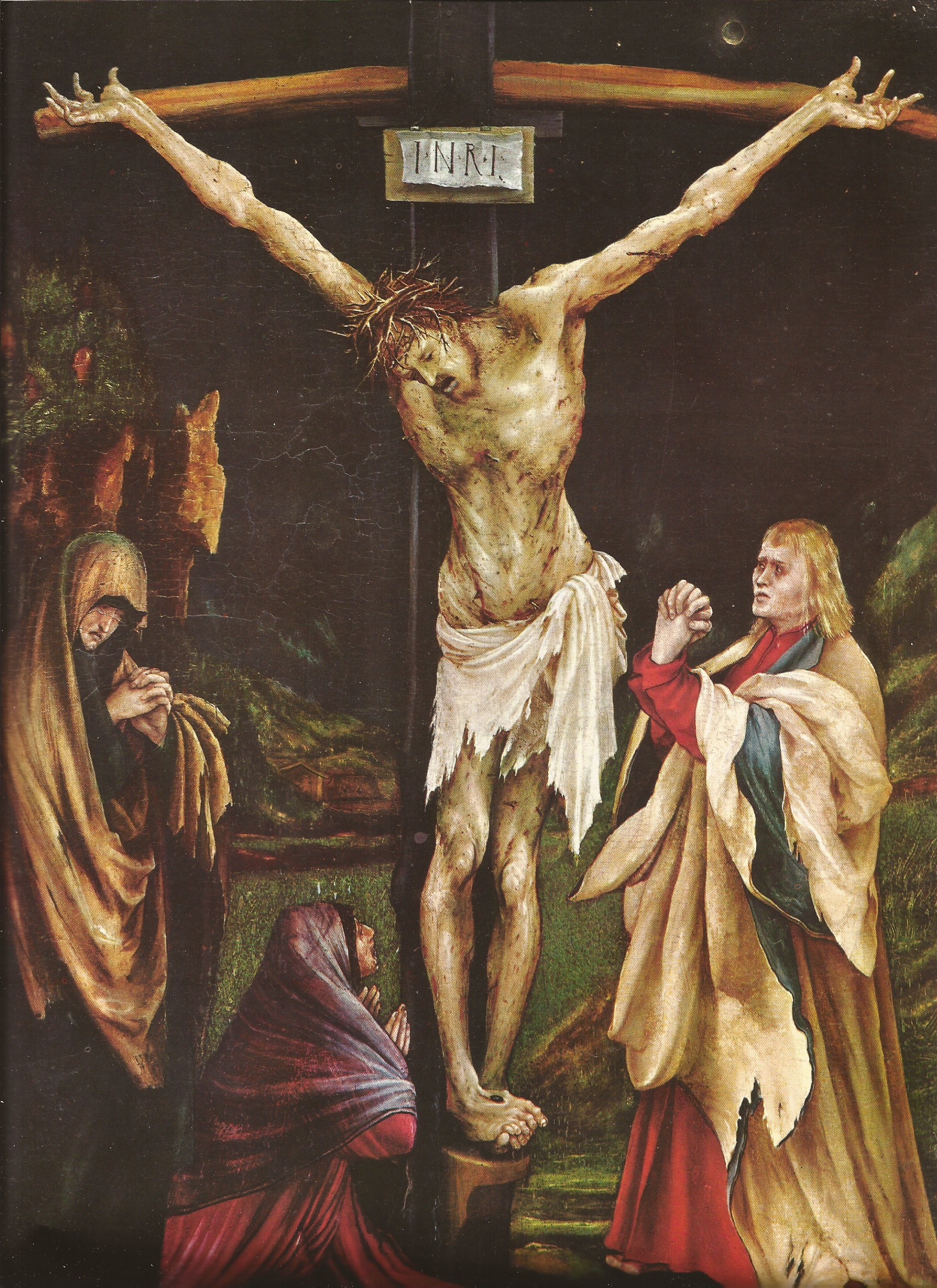
Crucifixion: Albrecht Durer

Crucifixion: Albrecht Durer

A homily

Crucifixion is probably the most barbarous death ever devised. It was used by the Romans, not only as a punishment, but as a deterrent: anyone tempted to rebellion would think long and hard if once they had seen someone crucified. It is the death to which the Lord Jesus Christ went, freely and of his own will, for the salvation of the whole creation, throughout all time. Totally innocent of all sin, he took the sin of the whole human race upon himself. Offering his perfect life to the Father, he won our forgiveness, and brought us back to God.

Forgiveness lies at the very heart of the love of God which we see in Jesus. This Good Friday I want to put before you those words of Jesus, as he first experienced those great iron spikes being driven into his hands and feet. And he prays: ‘Father, forgive them, they know not what they do’. There are two inspired lines in the hymn by Graham Kendrick we call, ‘The Servant King’. The writer says of the Lord Jesus,

‘hands that flung stars into space
to cruel nails surrendered.’

In these few words he reminds us just who it is who lies upon the ground being nailed to his cross: it is the eternal Son of God, the Second Person of the Trinity, who emptied himself of glory and took our flesh: not just to live among us, though that would have been wonderful enough, but to die with us and for us, to share our death so that we might share his resurrection. Such love, such forgiveness.

You may know the words of this prayer, found in one of the concentration camps of the Second World War: places which mark, as nowhere else, the utter cruelty and depravity of which human beings are capable. This prayer was written by an inmate of the camp, one who had to suffer at the hands of his or her captors. This prisoner prayed:

O Lord, remember not only the men and women of good will, but also those of ill will. But do not only remember the suffering they have inflicted on us, remember the fruits we bought, thanks to this suffering: our comradeship, our loyalty, our humility, the courage, the generosity, the greatness of heart which has grown out of all this. And when they come to judgment, let all the fruits that we have borne be their forgiveness.
(Richard Foster, Prayer: Finding the Heart’s True Home. HarperOne, 1992. page 224)

Such love – such forgiveness

Posted in Uncategorized | 2 Comments

A reminiscence of Margaret Street

There is concern about a school in Birmingham which, it is asserted, is being targeted by Muslim extremists. A teacher was quoted, earlier in the week, saying that “there is some gender segregation in religious assemblies”.

All Saints' Anglican Church, Margaret Street, London W1

All Saints’ Anglican Church, Margaret Street, London W1


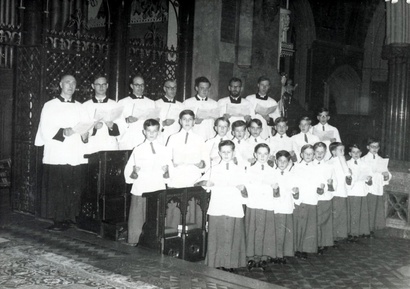
About fifty years ago “gender segregation” came to an end at All Saints’, Margaret Street, in London’s West End. For many years the congregation had divided, male and female, on either side of the nave in the front part of the church. This had been one of those examples of ‘correctness’ which the Catholic revival in the Church of England, the ‘Oxford Movement’, had sought to encourage. In the early 60’s I went with my aunt to the celebration of Candlemas on 2nd February. Although the custom of separation had been given up I seem to remember that she was the only woman sitting on our side of the church. The choir school was still going, and the boys wore very short cottas, eton collars, and purple socks to match their cassocks. Choir schools and daily sung services had also been part of the Revival. And now? Even the English Cathedrals are struggling financially to keep their choirs. In any case fifty years of ‘pop music’ have left the British unable to sing, so even if they can find the money, the Cathedrals can no longer find the boys to fill the choir stalls.

The men and boys choir at Margaret Street

The men and boys choir at Margaret Street

But for a moment, back to that February day at Margaret Street. As we hovered after Mass a tall lady in a long fur coat hurried down the centre aisle saying loudly, ‘Has Mr Gorse gorn?’ (For the younger generation and overseas readers, you should know that in English as spoken by the upper classes at that time, words like ‘lost’ and ‘cross’ and ‘gone’ were pronounced to rhyme with ‘mourn’ or ‘lawn’ – a cross between the two … ) A few years later my aunt sent me the Notice of Death from the Daily Telegraph of the said Mr Gorse, and the date and time for his funeral at All Saints’. But she could not resist writing in the margin, ‘Mr Gorse has finally gorn.’

Posted in Uncategorized | Tagged , , , , , | 2 Comments

Sweet Spirit, comfort me

Jeremy de Satgé   R.I.P

Jeremy de Satgé R.I.P


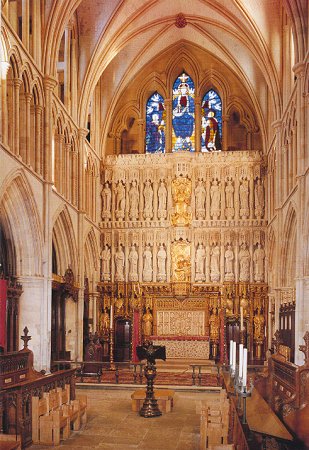
I went recently to Southwark Cathedral for the funeral of the musician Jeremy de Satgé, who had organised the music and singers for my ordination at Most Precious Blood. The boys of Westminster Cathedral choir sang at the funeral, and the music included a setting by Peter Hurford of part of this poem by Robert Herrick. If you want to hear the musical setting go to You-tube; it’s sung by the boys of Southwark Anglican Cathedral, with accompaniment on the Lewis organ – also the chance to see an English altar combined with a towering reredos. The management of the scale is interesting (it’s Sir Ninian Comper, I think) and avoids the altar looking like an overwhelmed sideboard as in the later classical/baroque period.

High Altar - Southwark Anglican Cathedral of St Saviour

High Altar – Southwark Anglican Cathedral of St Saviour

HIS LITANY, TO THE HOLY SPIRIT

In the hour of my distress,
When temptations me oppress,
And when I my sins confess,
Sweet Spirit, comfort me!

When I lie within my bed,
Sick in heart, and sick in head,
And with doubts discomforted,
Sweet Spirit, comfort me!

When the house doth sigh and weep,
And the world is drown’d in sleep,
Yet mine eyes the watch do keep,
Sweet Spirit, comfort me!

When the artless doctor sees
No one hope, but of his fees,
And his skill runs on the lees,
Sweet Spirit, comfort me!

When his potion and his pill,
Has, or none, or little skill,
Meet for nothing but to kill,
Sweet Spirit, comfort me!

When the passing-bell doth toll,
And the furies in a shoal
Come to fright a parting soul,
Sweet Spirit, comfort me!

When the tapers now burn blue,
And the comforters are few,
And that number more than true,
Sweet Spirit, comfort me!

When the priest his last hath pray’d,
And I nod to what is said,
‘Cause my speech is now decay’d,
Sweet Spirit, comfort me!

When, God knows, I’m tost about
Either with despair, or doubt;
Yet, before the glass be out,
Sweet Spirit, comfort me!

When the tempter me pursu’th
With the sins of all my youth,
And half damns me with untruth,
Sweet Spirit, comfort me!

When the flames and hellish cries
Fright mine ears, and fright mine eyes,
And all terrors me surprise,
Sweet Spirit, comfort me!

When the Judgment is reveal’d,
And that open’d which was seal’d;
When to Thee I have appeal’d,
Sweet Spirit, comfort me!

Robert Herrick

Southwark Anglican Cathedral - the reredos

Posted in Uncategorized | 1 Comment

Let us now praise famous women …

St Edmund, King & Martyr, Forest Gate in East London: the old church

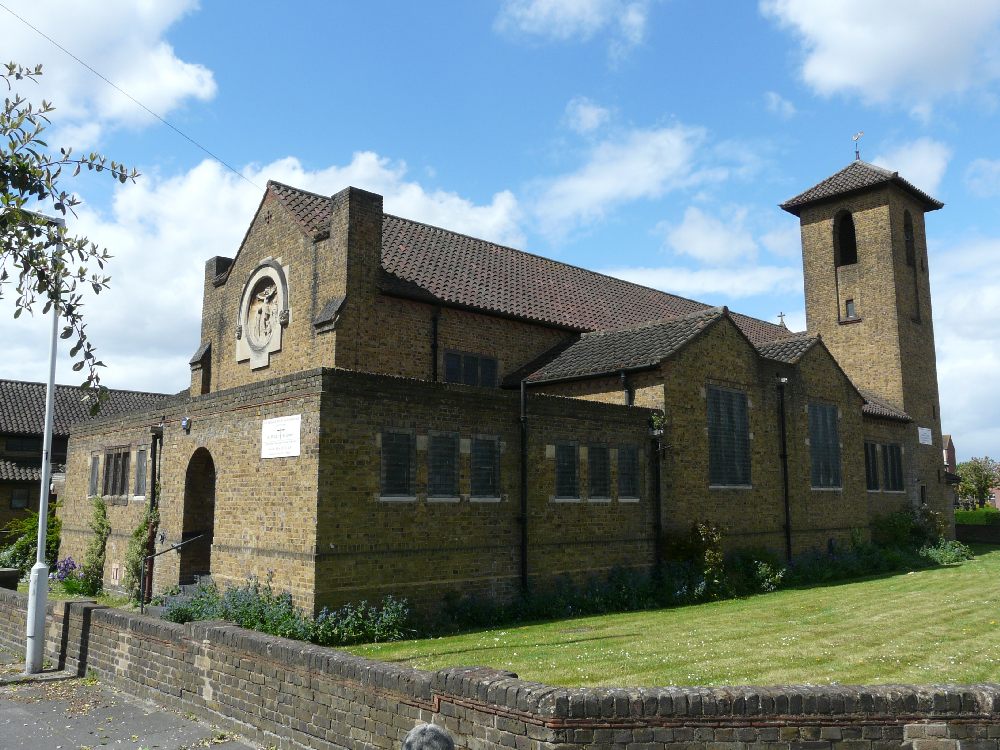
St Edmund, King & Martyr, Forest Gate in East London: the old church


… at least, famous in the C S Lewis sense. If I remember rightly, for I have not got my copy of ‘The Great Divorce’ to hand, he heard singing and joyful tumult, and asked his guide who was coming. The reply came that it was one of the Great Ones, who on earth had been Sarah Smith of Golders Green. I count myself privileged to be old enough to have known some of the great ones of the Anglo-Catholic Movement – not, of course, Newman and Pusey, nor even Dom Gregory Dix and Dr Mascall – but rather some of those ordinary but wonderful lay women, usually single, devoted to their parishes and to their priests, who were once such stalwarts of the Faith.

Emily Lenderyou, always known as ‘Lindy’ was well into her seventies when I went to be priest-in-charge of St Edmund, Forest Gate. She had moved as a child into a house in the parish which her parents had bought before the First World War. She had cared for both of them until they died, and had been a civil servant. Taken to St Edmund’s in her teens by a friend, she was a was a loyal and even fierce supporter of its tradition. Mass every Sunday, a regular penitent, her financial giving sacrificial to the point of recklessness, she was a talented seamstress, and made two albs and two cottas which I still wear, decorated with rows of fine drawn thread work. There was nothing of the ‘narrow minded spinster’ about her, and she seemed instinctively to understand many of the pressures which a priest nearly fifty years younger than her was subjected to. She was wise, funny and contented. She saw the church she had worshipped in all her life demolished and redeveloped, and she amazed the Bishop on the day of the consecration of the altar in the new Church Centre by telling him, ‘This is the happiest day of my life.’ Well into her eighties, her wonderful Irish doctor found she had a slow and painless cancer. He got her into St Joseph’s Hospice where she had a marvellous six months, made all the net curtains for my new Vicarage, and travelled by builders’ van (more kind friends) to see my new church. She asked me to leave her for a time in front of the Blessed Sacrament altar. When she died I grieved for my loss and rejoiced for her gain. I still do.

St Philip, Plaistow - former conventual church of the Anglican Franciscans, now the parish church

St Philip, Plaistow – former conventual church of the Anglican Franciscans, now the parish church


Eileen King had been a missionary teacher in Papua New Guinea returning to retire to Plaistow in East London. She had worked with them overseas, and in retirement was close to their house at Balaam Street. She joined the congregation at St Philip’s Plaistow where I was Rector. She was tall and angular, strode round the parish collecting children (she revived the youth work in the parish) and would hoot with laughter. She looked after the altar linen and one Holy Saturday fell down the steps behind the Blessed Sacrament Altar. Although badly shaken and bruised she refused to go to hospital. ‘They might keep me in and I’d miss the Easter Vigil’ she said – and she got her way. During this time her block of flats was being upgraded, to turn the bed-sits with shared bathrooms into self-contained one bedroom flats. Eileen was appalled at such extravagance, and threatened to sub-let her bedroom if she was not given one of the two ‘bed-sitters’ which were left. She got her way! By this time the controversy over the ordination of women was under way and dividing our parish. She told me that she had always wanted to see women ordained. But she did not believe that I and others were misogynists and that we had done more to enable the ministry of women in our parish than anywhere she had known. I treasure that: it gave me great comfort at a very difficult time in my life. Eileen was taken ill while with friends in Yorkshire. She stayed in hospital in the north because she thought that people might “fuss” if she came back to London. She badgered the Lord to take her home, and he did two weeks before I left the parish. I celebrated her funeral Mass on the day before I moved.

Thanks be to God for the service that these women gave to his Church and to us, his priests. May they receive the reward of their labours.

Posted in Uncategorized | 2 Comments