New Christians: the heart of the Ordinariate venture

Pope Francis

Pope Francis

Part of the Anglican Patrimony at Most Precious Blood, Borough, seems to be coffee after the Sung Mass on Sunday: and quite a lot of people stay to it. It’s a great opportunity to get to know people. I was talking to a lady who has been at MPB for quite a few years, and she was reminiscing about her Catholic upbringing in Scotland. I found it fascinating: it was her father who took the lead in in overseeing the religious life of the household, and it involved things like blessing yourself at the holy water stoup before going to bed and family recitation of the rosary in the evening.I guess the nearest I ever came to that in the C of E was at Parson Cross, Sheffield, where I served by first curacy. My colleague who ran the Repository had as his motto, “A Sacred Heart in every home”, and true enough, the image of the Sacred Heart or a Crucifix was to be found in nearly all the homes of the congregation. The practices of the Catholic religion were taught simply and insistently: we used all sorts of ways of doing it. I remember teaching the children a song to the tune of “Puff the Magic Dragon” which went:

Where the white light burns I humbly bow the knee,                                                                 for there the Blessed Sacrament of Jesus waits for me                                                            This is where we greet him, this where we say,                                                                     “Jesus you are Lord and God, present night and day.” 

It would be very easy to knock this sort of thing, and the surrounding parishes were often pretty snooty about our ‘popular’ Christianity, though they never could quite explain why their intellectual liberalism never seemed to be very good at filling churches, but that’s another argument. In fact, there was a biblical/evangelical strand to the life of that Sheffield Anglo-Catholic parish which rooted it in the 19th century revival, and which might very well provide us with a model for the New Evangelisation.
 

The Lord added to their number

The Lord added to their number

On 31st May 2013, on the authority of Pope Francis himself, a significant change was made to the rules by which the Ordinariate works. (These are called the ‘Complementary Norms’ which flesh out in practical terms the Apostolic Constitution, Anglicanorum Coetibus, which set up the Ordinariates.)

The modification addresses a particular question of who is eligible for membership in the Ordinariate.  Here is the modification in the Complementary Norms:

Article 5 §2:  A person who has been baptized in the Catholic Church but who has not completed the Sacraments of Initiation, and subsequently returns to the faith and practice of the Church as a result of the evangelizing mission of the Ordinariate, may be admitted to membership in the Ordinariate and receive the Sacrament of Confirmation or the Sacrament of the Eucharist or both.

Quite simply this broadens greatly the groups among whom the Ordinariate may evangelise. Previously, only those who had been Anglicans might become Catholics within the Ordinariate. Now, those who have been baptized in the Catholic Church – but did not them proceed to Confirmation and reception of the Eucharist, may also join us.

We can see immediately how this might work in practise. A member of an Ordinariate group gets into conversation with a colleague at work. The colleague tells him that his parents were lapsed Catholics, and he was baptized, but never went any further. He is fascinated by his friend’s enthusiasm for his new Catholic faith (which he contrasts with his own vague, tribal sense of being a ‘Catholic’) and agrees to come to a Sunday Mass with him. The vibrancy of the worship and the strong sense of belonging which he experiences there leads him to re-examine what is important to him in life, and he senses the presence of God at work.  He approaches the Ordinariate priest, and is prepared for Confirmation and Holy Comunion.

But this change in the Complementary Norms is not, first and foremost, about increasing the numbers in the Ordinariate: it is about making new Christians through the work of evangelisation. Now, of course, those who have been baptized already stand in a different relationship with the Lord: they are not ‘pagans’. A seed has been planted in their lives by the faith of parents or grandparents. But that seed has remained dormant, and  those people have not continued on their sacramental journey to Confirmation and the Eucharist. They are not living within the family of faith according to its pattern of prayer and behaviour.

Let’s be honest, there are millions of Christians, yes, millions of Catholic Christians, in this very situation. It is the the state of Christianity in post-Christian Europe: many people who could hardly even be described as ‘lapsed Catholics’ for they have not practised the faith beyond their baptism.

Those of us who have lived and worked as Anglicans will be very familiar with this situation, for in the 1950’s and ’60’s the majority of parents in the UK were still bringing their children for baptism, or ‘christening’ as it was usually known. It was a ceremony in itself, and was not intended to lead to anything else. Much smaller numbers then went on to Confirmation (which for Anglicans always preceeded the receiving of Holy Communion). In the 60’s and 70’s attempts were made to tighten up this ‘rite of passage’, usually by introducing some sort of preparation and by moving the baptism ceremony from Sunday afternoon to its celebration during the main Sunday Eucharist. There was often considerable resistance to this, and indeed it was acted out on Coronation Street with Deirdre Barlow complaining that the vicar had asked her to attend church before Tracey was baptized!

There are, I think, signs that a similar situation has grown up in the Catholic Church, but rather more recently. The Catholic Church has always been much clearer about the responsibilities of parents and godparents – and clearer too about what is expected of a Catholic. ‘You don’t have to go to church to be a Christian’ was something we often heard among the older generation in the C of E. A Catholic could hardly have said this: we all knew that Catholics had an ‘obligation’ to go to Mass on Sunday! But the sense of obligation has grown thin and the promises made by parents who have brought their children for First Communion may well not be fulfilled beyond the day itself. Perhaps we shake our heads and ask how they can in conscience make promises knowing that they won’t keep them. But we live in an age when people are used to getting what they want, when and how they want it. It is not for the priest (or anyone else) to make conditions.


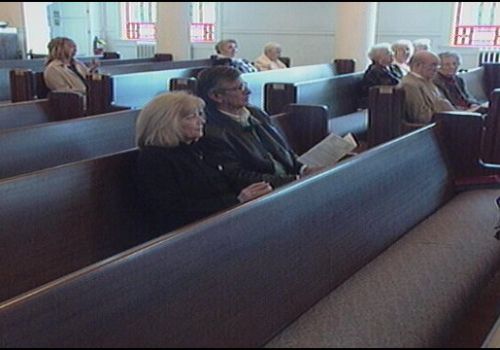
Baptism and the First Communion need to become real opportunities for evangelisation and the recovery of the lapsed – or those who never made it beyond their own baptism! But however warm the welcome of the priest, however good and thoughtful the teaching of the Catechist, it may well be what the family ‘catch’ from the people they sit next to at Mass. Do they get anymore than a limp handshake at the peace? Do they see their neighbour in quiet prayer, in enthusiastic singing, in devout participation in the liturgy? Or is the person next to them late at the beginning, obviously bored out of their mind during the Mass, and gone as soon as the blessing has been given? Just being at Mass because you feel guilty otherwise, is no good for you – and may well put off the person next to you. It is the attitude, the behaviour, the commitment of each person at Sunday Mass which – in itself, evangelises. This is why, above everything else, the New Evangelisation needs a faithful, Spirit-filled laity, able to talk about their faith – but above all daily living the love of God,  and showing his love by their behaviour to the people all around them.

I began with reminisences about Catholic families fifty years ago. Once dismissed as ‘folk religion’ we desperately need to recover the rich spirit and practice which joined Catholic homes to the Sunday Mass and to the liturgical year. It needs refreshing and reinvigorating in the spirit of the Second Vatican Council: a revival of mindless antiquarianism will convert nobody!

We also know that the laity before the Council were weak in their understanding of, and love for, the Scriptures, the written word of God. I was told recently that many African Catholics are envious of their Pentecostal friends for their Bible knowledge.

Many of us in the Ordinariate are discovering the Cathechism of the Catholic Church as an authoritative resource for building up  intelligent and thoughtful Catholic faith among the People of God. For we live in an age when, like it or not, “The Church teaches…” cuts little ice. We need to know – and to be able to explain WHY the Church teaches – and WHY we believe it.

Blessed and praise be Jesus Christ

Blessed and praise be Jesus Christ

Posted in Uncategorized | Leave a comment

Wrestling Jacob


wrestling jacobI have only sung this hymn of Charles Wesley’s once, to a lovely 18th century tune called ‘David’s Harp’. You will find both words and tune in the old English Hymnal at number 378. It is a fine and moving meditation on Genesis 32:22-32.


Come, O thou Traveller unknown, Whom still I hold, but cannot see!                                     My company before is gone, And I am left alone with Thee;                                                   With Thee all night I mean to stay, And wrestle till the break of day.

I need not tell Thee who I am, My misery and sin declare;                                                          Thyself hast called me by my name, Look on Thy hands, and read it there;                         But who, I ask Thee, who art Thou? Tell me Thy name, and tell me now.

Yield to me now, for I am weak, But confident in self-despair;                                            Speak to my heart, in blessings speak, Be conquered by my instant prayer;                          Speak, or Thou never hence shalt move, And tell me if Thy Name is Love.

’Tis Love! ’tis Love! Thou diedst for me! I hear Thy whisper in my heart;                             The morning breaks, the shadows flee, Pure,  universal love Thou art                                    To me, to all, Thy mercies move; Thy nature and Thy Name is Love.

I have taken the selection of these four verses as in the English Hymnal, and also used their change in the last line. If you are interested you can easily find the whole poem (including the last line!) on the internet.


Posted in Uncategorized | Leave a comment

Catholic Renewal


Pentecost 1


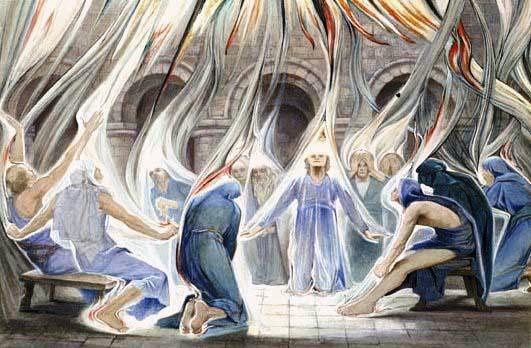
Where are the tongues of fire talking of God and his love? When do men speak of the “commandments” of God, not as a duty to be painfully observed, but as the glorious liberation of man from the enslavement of mortal fear and frustrating egoism? Where in the Church do men not only pray but experience prayer as the Pentecostal gift of the Spirit, as glorious grace? … We talk too little about God in the Church or we talk about him in a dry, pedantic fashion, without any real vitality … Only when the message of the living God is preached in the churches with all the power of the Spirit, will the impression disappear that the Church is merely an odd relic from the age of a society doomed to die … And in turn profession of faith in Jesus as Christ and Lord, the decisive and final word of God in history, might become more alive, more joyous and spontaneous.

Karl Rahner  SJ     1974


Posted in Uncategorized | Leave a comment

Pope Francis on the Ordinariates

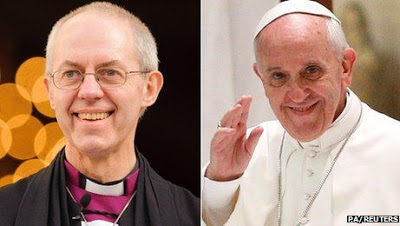
Pope Francis & Archbishop Justin Welby

Pope Francis & Archbishop Justin Welby


“I am grateful, too, for the sincere efforts the Church of England has made to understand the reasons that led my Predecessor, Pope Benedict XVI, to provide a canonical structure able to respond to the wishes of those groups of Anglicans who have asked to be received collectively into the Catholic Church: I am sure this will enable the spiritual, liturgical and pastoral traditions that form the Anglican patrimony to be better known and appreciated in the Catholic world.”

From the moment of the announcement of the Ordinariate by Pope Benedict XVI  I  believed that it was an appeal for unity: an appeal from the Bishop of Rome, who has a particular responsibility for the charism of unity, to the Anglican Communion which his Predecessor, Pope Paul VI, once called the beloved sister of the Catholic Church. “There will,”  Pope Paul VI said , “be no seeking to lessen the legitimate prestige and usage due to the Anglican Church when the Roman Catholic Church … is able to embrace firmly her ever-beloved sister in the one authentic communion of the family of Christ…” He made it clear that what he called the “worthy patrimony” of Anglicanism would be preserved in a united Church. A few years later, he said that he believed that “these words of hope ‘The Anglican Church united not absorbed’ are no longer a mere dream”.

The Catholic Church is more cautious about using the term ‘sister Church’ now: the Anglican Communion (or at least parts of it) have embraced such things as the ordination of women and re-definition of marriage, which make re-union more difficult. The excitement about the possibility of Christian re-union has died down. In Britain the annual Unity Week service has become as dreary as the January weather. And there is no doubt that complex forces at work among both liberals and evangelicals have contributed to a strange renewal of ‘anti-Rome’ feeling in this country. The Christian unity scene had become stale, and Pope Benedict sought to break the log jam.

My generation of Anglicans grew up with hope of the re-union of Christians in one Church. I use the word “re-union” deliberately, and not “unity”, which is a looser word which can – and does – have several meanings. My generation hoped for re-union between the  divided groups of Christianity. We could see that the journey was going to be difficult, but we did not believe it to be impossible – because it was clearly the will of God that the Church should be One. The Lord Jesus said so in Scripture and the Creed described the Church as One. Moreover, the Church had been one for a thousand years. It had struggled to maintain a common belief, a common ordained ministry, and shared sacraments  – but for a thousand years, wherever you were in the world, you were one at the altar.

We applauded the work of the Anglican Roman Catholic International Commission, and we were excited at the Agreed Statements on such key issues as the Eucharist and Authority. They were oh-so-carefully- worded, and they seemed to be willing to reach behind the Reformation years when division had been expressed by harsh words and closed ears. Much publicity was given on the Anglican side to the request for clarification on the Catholic side, with the implication that Rome was dragging its feet; Anglicans found it less easy to own up to a growing fearfulness among Anglican liberals about any statement of belief, and among Anglican evangelicals about these statements of belief.

Pope Francis’ statement acknowledges the shock, even dismay and anger among some Anglicans at the announcement of the Ordinariate structures. But he also reminds us of the many examples of understanding and accommodation  as this process began. Many clergy will tell you of heartfelt conversations with their bishop, practical support concerning housing from their Archdeacon, and moving letters from laity on their departure. Of course, there are stories of occasions when this did not happen. The Pope reminds us that the first move was made by Anglicans who appealed to Pope Benedict. I’ve no doubt that there were senior Anglicans (Archbishop Rowan Williams among them) who were worried about the unwillingness of the liberals to reach any sort of accommodation with the Anglo-Catholics. Indeed, it might be said that the Anglo-Catholics found the Pope ready to listen and understand in a way which their own Church did not.

Lastly, Pope Francis looks into the future, and I believe he still has the hope of Pope Paul VI for the restoration of the full communion of all Christians in one Church. He sees the entry of groups of Anglicans bringing their patrimony with them, as a preparation for this restored communion.  The legitimate prestige and usage of the Anglicans will not be lost. If there are some who feared that the Ordinariates might be ‘shut down’ then the Pope’s words will reassure them. For our part we need to do all we can to ensure that the bridge is not closed on the Anglican side. As far as we are able, then, let us keep our contacts and friendships, and let our words be tempered with the spirit of love and the longing for unity.

Posted in Uncategorized | 2 Comments

Corpus Christi

Blessed and praise be Jesus Christ
Blessed and praise be Jesus Christ
 

We said that breaking the bread is an act of communion, an act of uniting through sharing. Thus, in the act itself, the intimate nature  of the Eucharist is already indicated: it is agape, it is love made corporeal. In the word “agape” the meanings of the Eucharist and love intertwine. In Jesus’ act of breaking the bread, the love that is shared has reached its most radical form: Jesus allows himself to be broken as living bread. In the bread that is distributed we recognise the mystery of the grain of wheat that dies, and so bears fruit. We recognise the new multiplication of the loaves, which derives from the dying of the grain of wheat and will continue until the end of the world. At the same time we see that the Eucharist can never be just a liturgical action. It is complete only if the liturgical agape then becomes love in daily life. In Christian worship, the two things become one – experiencing the Lord’s love in the act of worship and fostering love for one’s neighbour. At this hour we ask the Lord for the grace to learn to live the mystery of the Eucharist ever more deeply, in such a way that the transformation of the world can begin to take place.

Pope Emeritus Benedict XVI –  Maundy Thursday 2009

Posted in Uncategorized | 1 Comment

The future of Anglo-Catholicism

A nobleman went into a far country to receive kingly power… but his citizens hated him and sent an embassy after him saying, ‘We do not want this man to reign over us.’    Luke 19:12,14.

Fr Philip North in Synod

Fr Philip North in Synod

Fr Philip North has better reason than most  Anglo-Catholics to feel hurt and angry. The campaign against his appointment as a bishop was only concerned with one issue, that of his belief that women may not be priests.  And unlike Fr Jeffrey John and his foiled appointment, Fr North  is not going to find Parliament and the secular liberals on his side in the support of ‘justice’.

It is perhaps surprising that he advocates in a recent article in New Directions, the magazine of ‘Forward in Faith’, a re-engagement by those Anglo-Catholics who remain in the C of E  ‘to convince the Church of England of its catholic identity.’  I believe Fr North to be mistaken , both in his analysis of what has happened to the C of E over the last forty years, and in what he proposes for his fellow Catholics still in the C of E.

I disagree with his assertion that we (Anglo-Catholics) ‘allowed ourselves to become respectable and establishment’ and at the same time maintained  ‘an ethos of exclusivity, a feeling that (we) alone were in possession of the truth and displayed an archness, even a distance, to those of other persuasions.’  Rather, my memory of the 70’s and 80’s was of a Movement renewing itself and growing in confidence. It had taken on board the spirit and reforms of the Second Vatican Council, and was willing to engage with the rest of the C of E through the parishes and synods. Much of this happened outside (the diocese) of London, and I am afraid that beyond the capital we looked disdainfully at the ‘lace and biretta’ brigade and the ageing laity running the ‘Catholic Societies’. In leaving the ghetto in order to go to Diocesan Synod we believed that we could contribute ‘richly and constructively to the life of the wider church.’ Yes, we believed that we had much to give, and that the C of E had  much it needed to receive!

Were we naïve? I think we were. Most of us were really much more interested in our parishes and their people than in sitting through debates in Synod. But it was there that an agenda was being advanced to change the C of E, and in such a way that it would make it clear for everyone that the C of E was most certainly not what Anglo-Catholics had doggedly maintained i.e. a part of the whole Catholic Church, sharing a fundamental identity with the Roman Catholics and the Orthodox.  Of course, we  had nearly succeeded in doing this: that was what was so worrying. For decades we had produced the theologians, the thinkers, the ordinands, as well as being willing to go to some of the roughest and toughest parishes in the land. So the liberals, although they quite liked us for not being evangelicals, grasped the new doctrine of ‘equality’ which was becoming fashionable in secular society, and applied it to the Church’s ministry. No matter what, women must be priests. Some of them really believed that, once we had them, England would turn back to its National Church. In spite of all the evidence, some still believe it will happen when there are women bishops. The evangelicals came at this from a different angle, and quickly realised that if they voted for women ‘priests’, they could actually rid the C of E of ‘priesthood’, and put a stop for ever to the Anglo-Catholic claim that our priests were the same as the Roman Catholics.  This is the real significance of the 1992 vote, and the following action of bishops in proceeding to ordain women to the priesthood. It was  the most devastating action of the Church of England since the break with Rome in the 16th century. It turned the Church of England irreversibly away from the historic Communions of East and West, and in upon itself. Conformity by the Church with the secular establishment had been asserted. The English Church had submitted, as it did to Henry VIII, to Elizabeth 1, and to Parliament under William and Mary.

A 'bitter half-life?' - surely not!

A ‘bitter half-life?’ – surely not!

I disagree again with Fr North when he describes ‘the bitter half-life we have lived since 1992.’  This was the second half of my ministry as an Anglican priest, and it had many times of sweetness and full-life! We learnt a new relationship with our (flying)  bishops, one based on respect and trust. The fraternity among priests was strong, and we taught with a new urgency and clarity.  Our congregations grew in numbers and faith. But other parts of the C of E were not happy. It was they who had voted in the system which gave us alternative bishops, but as a former Bishop of Southwark remarked to a group of us, ‘If I had realised that I was not going to be able to celebrate the Eucharist in your churches, I would never have voted for it.’  Clearly  he had voted for a gesture, to make the majority look magnanimous, but only to last for a few years while the Anglo-Catholics conformed or left. It was not our refusal to allow him to preside, so much as our renewed strength and growth which horrified him. As Geoffrey Kirk pointed out to me when we were neighbours in Lewisham, our two churches had more people worshipping in them on Sundays than the whole of the rest of the Deanery put together.  In any other field we would have been ‘models of good practise.’  But rather like the railways and the leaves, our two parishes were producing the ‘wrong sort of growth’.   I went to Synod and Chapter, I was courteous to my women colleagues, I wrote and spoke about mission and I called for reform and renewal – but I was constantly faced with the fact that, in order to participate in any way in the life of the diocese, one had to accept the ministry of women priests.  It was deliberate and coercive.

Fr North ends with a stirring cry to Anglo-Catholics to enter the fray again. I responded to such calls as a young priest in the 70’s. I picked myself up again in middle age and entered the struggle (gladly, not bitterly) in the 90’s.  And now I have gone where Anglo-Catholics have always longed to be, which is in restored communion with the worldwide Catholic Church. Pope Benedict held out an invitation, and I have yet to hear a convincing argument against accepting it. Fr North, having said, ‘We have declined it’ gives no reasons.  He is right when he says that in saying ‘no’  ‘we have re-committed ourselves to an Anglican future.’ But that Anglican future is not a Catholic future – and now never can be.  The two opinions are not ‘threatening to leave and then never quite doing so.’ The two opinions are being a member of the Catholic Church, and being a member of the established Church of England. Once I thought I could be both: now I believe you can’t. To re-write Father’s last sentence:  ‘the Church of England changed, the Anglo-Catholics left, and those who stayed are facing death.’

Posted in Uncategorized | 9 Comments

Small groups: a model for growth through the Ordinariate

‘Groups of Anglicans’ – that’s what ‘Anglicanorum Coetibus’ means. So ‘groups’ is an important word for us; it’s part of who we are as Catholics in the Ordinariate. As Anglicans we had lots of groups! Lent groups, home groups, Group Ministries to name but a few. My fellow class members at Kelham (all Catholics now) may even remember our Encounter Groups which had such a devastating effect on the life of both the Community and the College.

I read once in a book about Church Growth theory that all Christians need to belong to three groups. To help us remember these things, they are called the ‘3 C’s’. The groups are Celebration, Congregation, and Cell. We’re most familiar with the middle one, congregation. The theory describes it as the group which one priest or minister can effectively relate to, say 100 – 150 people. Much above that and it becomes difficult for the priest to know everyone. Much below a hundred and financing and resourcing the group becomes difficult, especially funding a priest/pastor and a place where the whole congregation can meet for Sunday worship.

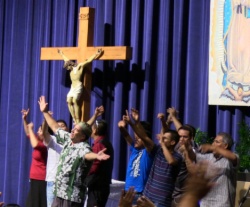
Young people on pilgrimage

Young people on pilgrimage

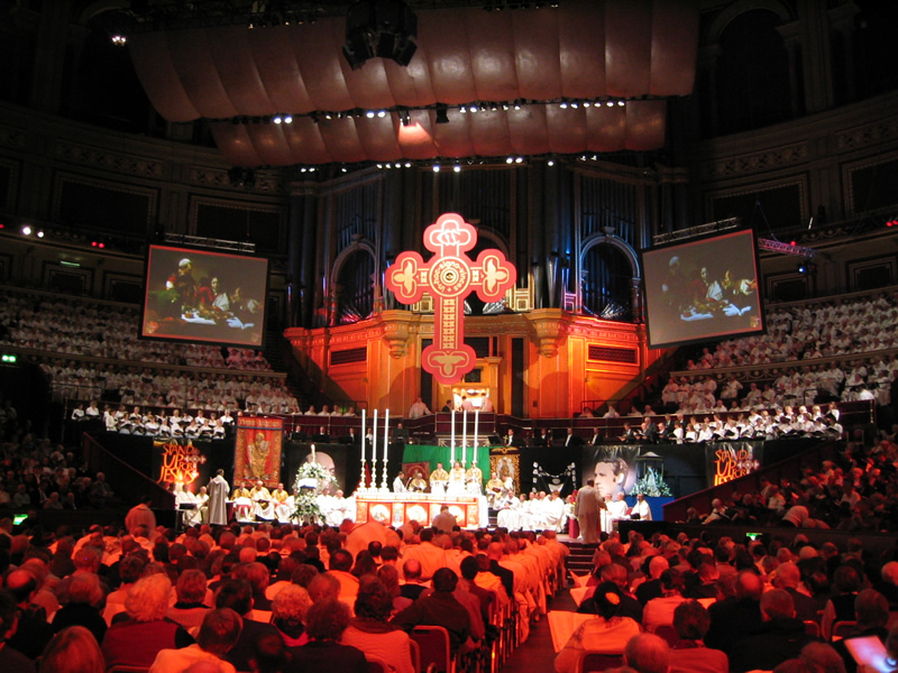
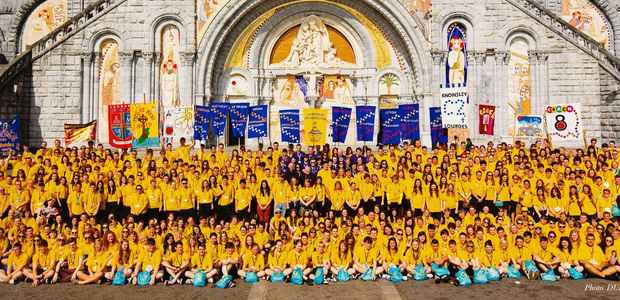
Celebration means 150+ and it can be thousands. For us Anglo-Catholics it was the Millenium Celebration Mass at the London Arena – it’s Lourdes and Walsingham and a Papal Mass in Rome. Now, just as an aside, and because someone is likely to pick me up on this, I recognise that many Catholic parishes in England are Celebration size, and even individual Sunday Masses may have congregations of 300 – 500 which is a lot bigger than the ‘Congregation Size’ that my theory will allow. I think there are special reasons for this, to do with the financial giving of Catholic congregations, and with the number of priests available. That’s another issue, perhaps another post. What I do notice is that a growing number of Catholic congregations are getting to ‘Large Congregation size’ with about 150 – 200 at Sunday Mass. With these numbers the dynamics change, and it is the dynamic – the way that a group functions depending on its size – which is so important.

empty and ageing?

empty and ageing?

If I take you back to our C of E days we remember that many of us belonged to congregations with about 40 – 50 at the Sunday Eucharist. What used to puzzle me was that we often talked about the decline in the C of E compared with the growth of Pentecostal/Evangelical congregations. I took some time comparing numbers and I found that many of the latter were also drawing 40 – 50 to their Sunday worship. Yet they talked enthusiastically about the blessing of growth, and we talked about the burdens of decline. Why?

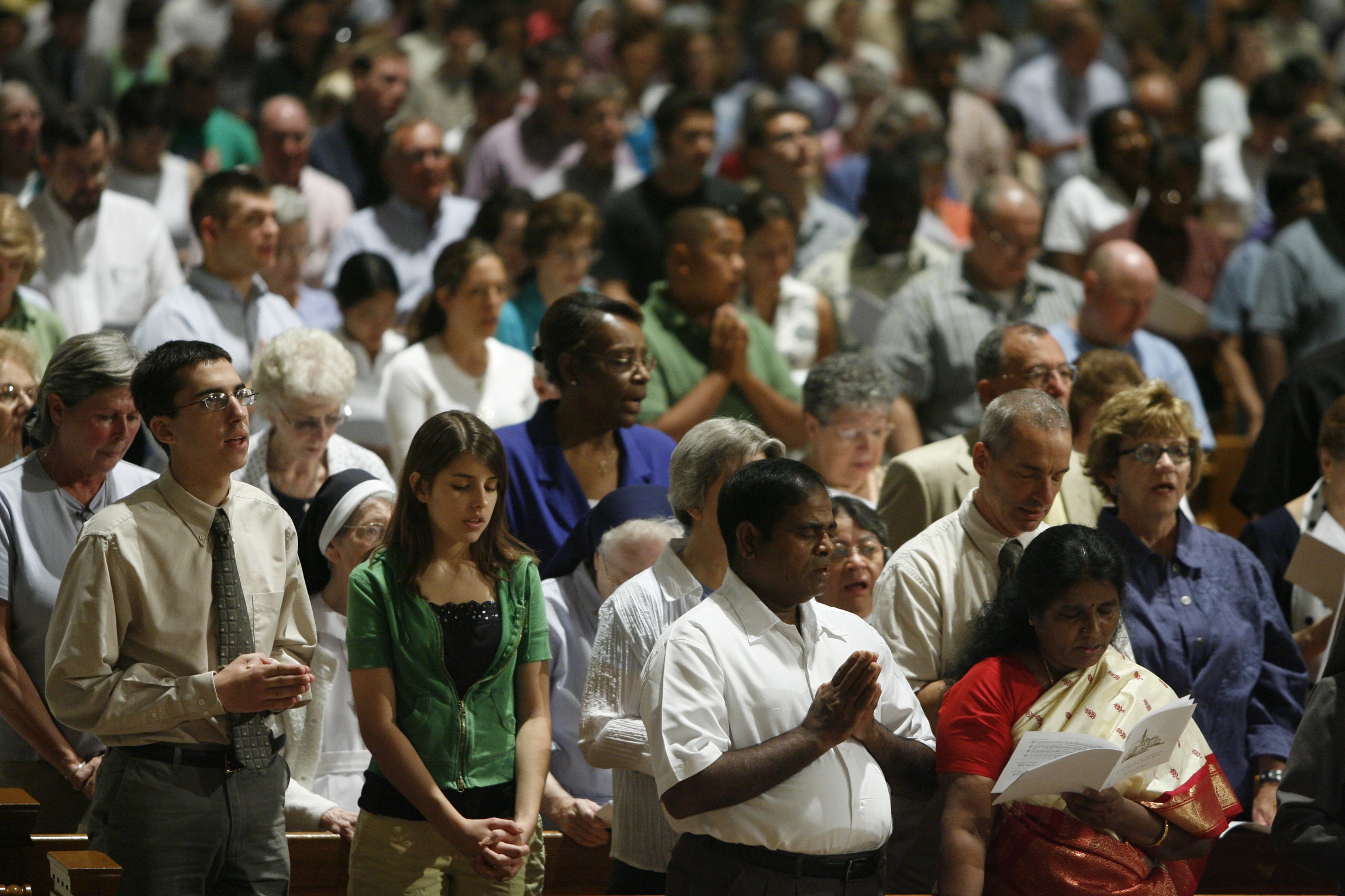
The Lord added to their number

The Lord added to their number

I think the answer is simple. We thought of our group of 30 people as a Congregation, remembering the glory-days when we had been 120, with a choir and Sunday Schools and a Youth Club. Yet with only 30 people we continued to keep open the same building with chairs for 200, and most of us were on the PCC because we still had to keep that going. Now down the road Full Faith Jesus Loves You Community Church Inc. had started with ten of them in someone’s front room. Their mission – to GROW!  As soon as their group reached fifteen they divided and occupied two front rooms. A year later there were three home groups of fifteen – so on Sunday they hired a room (probably in our Church Hall!) and filled that. Now they were a small congregation, sitting on every chair available, but still with minimal organising needs and financial overheads. So the time and the energy went into MISSION and GROWTH.

It’s a tragedy – both for Anglo-Catholicism and for the Church of England – that whole congregations did not respond to Pope Benedict’s call to unity.  Can you imagine what it would have done for the for Christianity in the UK if the C of E had announced the end of the Reformation breach, and the return of Anglicans to the Universal Church?  But it hasn’t happened like that, and we have to accept what the Lord of the Church has given us, as his will for us now, today.

prayer and praise

prayer and praise

But acceptance of that will does not mean staying where we are, failing in hope for the future, and not looking to the great things that the Holy Spirit does to those who trust his power. The small Ordinariate Group looks to grow. It finds its continuing identity perhaps in a weekly meeting as a Home Group. Most of our groups are fortunate in having a priest, so that all the members may continue to be formed in the Scriptures and the Catholic Faith, and in the celebration of the Eucharist. The group prays together, the group socialises, and the group has pastoral care for each other, for families and neighbours.  The group is part of a Catholic Parish and offers itself as a group of committed and dynamic people to the life and service of the Catholic Parish. It evangelises, and has no shame about bringing former Anglican friends, many of whom are grieved at the direction of the C of E in this country, into the group.  The Ordinariate Group outgrows the front room, and divides in two and three and four, but continues to meet each other on Sunday.

And at this point the Ordinariate Priest, with his Catholic Parish Priest, go to the bishop: ‘Here we have a growing group of committed laity, inspired in their Mission to evangelise, to recover the lapsed. Where do you want to plant them, to revive a congregation, to re-open a Mass Centre? ‘  Impossible? Not a bit of it. Just lift up your eyes to see – not what God might have done, and certainly not what you want him to do – what what he will do today and tomorrow with you and me.

Here am I: send me

Here am I: send me

Posted in Uncategorized | 4 Comments

Models for Mission in the Ordinariate

Last year I wrote an article for the ‘Catholic Herald’ in which I suggested that the insights of the Church Planting Movement might be useful for the newly established Ordinariate.  In particular I imagined that an Ordinariate group of lay people with their Pastor might become part of a small Catholic congregation in order to strengthen it, and help to rebuild its life. Some of the reaction to this article included expressions of concern that this might lead to the Ordinariate groups being absorbed into the Diocesan structure in England and Wales while some people claimed that ‘Church Planting’ was unfamiliar  to Catholics.

fresh expressions‘Fresh expressions’ – probably not for Catholics

My intention in this post is to suggest a second model for the presence and mission of the Ordinariate, within the Catholic Church in England and Wales, but first I want to deal with the idea that Church Planting is foreign to Catholics. I believe this to be  based on a misunderstanding. I gather that Church Planting in the C of E and  Methodists has been subsumed under the heading ‘Fresh Expressions of Church’. This new title may well refer to the re-building of  struggling congregations and to the establishment of new ones, but it has drawn the net much wider than this. In fact, for the more liberal minded it is based on a  different ecclesiology, which aims to discover ‘Church’ beyond the boundaries of diocese and parish, sacraments and ordained ministry. Thus ‘Church’ for some people who ‘cannot be at a Sunday service’ may well be the Mother and Toddler Group on Thursday afternoon. So the Minister, coming in to say a little prayer at the end, may well believe that she has identified here in this group of say, ten adults and fifteen children,  a ‘Fresh Expression of Church’: well, OK,  but the temptation is to add twenty five to the weekly return of numbers to the National Church Statistics.

Catholic experience of growing new churches in the past

I am much more comfortable with the older, more robust notion of Church Planting. Its theology is rooted in the teaching of Scriptures and the Church:

God ‘desires all men to be saved and to come to the knowledge of the truth’: that is, of Christ Jesus. Christ must be proclaimed to all nations and individuals so that this revelation may reach the ends of the earth.   CCC 74

It is from God’s love for all men that the Church is every age receives both the obligation and the vigour of her missionary dynamism. .. God wills the salvation of everyone through the knowledge of the truth. Salvation is found in the truth. Those who obey the prompting of the Spirit of truth are already on the way of salvation. But the Church, to whom this truth has been entrusted must go out to meet their desire, so as to bring them the truth. Because she believes in God’s universal salvation, the Church must be missionary.  CCC 851

The expansion of the Catholic Church in England could not have been achieved without Church Planting.  ‘In 1935 the Catholic population (of England and Wales) was estimated at a total of 2.5 million out of a total population of forty millions. In 1850 the number of Catholics had been about 68,000 out of a population of 18 million, and the number of priests was less than 800. By 1935 their number had increased to 4,500. In 1875 there were about a thousand Catholic churches, in 1935 their number was 2,400.’  (The Catholic Church in England and Wales 1500-2000 ed. Paul Kennedy)

Catholic Mission

Catholic Mission

The establishment of a Mass or Mission Centre from an established Catholic Parish might well be placed in the hands of a curate. The presence of a number of Catholic families in the new Mission Area would have been noted, but it was not for their convenience that Mass would be celebrated, but rather to ‘plant’ the Catholic Church in a new place. Here the Church is understood as the people gathering around priest and altar for the celebration of the Sunday Mass and the preaching of the Gospel. This might well happen in the back room of the pub, or in the school. It could be several years before a prefabricated shed could be built, many more years before the money was raised for a permanent church building.  But the nucleus of people who began attending the Mission Mass in the pub grew! First, they contacted Catholics who had lapsed and who now returned to the Church;  secondly, they brought their children to Mass and First Communion; thirdly,  there was a steady stream of  ‘converts’ – meaning truly those who were converted to Christ; and fourthly, those who had been members of other ecclesial communities who were received into full communion. Thus the Church grew in those four areas described by Church Growth theory:  Recovery Growth, Biological Growth, Conversion Growth and Transfer Growth.

Anglican history and experience comes into the Ordinariate

Anglo-Catholics were also much involved in Mission Planting. St Stephen’s Upton Park, in East London, opened three Mission churches in the 19th century of which two subsequently became parishes in their own right.  Holy Family, Failsworth, on the edge of Manchester, still has in its congregation, some of the original Church Planting Team. Forty years earlier these people had left the parish church led by a curate, begun worshipping in the pub, then in a garage – and had finally built a church and established a new parish.

I think that the Ordinariate has a place in Catholic Church Planting.  The establishment of the South London Ordinariate Group at Most Precious Blood, Borough is a genuine Plant, and is producing growth already. But there are other models of Planting, and for help here I turn to the words of Father Ed Tomlinson, Pastor of the Tunbridge Wells Ordinariate Group, based at Pembury.

Tunbridge Wells Ordinariate Group

Tunbridge Wells Ordinariate Group

As many readers know Saint Anselm’s once served as a Mass centre attached to the nearby Paddock Wood but became an independent quasi-parish in Advent 2011 following the arrival of an Ordinariate group from nearby Tunbridge Wells. Since then we have worked hard to bring together two groups of Catholics, the long standing diocesans and newly arrived Ordinariate, into one happy family. Our mission statement reading “serving all Catholics in the village of Pembury and home to the Ordinariate of Our Lady of Walsingham in the Tunbridge Wells Area” 

Being a body breathing with two precious lungs, diocesan and Ordinariate, can bring blessing and challenge in equal measure. So, for example, running dual bank accounts is an absolute pain but  a united people bring strength in number. Despite hurdles then the end result is proving positive: we thrive if we work together and focus on all that unites us.

Here, then, we have an Ordinariate Group established in a building which once served as a Mass (Mission) Centre for the Catholic Parish. It has an independent life, but draws some local Catholics who find it easier to attend Mass at St Anselm’s (or are comfortable with the life/worship which they find there) This is a genuine Church Plant, as it involves a new congregation ‘planted’ into a building which had closed for Catholic worship. Into the  congregation of the Ordinariate have been drawn others, including, one imagines, those who had lapsed, and those who have come new to the Faith.

A Church Plant must be Mission centred

In the preparations for the establishment of St Anselm’s there would no doubt have been discussions about resources: how was the priest to be paid; were there enough people for a viable congregation; was the building going to be a burden and could it be maintained? But important though these things are, my guess is that the Bishop and the Ordinary were looking for a strong sense of mission on the part of the Group: quite bluntly, did they want just to maintain themselves and ‘the way we’ve always done things’ – or did they want to grow in faith and numbers. Could it be said of them as it was of the early Church that …

day by day, attending the temple together and breaking bread in their homes, they partook of food with glad and generous hearts, praising God and having favour with all the people. And the Lord added to their number day by day those who were being saved. Acts 2: 46f    RSV Catholic edition

Decline and closure is not inevitable: it is a choice

In all new congregations it is mission – underpinned by worship and prayer – which sets the agenda and gives the group the energy to work for growth. It was precisely this lack of a missionary centred life which led to the decline of so many of our congregations in our latter years in the Church of England. In some places this may have been the fault of the congregation who had neither heart nor will to grow: ‘please put out the lights and lock the door after the last funeral.’ In other places there was life, but it was stifled by the need to maintain huge buildings and all the bureaucracy of parish life, with its councils and Synod reps and committees. Nor should we forget the ‘disapproval’  which sapped the life of many of our parishes because of our ‘failure’ to implement the liberal agenda.

Sanctuary at Easter Most Precious Blood Borough

Sanctuary at Easter
Most Precious Blood Borough

No, decline and closure is not inevitable, but growth is not something to be left to the priest or diocese, certainly not to chance, nor even to the vague hope that God will do something about it even if we don’t.  It requires the commitment of everybody in the parish. But just as there are many things which lead to growth, so equally there are many things which lead to decline. There are physical conditions, spiritual attitudes, and the dynamics and behaviour of the congregation. Indeed, they say that most new people will have decided within the first ten minutes whether they will come again to this particular congregation. Once a sense of obligation alone would have kept Catholics coming back; today, I’m not so sure.

Posted in Uncategorized | Tagged , , , , , , , | 1 Comment

A society which has lost its memory

Rose Macaulay

Rose Macaulay

On my recent visit to Rome I took to read ‘The Towers of Trebizond’ by Rose Macaulay. Two themes are intertwined: the hilarious world of an Anglo-Catholic mission to Turkey led by Father High Chantry-Pigg and Aunt Dot on her camel; and the guilty affair between Laurie, the narrator and her married lover, Vere. The novel ends tragically: if you haven’t read it, I won’t spoil it, but be prepared for heartache.

The novel, magnificent though it is, would be difficult to understand nowadays, for it inhabits a world familiar with the customs and the teaching of the Church of England, and particularly its Anglo-Catholic revival.  And the memory of this world has been almost entirely erased by other forces. In the literary world, and in the media in the 1950’s and early 60’s, there were  respected and yet popular voices – by no means all professional theologians – who introduced their readers and listeners to Catholic attitudes and Catholic belief. One thinks immediately of John Betjeman, whose poem ‘Christmas’ was read year after year at countless school carol services, and which taught the Real Presence of Christ in the Eucharist more subversively than a thousand sermons!

No love that in a family dwells,
No carolling in frosty air,
Nor all the
steeple-shaking bells
Can with this single Truth compare –
That God was
man in Palestine
And lives today in Bread and Wine.

The deliberate marginalisation of Christianity is nowhere better seen than on our TV screens. It is not a matter of totting up the number of hours of ‘religious broadcasting’, nor even of the coverage given to attacks on Christian beliefs and our way of life. It is the way in which unbelief has become the default position for the key characters in every drama. Huge attention is paid to the detail of historical dramas, the costumes, music and customs. But when it comes to the Church, anything will do – does it not occur to producers to ask the clergy of the churches they use about what a priest might be wearing before they put him into a surplice with a green chasuble and red stole on top – all for a funeral service! Worse than this is the lines that clergy are given to speak. I thought that calling people ‘my son’ had gone out with Friar Tuck and Robin Hood. True, there are exceptions – and they are remarkable because they are few and far between.

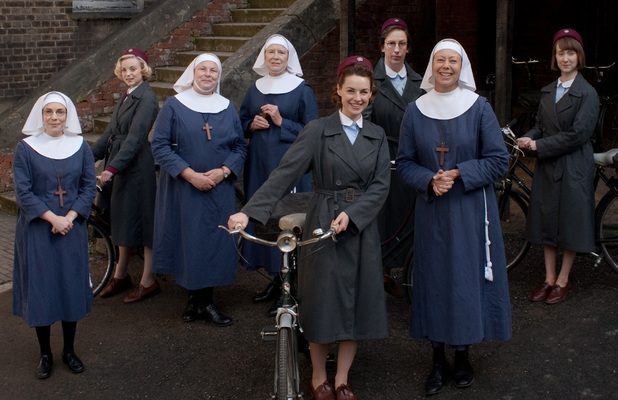
The Nusing Sisters of St John the Divine - as seen on TV

The Nusing Sisters of St John the Divine – as seen on TV

The brilliant portrayal of the Nursing Sisters of St John the Divine in 1950’s East London, in the series ‘Call the Midwife’, springs to mind. Moments of silliness, of course, like ‘Saint Nonatus’ and Father Joe Williamson confused as an Irish (Roman) Catholic priest, but taken as a whole, positive – and accurate. I should know: I worked as a seminarian in Poplar Parish and went to Mass in the Sister’s chapel.

But it is the relentless puruit of the liberal agenda which really gets up my nose. It’s no longer even a hidden agenda:  Black-American-woman-bishop-murdered-suspicion-turns-on-male-monk-who-wants-to-stop-women …. (I switched off at that point) and all this in the otherwise excellent ‘Lewis’.

So here’s my suggestion to the scriptwriters for an alternative ‘Morse’, a series which I love and watch and re-watch on DVD.

The Remorseful Day

The Remorseful Day


It’s the penultimate episode, “The Remorseful Day”,  the episode in which Morse dies. Early in the scene Morse quotes from a poem by A E Housman. Here it is in its entirety.

How clear, how lovely bright, 
How beautiful to sight 
Those beams of morning play; 
How heaven laughs out with glee 
Where, like a bird set free, 
Up from the eastern sea 
Soars the delightful day  .

To-day I shall be strong, 
No more shall yield to wrong, 
Shall squander life no more; 
Days lost, I know not how, 
I shall retrieve them now; 
Now I shall keep the vow 
I never kept before. 

Ensanguining the skies 
How heavily it dies 
Into the west away;
Past touch and sight and sound 
Not further to be found, 
How hopeless under ground 
Falls the remorseful day. 

Of course, Morse is a non-believer, as is Lewis, and many episodes contain ‘passing remarks’ which reveal this. (Though what about Hathaway and his mysterious past when he was going to be a priest?)  So when Morse dies there is to be no memorial or religious service of any kind: Morse has made that clear in his will. But I envisage another ending which goes something like this …

… the heart attack, though serious, has not killed Morse. He wakes late at night in his hospital bed. Calling the nurse he insists that she send for a priest whom Morse first met during one of his cases, and recently saw again at one of his old College celebrations. The nurse telephones, apologises for the lateness of the hour, and explains the situation. The priest tells her that he will be there within the hour.

He arrives on the side-ward. It is about justice that Morse wants to talk, ultimate justice, without which the whole of his life, he feels, and all that he has tried to do, will be wasted. The priest speaks of God before whom every man and woman must stand on the last day, when the secrets of all hearts will be revealed. Then there will be judgment and justice. But the priest continues that in God there is not only justice but mercy, in a way which human beings can barely grasp. In the death of the Son of God the awfulness of human injustice and failure which has haunted Morse all his life is overcome by the boundless loving-mercy of God.

At the end there is silence, which is broken when Morse says, ‘You’d better do your job then, and get me ready to face this God of whom you speak.’  The camera backs away as we see the priest bending over the bed and the murmur of Morse’s confession – and the voice-ver with the words of Housman: 

Days lost, I know not how, 
I shall retrieve them now; 
Now I shall keep the vow 
I never kept before. 

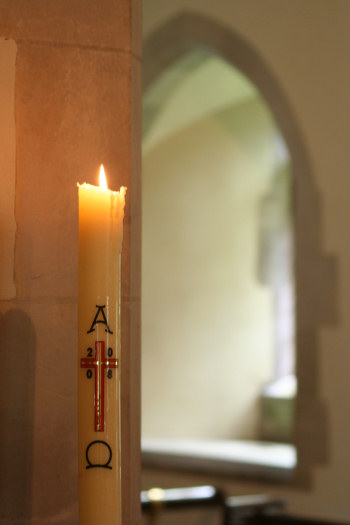
We move to the day of the funeral, for another and much more serious heart-attack has taken Morse. Lewis and Morse’s boss meeting outside an Oxford church, puzzled. ‘I thought Inspector Morse didn’t believe in all of this’  says Lewis. Inside the congregation gathers, we see Morse’s coffin with the Paschal Candle beside it, and the priest explaining his call to the hospital, before the last and fatal attack, and Morse’s insistence with the nurse as witness that his funeral is to be here. ‘In the end Inspector Morse came to believe in justice, and in the God of justice whose name is also  Father …”

So the camera moves from the coffin to a close up on the lighted Paschal Candle, and  the baritone solo,  ‘Libera me Domine, de morte aeterna’,  from Faure’s Requiem.

paschal candle

Posted in Uncategorized | Tagged , , , , , , | 6 Comments

The Ordinariate and the search for unity

Precious Blood, Borough - the first Ordinariate Church in England

Precious Blood, Borough – the first Ordinariate Church in England

I wrote this article  in January for the Magazine of my local Catholic Parish. One of the parishioners told me that it had helped her to understand what the Ordinariate was all about.

On 2nd February 2012 I was received into the Catholic Church: and I did it through the Ordinariate of Our Lady of Walsingham. These Ordinariates, in England, America and Australia, are structures by which former Anglicans become Catholics in communion with the Holy See, and can remain together as groups and congregations, retaining something of their Anglican heritage, or ‘patrimony’.

A year ago I resigned as vicar of an Anglican parish in SE London, and moved to Wimbledon. Sacred Heart became my home for the daily Mass, and on Sundays I joined the London (South) Ordinariate Group, all former Anglicans including our (now Catholic) priest Fr Christopher Pearson. We worship at the Most Precious Blood Borough, and on January 7th Fr Pearson became priest in charge. Our group works now as part of the congregation to revive and renew the parish.

Monsignor Keith Newton, who now leads the Ordinariate in England, rejects the idea that we are ‘disaffected Anglicans’ and stressed that he had become a Catholic not for “negative reasons about problems in the Church of England but for positive reasons in response to our Lord’s prayer the night before he died, [that] ‘they may all be one’.”

In the 1970’s many of us hoped for re-union . But we were saddened by the unwillingness of many in the C of E to commit themselves to the ARCIC agreements. Then in the 90’s new obstacles to unity turned the C of E away from both the Catholic and Orthodox Churches.

Anglicans appealed to the Pope who proposed a new way of unity. He offered as a basis for Christian belief the Cathechism of the Catholic Church and recognised that many of the Anglicans he was meeting had been living a Catholic life. Many of us were coming to see that Communion with Peter was precisely what we Anglicans needed – and were now being offered.

For the Ordinariate in England it is early days. Some of our groups have been established as small congregations: others find a home in their local Catholic Church. As former Anglicans we have received a wonderful welcome into the church, and may perhaps bring something of our former life with us. Above all, we long to work for unity: not as a pious hope for the future, but as a practical reality now.

Posted in Uncategorized | 1 Comment