
In the aftermath of the First World War, with so many young men dead, and their bodies lost for ever in some foreign field, the British learned again to pray for the dead.
“Now when the bells for Eucharist Sound in the Market Square,
With sunshine struggling through the mist And Sunday in the air.
The veil between her and her dead Dissolves and shows them clear.
The Consecration Prayer is said And all of them are near.”
These words of the Poet Laureate, John Betjeman (1906 – 1984) sum up the belief of many an Anglican as prayer for the departed became again part of the restored heritage of the National Church. It is true that Cranmer and the Protestant Reformers did their best to exclude such prayer from the liturgy and devotion of the English. Perhaps the mediaeval cult of the dead had lost something of its assurance in the mercy of God and of th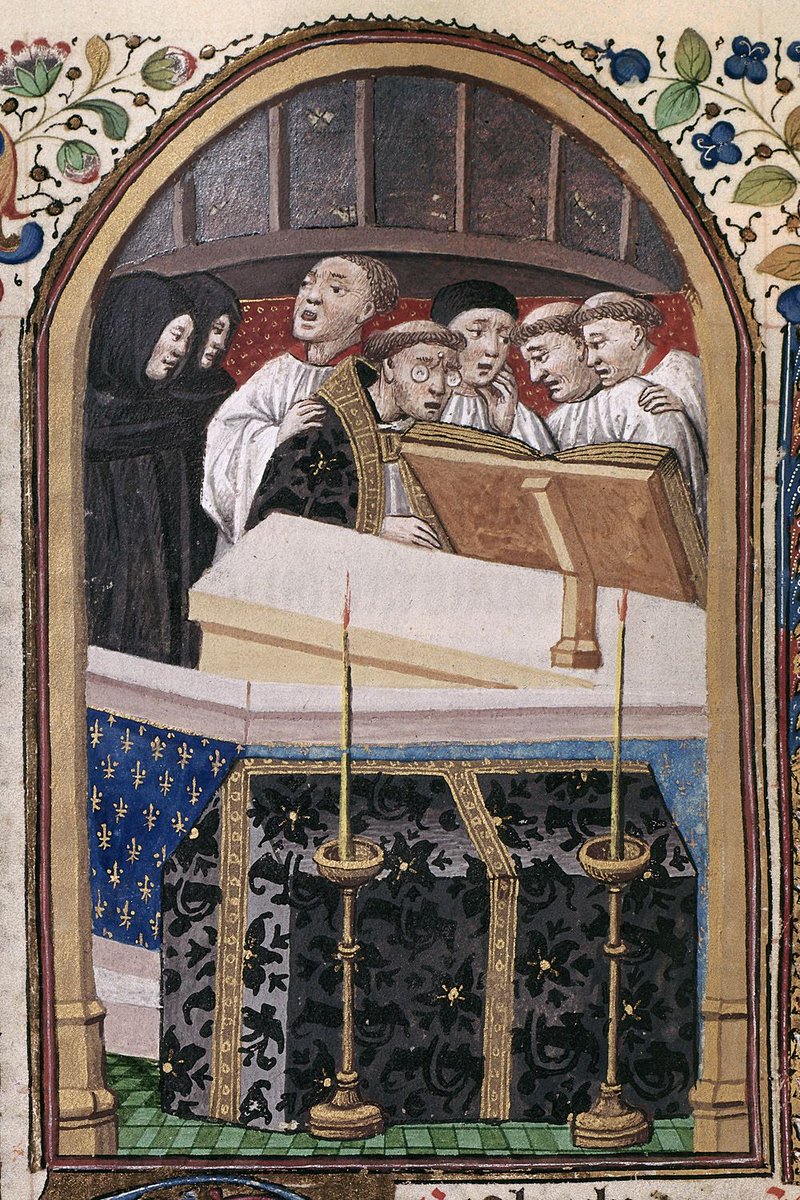 e victory of Jesus Christ over sin and death of which St Paul talks most powerfully. (I Corinthians 15, Romans 6). Nonetheless, the abolition of prayer for the dead struck at the heart of people’s consciousness of the communion of saints, of the community of earth and heaven linked above all in the celebration of the Mass. It led inevitably to the weakening of belief in the world to come, and ultimately to the widespread secularism of our generation.
The overwhelming sense of loss of the First World War saw many people turn to spiritualism and the occult. The Prayer Book of 1662 provided nothing to meet this crisis of grief.
How quickly we forget. The widespread loss of faith from the 1960’s onwards led to a curious forgetfulness of the dead. Unable to face the awfulness of atheism and say, ‘You’re dead and that’s it’, many have turned to the ‘Celebration of Life’ funeral. Expressions like “They live on in our hearts and minds” have become commonplace. It’s another way of saying “You will go on thinking about X, and they will be warm memories, until inevitably they fade.” 
At the same time, as the National Church, proceeded with the revision of its liturgy, the Evangelicals started a renewed attack on the practice of prayer for the dead. Unable to see the damage that the Reformers had done, they forced the exclusion of any explicit prayer for the dead from the official services. The liberals simply went with the flow, and have continued to do so, so that I recently heard an Anglican cleric remark that the inability of people to attend funerals during the period of social distancing would lead to a lot of parties when it was over!
Sadly, the Catholic Church contributed to this too. The desire to escape from the funeral (and funereal) style and thinking of pre-Council Catholicism led to funerals in white and eulogies instead of homilies. When I mentioned Purgatory recently in the homily, I was told “we don’t believe in that nowadays”. Most Catholics, I suspect, are universalists, and Judgement sounds distinctly old-fashioned!
Here in France the dire shortage of clergy led to the formation some 25 years ago of teams of lay people who lead funerals. Their commitment to this ministry, their pastoral care of the bereaved and their careful preparation and conduct of funerals is marvellous. About a year ago I started to look with our parish team at the liturgy, and at the commentaries which they prepare and give on the Gospel reading chosen by the family. In my opinion as we have it here in France the funeral liturgy concentrates too much on the bereaved family as its first aim, and not on the prayer for the departed person. This has lead to the team preparing commentaries in which the life of the person takes up much of the time allowed, with a nod at the end to show how their manner of life (sadly nowadays often with little connection with the Church) really was in accordance with the Lord’s command to ‘love thy neighbour’. The shortage of priests has broken the connection between the dead and the Eucharist, so profoundly and movingly expressed by Monica, mother of Augustine of Hippo as she prepared for her death.
 “Bury my body wherever you will; let not care of it cause you any concern. One things only I ask you, that you remember me at the altar of the Lord wherever you may be.”
When we return to normal (whatever that new normal will be) there are going to be a lot of grieving people, who have been deprived by the virus of the funeral rites for the person they loved. Actually, that process of deprivation has been going on for much longer, in the poverty-stricken ‘Services of Thanksgiving’ which we have trotted out with all their feeble theology. Those who pray for the dead place their hope firmly in the Resurrection of Jesus Christ – which is God’s final word, the victory of life over death. This is the Good News and we have no right – and no need – to water it down.
And, by the way, can anyone direct me to a French translation of Newman’s ‘Dream of Gerontius’ so that I can convince my parishioner of the beauty, love and wisdom of Purgatory?

 Ordinariate Pilgrim
There seem to be two translations, see:
https://www.worldcat.org/title/reve-de-gerontius-the-dream-of-gerontius-du-cardinal-john-henry-newman-traduction-en-vers-francais/oclc/460590156/editions?referer=di&editionsView=true
Possibly the Bibliotheque Nationale might have a digital edition? It has several translations
https://catalogue.bnf.fr/affiner.do?motRecherche=Newman%2C+john+henry&index=&numNotice=&listeAffinages=FacLan_fre&afficheRegroup=false&trouveDansFiltre=NRI&nbResultParPage=100&triResultParPage=0&critereRecherche=0&typeNotice=
Unfortunately I could not see one on line, but you could try abebooks using the bibliographical info from the BNF
Thank you – that’s most helpful