The Mission of the Church is our Mission

Since lay people, like all Christ’s faithful, are deputed to the apostolate by baptism and confirmation, they are bound by the general obligation and they have the right, whether as individuals or in associations, to strive so that the divine message of salvation may be known and accepted by all people throughout the world. This obligation is all the more insistent in circumstances in which only through them are people able to hear the Gospel and to know Christ.                       Canon 225    THE CODE OF CANON LAW

——————————————————————————————–

Some years ago a friend of mine was working for a small communications company which had been taken over. Within weeks he knew that all was not well. He left for another job before it failed. In his original company everyone had been clear about what it was they produced, how it was going to be marketed, and that everyone was involved. At times of pressure all were willing to work flexibly, and jobs were shared as needed. But the first management meeting of the new larger company spent most of its time discussing office furniture, and specifications of company cars which distinguished management levels. “They’ve forgotten the salesmen” my friend wailed, “but it’s the salesmen who sell the product and make the money.”

The Church, because it is an institution both human and divine, can also get into the same fix. It is all too easy to confuse the mission of the Church as the People of God, with the resources needed to carry out that mission. Let’s try and think of it in the area with which most of us will be familiar – the parish. So we sum up what the Church exists for something like this:

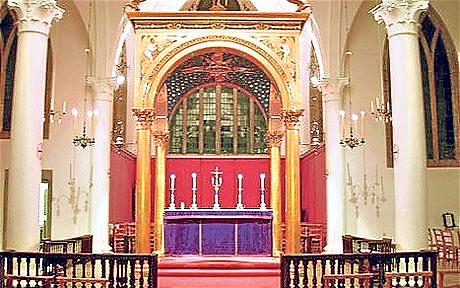
celebrate mass

The parish of the Assumption of Our Lady, Lydmouth, exists for the worship of Almighty God who is Father, Son and Holy Spirit. The People of God come together every Sunday to celebrate the Mass, when they hear the word of God and participate in the offering which Jesus Christ has made for the sins of the whole world.

The mission of the parish is the mission of all Catholic Christians:

1. CATECHESIS (Teaching & Formation) so that every believer may grow in the knowledge and love of the Scriptures, the teaching of the Church, and in prayer …

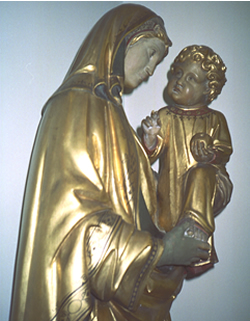
evangelisatrion

2. COMMUNION  (Fellowship) so that our love and service of God and of each other may be deepened and strengthened …

3. EVANGELISATION so that the people of our parish may hear the Good News of Jesus Christ, and experiencing it among us in this parish, may turn to him and be saved for eternal life.

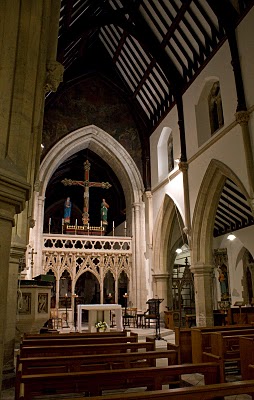
care for sick

4. PASTORAL CARE so that we may reflect the love of God for his creation, as we serve each other and reach out to meet the needs of our local community.

In order to carry out its vocation of worship and mission each parish needs four resources:

1. Finance so that there is sufficient money and a realistic budget              

2. People to exercise key roles of  leadership, formation and outreach. This will include the ordained Pastor who exercises oversight in the name of the bishop, presides over the Eucharist  and ensures faithfulness in teaching.

3. Buildings and accommodation appropriate to the needs and financial resources of the parish.

4. Governance  (Organisation) to form and serve efficiently the work of the parish and its relationships.

I think we can see how this model of mission and resources could be taken upwards to the level of the Diocese, and downwards to the home groups and mission stations which the parish may initiate. For the Ordinariate in the UK clarity in mission and careful resourcing of all of its groups might be used to direct policy, to make decisions about growth and planting as well the more painful ones concerning closure.

One of the greatest dangers for the Church is a failure to understand that resources are there to serve mission: resources are never an end in themselves. Those of us who are former Anglicans remember the constant struggle to resist our parishes becoming building preservation societies. Sometimes we wonder about the independent evangelical churches, where mega-finance seems too high on the agenda. And what of the Catholic Church?

Here we see the danger that governance (organisation) may sometimes fail to serve the mission and become an end in itself. The Holy Father himself has begun the process of reform at the centre so that necessary institutions may more clearly, humbly and efficiently enable the saving work of the Church.

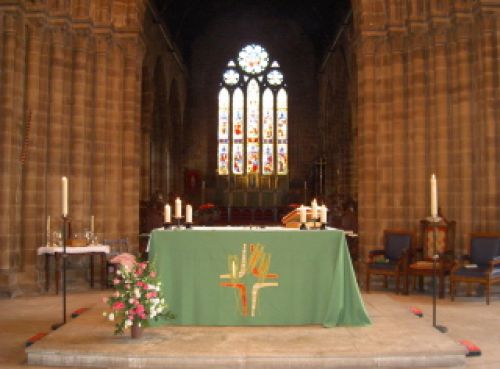
pope francis smile

Posted in Uncategorized | 2 Comments

Ordination

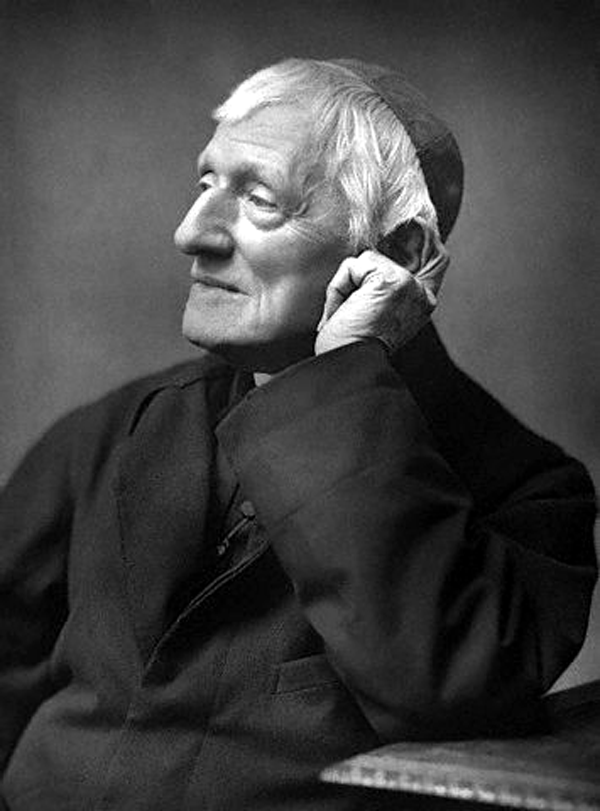
Blessed John Henry Newman

Blessed John Henry Newman

Please pray for

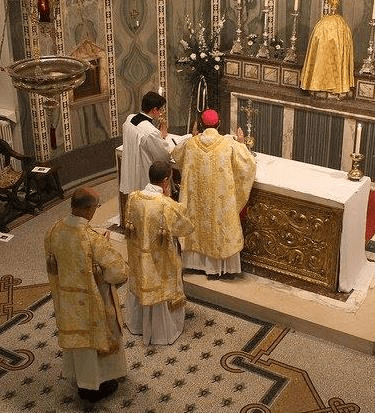
ANTHONY WATKINS & SCOTT ANDERSON

to be ordained to the priesthood today, October 19th 2013

by the Archbishop of Southwark, the Most Revd Peter Smith

at the Church of the Most Precious Blood, Borough

for the service of the Ordinariate of Our Lady of Walsingham

Blessed John Henry Newman, pray for us


Posted in Uncategorized | 5 Comments

When words are used to hide the truth (3)

humpty dumpty


The Crown Prosecution Service has decided not to pursue charges against two doctors who agreed to perform abortions on the grounds of the gender of an unborn child.

Lord Steel who introduced the 1967 abortion legislation has described abortion on the grounds of gender as “wholly repugnant”.  Baroness Knight said that in 1967  no-one would have  “dreamt that it was necessary to put an amendment down to protect girl babies.”

How significant again is the use of language: Baroness Knight identifies what lives inside the womb as a “baby” – and she is entirely right to do so. But imagine that she had talked instead of  “a non-male foetus”: it feels so different, doesn’t it?

What, then, about an amendment “to protect handicapped children”: this is  what a civilised and caring society does. Lord Steel says “Gender selection in abortion is wholly repugnant.”  Isn’t the selection by handicap pretty awful too?

Posted in Uncategorized | Tagged , , , , , | 3 Comments

“We do not presume…”

ordinariate useOver the years as an Anglican  I waited for the publication of each new round of services. I took part in anguished discussions with fellow Anglo-Catholics as to how to make the best of these new rites. I read (and occasionally wrote) articles which tried to assess how much the Anglo-Catholics had got through the Synod, and what the Evangelicals had blocked or removed.

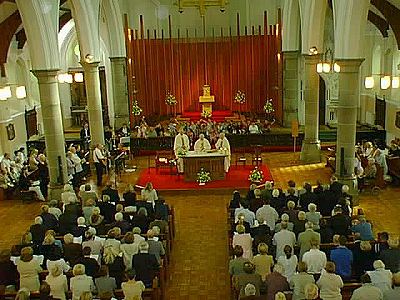
None of that happens in the Catholic Church. A few weeks ago we received the text of the Ordinariate Use, and last Thursday Mgr Newton, the Ordinary, celebrated it at the Assumption, Warwick Street. It is now one of three forms of the Mass which Ordinariate priests may legitimately celebrate, using it as it stands, and knowing, beyond a shadow of a doubt that this is the Catholic Mass which has been celebrated for 2,000 years.

I had forgotten just how deeply the texts of the Book of Common Prayer have sunk into the memory of people of my age. Although the Sunday Communion Services of my childhood were very definitely low-church, they were conducted with a gravity and reverence which has all but gone from that section of the Church of England. So taking part in the Mass last Thursday I found my lips moving with the words. In the preparatory prayers which we recited with the Celebrant while the Entrance hymn and chant were being sung, I was transported back to side-chapel of St Paul’s Weymouth, early on a Wednesday morning, when I served Fr Henry Maude each week.

At the heart of the new Use all controversy has been removed: and of that I am very glad. Cranmer’s prayer, which the 1662 revisers called the Prayer of Consecration, to which from the 1960’s onwards was joined the Prayer of Oblation – and all in an attempt to construct a ‘valid’ Eucharistic Prayer – all this has gone. The Anglicanae Traditiones group which prepared our Mass rite has reached back before the break with Rome, and placed the Roman Canon at the heart of the liturgy. This also places the rite firmly with the current worship of western Catholics throughout the world, the use of 16th century English notwithstanding.

Within the Ordinariate Use as we have been given it, it is possible to discern at least three ‘forms’ which may be quite properly used. It is my hope that careful and thoughtful reflection, which will need some considerable time, will allow us to see how and when the Use may be most fruitfully used. Liturgical discussion has its place, but only to serve the worship of the living and true God, who is Father, Son and Holy Spirit. The Lord Jesus Christ himself gave us the Eucharist as the perpetual memorial of his suffering, death and resurrection until the end of time. There may well be time given to legitimate discussion about the ‘how’ and ‘why’ of worship – but only so that we may enter humbly prepared into the mystery itself and find ourselves with angels and archangels and the whole company of heaven, as we sing, “Holy, holy, holy.”

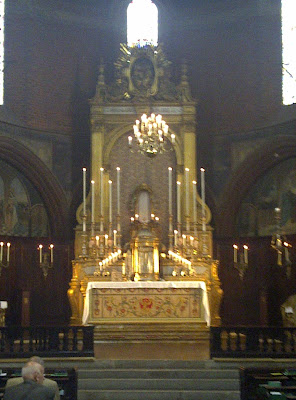
cosham altar

Posted in Uncategorized | 3 Comments

Anglo-Catholic humour


Rose Macaulay

Rose Macaulay

Soon after my aunt introduced me to Anglo-Catholicism she showed me its humour. I remember gales of laughter coming from her bedroom as she sat up reading ‘The Towers of Trebizond’ by Rose McCaulay. The book begins with the immortal lines ” ‘Take my camel dear’, said my aunt Dot, as she climbed down from this animal on her return from High Mass”, and continues with the antics of Father Hugh Chantry-Pigg holding a Corpus Christi Procession in the gardens at Istanbul. It was many years before I returned to read the novel in full, and realised that underneath this ridiculous humour lay a profound and moving examination of human behaviour, moral decisions, and the bitter tragedy of sudden death. Rose McCaulay wrote her novel from within the world of 1950’s Anglo-Catholicism which she embraced as a result of the influence of Fr Johnson, a Cowley Father (Society of St John the Evangelist). She was writing to a society which understood her allusions and her jokes: much of what she writes about would be incomprehensible now in a society which does not know or care about its Christian history: indeed, rather resents any suggestion that it should know or care!

The humour of the Anglo-Catholics is often witty, irreverent, and mocking of authority. It is the humour of a minority, and often a persecuted minority. It has sometimes been private, disapproved of as trivialising serious belief, but part of being ‘in-the-know’ – a sign of belonging. But will it survive – should it survive – the move of the Anglo-Catholics into the Communion of the wider Church? And is it still a weapon in the armoury of those who continue in the Anglican Communion is their struggle against liberalism and protestantism?

Anglo-Catholic humour was often used as a weapon. The stories of Archdeacon Armitage Shanks who appeared in ‘New Directions’ (the magazine of the campaigning organisation, ‘Forward in Faith’) in the 1990’s were a way of undermining the liberal agenda in the Church of England. They were not always popular, even among the supporters of Forward in Faith: Anglo-Catholic humour has been accused of ‘lacking in seriousness’. Oddly, they were sometimes seen as part of the ‘oppression’ of women – who by that time had won the vote, were being ordained and were claiming overwhelming support in the parishes. But  it takes time for a minority to stop behaving like one: and to realise that they must now appreciate humour being used against them. It also greatly amused the creator of Archdeacon Armitage Shanks that not everyone realised that he was a spoof!

The juxtaposition of great seriousness and outrageous humour has been a feature of Anglo-Catholicism. Those who trained for the priesthood with the Kelham Fathers will remember five services in the chapel seven days a week, washing up after meals, the Greater Silence every night, shovelling coal for the furnaces, and compulsory football. They will also remember the Mid-Lent Review, the student who was packed into a laundry basket and put behind the High Altar just before Compline (and had to stay there until everyone had gone to bed) and that bizarre card which described the Chapel vacuum cleaner as ‘Fido’ who had to be taken out regularly to ‘do his business’. Yet even as I write this I know that it must sound like a cross between a prison and an old-fashioned public school. Humour changes and what one generation finds funny another finds boring, silly or even dangerous. Yet this humour was, I think, part of the way that the whole Community coped with a disciplined way of life, with the business of a hundred men living under the same roof, and living with all the struggles and emotions of the single state.

The self-deprecating humour of the Anglo-Catholics was another coping mechanism: deeply serious about the things of God, about the Church and sacraments and prayer – and yet often wildly irreverent about their daily life. The stories are legion: the vicar of a west-end church with a magnificent hanging pyx who remarked to a prospective curate, ‘In this church the Lord lives in a lift’; or the Marian Procession where the statue, dressed in cope, crown and earings was carried past a draughty alley between the houses: and seeing in one’s imagination the servers rushing to recover clothes and jewellery as they were blown down the street. Fr Colin Stephenson’s book, ‘Merrily on High’ contains a life-time of such stories. He has been accused of trivialising the Movement, and if his book were the only history of those days, then there might be some force in the accusation. But we need to balance the nonsense against the devotion, self-discipline, spirituality and hard work of many priests and countless numbers of lay people; and to recognise that the laughter balanced the tears and heart-ache: the froth on the surface with the depths beneath.

The nearest I have come to this humour in English (Roman) Catholic circles is found in the novels of Neil Boyd (Peter de Rosa) ‘Bless me Father’.  The television series of the same name, starring Arthur Lowe, is not as funny. Many of the situations could only be familiar to Catholics – and now only to those who remember the Church before the Second Vatican Council. The story I recall is of the poor curate coming down in the morning to discover that his trendy university chaplain friend has celebrated the Mass with his students on the dining room table with a loaf of bread. In those days the Blessed Sacrament was treated with almost fanatical reverence, and in the story we are confronted with the young priest who puts on a stole and uses the vacuum cleaner to gather up what he believes to be the Body of Christ. Remembering his seminary training for the disposal of the Eucharistic species, he then buries the vacuum cleaner in the garden – and brazens it out with the housekeeper who is puzzled by its disappearance from the Presbytery. Of course, this rather risky joke is relieved when, a week later, he receives a thank-you note from the chaplain, explaining that they had a quick breakfast in the diningroom, left early (apologies for the mess we left) and celebrated Mass when they arrived at the pilgrimage church which was their destination.

What place, then, if any, has the tradition of humour now that Anglo-Catholics have entered the fullness of communion? (Is there something here about growing up because we have grown into?) First, there is something peculiarly English about laughing at oneself. It is a tradition which must not be allowed to die. Secular humour  claims to be ‘cutting edge’, but this too often means that it is crudely pornographic, needlessly rude to the vulnerable, and yet desperately politically correct. Anglo-Catholic humour was often subversive: and where Christianity is pompous, boring and ignorant it needs to be subverted. Remember Jesus and his wonderful image of the man struggling round with the plank in his eye! The absurd (and bitter) discussions on some internet sites about the length of a maniple fringe need to be subverted – and so does the dreary pontificating of some of the liberals too.

Peter Berger in his book ‘A Rumour of Angels’ suggested humour as one of the pointers to the existence of God. Can anyone imagine heaven without laughter? We are not talking just about a smile, but the laughter of freedom which belongs to the children of God, who rejoice and exult when there is no more crying and pain, when death and fear and sorrow are swallowed up by Life – then we shall laugh for the sheer joy of knowing as we are known.


Posted in Uncategorized | 14 Comments

When words are used to hide the truth (continued)

our lady

In August I wrote a post suggesting that the use of language to hide rather than to communicate was growing. This morning’s ‘Today’ programme on Radio reinforces my point.

Without a trace of irony, the presenter Evan Davis introduced an item on ‘post-fertilisation contraception’, which, he suggested, might be used for up to two weeks after ‘fertilisation’. The discussion which followed concerned the difficulties faced by scientists, the reaction of the press, and the need for ‘public debate’ at an early stage if such discoveries are to be communicated.

What a curious term is ‘post-fertilisation contraception’. The word ‘contraception’ has always been used to mean the prevention of conception. Once conception has taken place we use the word ‘abortion’. The use of ‘fertilisation’ too, is significant. It has a clinical feel; we remember it being used of plants in biology class. ‘Conception’ is what happens in humans when a woman conceives a child. It is the word Christians use of Mary every time they recite the Angelus: ‘And she conceived by the Holy Spirit.’

So what if Evan Davis had described this new technique in the words we normally use: ‘post-conception abortion’. Yes, it sounds and feels very different, doesn’t it. And immediately I hear the objection that he was trying not to pre-empt the moral discussion. In which case let us continue the debate about abortion, about the moral basis for a practice against which Christians have always stood firm. By all means let us force the question, ‘Why two weeks – why not a month, or six months or ….’

It is simply not true that all moral questions nowadays are open: we frequently use words and phrases which express society’s moral disapproval. What once we called ‘risky jokes’ we now call ‘racist language’.  ‘Office banter’ is now ‘unacceptable sexism’. Packets of cigarettes  bear the slogan ‘Smoking kills’: when the scientific evidence is that ‘Smoking kills some people’.

I am not hopeful about such a ‘public debate’ over this new scientific discovery. It sounds too easy and convenient as a way of getting rid of an ‘unwanted little problem’ for people to resist. Will anyone have the courage to sell them as ‘Home Abortion Kits’? I doubt it.

Posted in Uncategorized | 1 Comment

The Parish Mass – a distinctively Anglican contribution

bourne street

The annual trip to London was much looked forward to by us teenage servers. It was organised by the Guild of the Servants of the Sanctuary, and involved servers, wives, children and several clergy piling into a coach and heading off to the capital. I suspect that the wives went off shopping and sightseeing (a trip to London was still quite an event even in the 1960’s) while we servers went to the annual Easter Saturday (the Saturday after Easter, of course) High Mass at St Augustine, Queen’s Gate. I freely admit that it was very bad for me, as for several of my teenage compatriots, and our Vicar must have dreaded our return. For it was here that we saw the latest (as we imagined) London fashions in liturgy: lace albs (the celebrant’s lifted by the deacon and subdeacon as they went up the altar steps) communion from the tabernacle, birettas and servers with the tiniest cottas trimmed with crocheted lace. Mercifully, the Vicar took no notice of the servers’ pleas to ‘do things properly, Father’ , for the worship of the Anglo-Catholic parishes in the provinces was already overtaking that in London. The once great shrines were  falling behind as the movement for the Parish Mass took hold of Anglo-Catholicism, and became, perhaps, its most lasting liturgical achievement. Indeed, I would want to argue that it is one of the most important contributions which the Ordinariate brings to the renewal of  Sunday worship of the Catholic Church.

Peter Anson, in ‘Fashions in Church Furnishings’ points to a curious anomaly. The ‘Back to Baroque’ Movement in the 1920’s, which transformed a number of English parish churches into quite passable replicas of their French and Belgian counterparts, was happening at the same time as the Liturgical Movement was gaining ground in the Catholic Church on the Continent. I had (before I culled my library on retirement) the privately published memoirs of Fr Merritt, who had been Vicar of a parish in West London before the Second World War. He writes of his great achievement by his third Easter there, when there were something like 750 communions at the 6am, 7am and 8 am Masses, but only one (himself as the celebrant ) at the High Mass at 11 am. Yet at precisely this time, liturgical scholars were pointing to the Eucharistic doctrine and practice of the early centuries, and asking whether a return to the Sunday gathering of the whole congregation, with general communion, was both possible and desirable.

The Movement had found inspiration in the immense shift in Catholic devotion under Pope St Pius X. Remarkably he had overturned the practice of centuries, by which many Catholics only went to Communion at Easter. Frequent, even daily, communion became in the 20th century, common again.  Then, during the Second World War, Pope Pius XII realised that many Catholics were unable to go to Communion because of war-time conditions. So he relaxed the fasting rules and permitted Evening Masses.
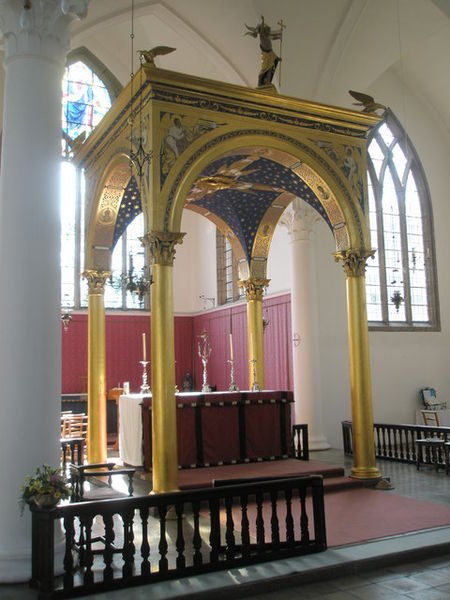
The Christian altar

The Christian altar

The growth of the Parish Mass movement in the C of E was coming from a very different direction. After the break with Rome in the 16th century, Archbishop Cranmer produced an English Prayer Book. As he revised it in 1549 and 1552 its theology reflected the Archbishop’s own move away from orthodox belief about the Eucharist towards ever more extreme Protestant views.  However, it would appear that he envisaged his Communion service as central to Sunday morning, for it is the only service at which a Sermon is ordered. In an attempt to get the laity to go to Communion more frequently, he outlawed non-communicating attendance. But the laity refused to budge, with the unforseen result that the clergy were unable to proceed with the Communion Service, ending it after what we now call the Liturgy of the Word. The established pattern of worship thus became Morning Prayer, the Litany and Ante-Communion. Four times a year (but more often in town parishes) the Vicar then led the more devout into the chancel and there proceeded with the second half of the Communion Service.

The Oxford Movement (or Catholic Revival) beginning in 1833 led to the rapid introduction of weekly (and even daily) celebrations of the Eucharist. A Sunday celebration at 8 am became the norm. At first this was followed by Morning Prayer, usually sung by the choir at around 11 am and Evening Prayer later in the day. With the second generation of the Revival, often known as the ‘Ritualists’ a Sung or Choral celebration displaced Morning Prayer. Strict notions of preparation and fasting from midnight made the reception of Communion at the Sung Celebration difficult. Protestant anger was aroused by these ‘non-communicating’ services, since it was obvious that the people came to adore the Eucharist rather than to communicate!  Two patterns of Sunday morning worship in the Church of England developed. Country parishes of a more moderate churchmanship, and eventually even the Evangelicals, adopted a weekly early Communion, followed by Morning Prayer at around 11 am. As the Catholic Revival grew in its ascendancy more and more churches introduced a Sung celebration with Morning Prayer said earlier.

All of this is in marked contrast to the pattern in the (Roman) Catholic parishes of England. The mainly urban, working class parishes had huge numbers to pack into far fewer church buildings. Not having the Established Church’s inherited money, it relied on large but unpretentious buildings being full five, six or more times on Sunday. High Mass with its ministers and elaborate ceremonial was virtually unknown. The 11 am Mass might have a small choir to sing two or three well-known hymns.  Put crudely the  emphasis might be characterised as  ‘hearing Mass’ rather than ‘making my Communion’.

Two Anglican Religious were responsible for giving the intellectual and theological rationale for the Parish Mass: Dom Gregory Dix OSB in The Shape of the Liturgy, and Fr Gabriel Hebert SSM in The Parish Communion. The books helped to drive forward the growing desire to restore the Sunday Eucharist to the central position on Sunday, and to ensure that priest, ministers and people participated appropriately, but fully and intelligently – as they believed, had the Christians of the first centuries. Anglicans were rather freer than Catholics to experiment liturgically, as they already had a vernacular liturgy. The Anglo-Catholics had pushed the recovery of something rather more like the order of the primitive Eucharist, in the face of conservative Protestant clinging to the Prayer Book rite. From the 1950’s onwards more and more Church of England parishes were to introduce the Parish Eucharist as the main service, usually at 9 or 9.30 am so as to allow people to come fasting. Indeed, breakfast was often provided afterwards and enabled the congregation further to develop that sense of Christian community which they had celebrated in their worship.

eventually, even the Evangelicals began to move with some introducing the Parish Communion while retaining Morning Prayer at the sacred hour of 11 am. But this change was not to last, and as their ascendancy grew (and Catholic influence waned) so their innate suspicion of the Eucharist (and of the sacramental principle as a whole) led them into ‘Family Worship’ which bore little resemblance either to the practice of the early Church, or to the classic formularies of Anglican worship.

Woodchester

Much of what the Liturgical Movement had pioneered was triumphantly acclaimed in the reforms which followed from the Vatican Council. Many Anglicans believed that with the Mass now celebrated in the language of the people, with altars looking rather more like tables and less like sideboards, and with vestments modelled on the cloak left by St Paul at Troas (at least in the minds of some of the very creative liturgists) the Anglican reform had now been vindicated. But Anglo-Catholics began to suspect that the enthusiasm of many liberal Anglicans was only skin-deep. Behind the Parish Communion lay a very hazy grasp of what the Eucharist actually was. Indeed, in one parish magazine the Vicar wrote. ‘The Communion Service is really very simple: we eat bread and drink wine while we think about Jesus.’ There is rather more to it than that, I think! Increasingly lay people (and one suspects, the clergy too) came to Mass unprepared either spiritually (through prayer) and physically (through any sort of fast). The practise of Confession which had grown among Anglicans from the 19th century was dying out, and many presented themselves for Communion on a pretty haphazard basis. Expressions like ‘taking the bread and wine’ became commonplace as referring to receiving Holy Communion. With the discipline of the C of E collapsing as the state liberalised, and with sharing agreements with denominations who had no priesthood and no doctrine of the Real Presence or Eucharistic Sacrifice being voted through General Synod, it was hardly surprising that the Anglo-Catholics found it impossible to hold the line.

There were those who put it all down to the day the vicar abolished the non-communicating High Mass at 11, and introduced the ‘coffee-table’ in the nave. They ignored the simple fact that for nigh on a thousand years the laity had participated vigorously in the Mass and that a strong community discipline had co-existed with frequent and regular Communion. Indeed, it is difficult to see how the discipline of ‘ex-communication’ could be effective unless people went often to Communion!
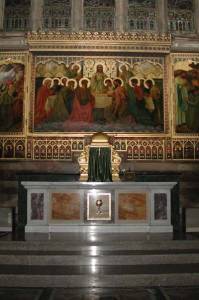
willesden green

At its best – and it was often very good – the Anglo-Catholic Parish Mass was a wonderful expression of the worship of the Church. The church building may well have been sensitively re-ordered and the Blessed Sacrament given a prominent position on the old High Altar, while not confusing the celebration at the new liturgical Altar. The various ministries of the Mass were defined and ordered, with lay people, both men and women, reading and leading well-composed Intercessions. Preaching took on a new importance, and a well-crafted Homily was vital. The music was carefully chosen with continuing use of ‘strong’ hymns from the centuries; the Mass texts were usually sung by all the people, to the traditional music of Merbecke or (new words) Dom Gregory Murray. Teams of servers carried cross and candles and incense was almost always used on Sundays. The Offertory Procession became a focus of lay involvement and Communion was usually given from the bread and wine consecrated at that Mass. Increasingly baptisms were administered during the Parish Mass, with anointings and other blessings given. At the end of Mass many of the congregation would stay for further fellowship over refreshments. The Sunday worship in many Anglo-Catholic parishes was a worthy and devout offering, joyful, involving, instructive – and evangelising in the way that it spoke to occasionals and visitors and drew them into the life of the Parish Church.

nave altar 2

In recent years this ‘norm’ of worship has fallen away in the C of E. I have already mentioned the unease of Evangelicals (too much attention paid to American Protestantism) with the Eucharist; for the liberal Establishment the panic over numbers, combined with an over-emphasis on ‘accessibility’ leading to some  wild experiments and much rather empty and unsatisfying worship.

Now that mainstream Anglo-Catholicism has passed, in its earlier stage in the 1990’s, and more recently through the Ordinariate, back into Communion with the Holy See, it is my  hope that we shall see the tradition of the Parish Mass becoming an accepted part of Catholic life. I believe it has the power to make Sunday worship come alive. Catholics from Africa and the Caribbean are often envious of their Pentecostal friends, and rather starved by their half-hour said Mass on Saturday evening. The Parish Mass tradition goes some way to meeting their needs. (And those who once worshipped in a black majority Anglo-Catholic congregation will know what a powerful and spiritual experience it often was).

Among Anglicans there used to be a saying, ‘The Lord’s Service, for the Lord’s People, on the Lord’s Day’:   the Sunday Mass, celebrated by Catholic Christians, as their duty and their joy.

Posted in Uncategorized | 4 Comments

The renewal of the laity – an opportunity lost and found

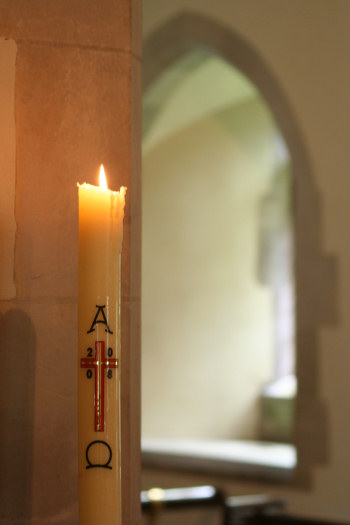
paschal candleIn  the late 1960’s, early 70’s, Renewal in the Holy Spirit arrived among us in the UK.  It had come from the United States, and not from the Pentecostals (and certainly not from the liberals) but from Anglo-Catholic Episcopalians.  For all sorts of reasons it hardly touched English Anglo-Catholics but was taken up enthusiastically by Evangelicals.  I still believe it would have brought new life to a struggling movement.

The recent death of Fr Ivan Clutterbuck, Organising Secretary of the Church Union during the same period, reminds me of his call for the catechesis and formation of the laity.  Again, it went largely unheeded, but was taken up by the Evangelicals through things like Alpha which has become a worldwide phenomenon.  In September I hope to meet an Alpha group in Abbeville, close to where I live in France, and run by the Catholic parish.

Here is what Fr Clutterbuck tried to do in his own words:

Since the 60’s at least there has been a great cry from the laity. We want sound teaching:and this has been answered by an outbreak of study courses.  Provided these steer clear of liberal ideas, this is excellent.  We are realising at last that the present malaise of the Church can be laid at the door of irresponsible speculation which has all but removed the Jesus of the Gospel from our eyes…  Provided too, that we do not end up with another round of discussion groups.  What is needed is teaching with authority… When the course is over, what then?  How shall we employ our instructed pupils for there is nothing more frustrating than getting qualitified and then finding there is no employment?…  It is here that a movement called the Lay Apostolate may come to our aid.  It began in the First Great War in Belgium where a Catholic parish priest, Fr. Cardin, saw his most promising young men being lost to atheism in the factories.  So he formed them into groups of Young Christian Worker (Jocists) and trained them to go on the attack against unbelief.  This movement spread to France and then to other countries.  It was developed in different ways but always the object was the same: sound teaching and mission.  It operated on the edge of the main church and brought many back to faith.  Twenty-five years ago, the Church Union adapted this strategy for use in parishes round the country and there was considerable support – over sixty cells were formed.  Programmes for study were made available in a still difficult situation.  Priests began to see the value of having lay people, men and women, who could share some of his duties with him.  So they were trained for a ministry which had always been theirs but which had been lost over the centuries.  The lay apostolate is based firmly within a parish and the parish priest is in charge.  In this way the danger of wrong teaching from outside is eliminated.  The priest uses his lay ‘apostles’ according to the local situation.  So it is clear that he must be prepared to share his priesthood as far as Catholic teaching allows.  The slogan for the lay apostolate has been from the beginning “The Growth of the Church” (Croissance de l’Eglise in France) and growth is measured by increase of numbers at the Sunday Mass.

Blessed John Henry Newman wrote:

I think certainly that the teaching Church is more happy when she has enthusiastic partisans about her … than when she cuts off the faithful from the study of her divine doctrines and the sympathy of her divine contemplations, and she requires from them an inplicit faith in her word, which in the educated classes will terminate in indifference, and in the poorer in superstition.  (In consulting the faithful in matters of doctrine)

I have argued that the immediate future of the Ordinariate in the UK lies in the presence of motivated laity – formerly Anglican, now in Communion with the Catholic Church – within the structures of the Church in England and Wales. There are those, I know, who fear absorption and the loss of the identity of the Ordinariate.  My own slogan, for what it is worth, would be ‘Integration not Absorption’.

If then we are to maintain and develop the integrity – the cutting edge for mission – of the Ordinariate, then we need to dig into the Anglican Patrimony as it relates to the enabling of the laity.  It is the bit of the patrimony of which our Blessed Patron so bravely speaks in his generation, and which Fr Clutterbuck sought to develop against a background of Anglo-Catholic disdain!  But he was right, and unless the Ordinariate and the wider Church in our land moves along these lines it will continue to haemorrage its life-blood, its people.

Whatever and wherever the members of a local Ordinariate group are on Sunday it is that weeknight group which is vital.  Here the numbers round about 20 are right for prayer (or the celebration of the Eucharist if the priest-pastor is present); for continuing formation in the Scriptures and the Catholic Faith; for discussion of how we not only defend but also share the Faith (apologetics/evangelisation); for the easy welcome and nurture of enquirers and new members; for sharing the needs (hospital, bereavement) of the group and for practical action (visiting, referring to the chaplain for the sacraments).  If this can be done with supper, then both fellowship and the rumbling stomachs of busy people travelling long distances can be met.

I hestitate to say that this is what the whole Catholic Church in the UK needs – I am not in a position either to know, or to say it!  But my guess is that Catholics have lost the powerful pillars which supported them fifty years ago (school, family life, social life, guilds, many more priests and religious).  Catholic life can no longer be sustained just by Sunday Mass attendance.

I look forward to hearing of the experience of my French friends in their Alpha group, and to see how they have received and integrated part of the modern Anglican patrimony into the life of the Catholic Church.


Posted in Uncategorized | 4 Comments

Why didn’t they ask Evans?

entombment

During this past year  I have re-read much of my collection of the detective fiction of P D James, Ruth Rendell – and of course, Agatha Christie, from whom I borrow the title  of this post.

In this first year of a new papacy there is much speculation about where Pope Francis will lead the Church.  Among liberal Catholics Pope Benedict was seen as attempting to turn back the clock from the liberation experienced at Vatican 2.  The new Pope’s style is thought to be rather different: but what will his message be?  The issues which concern liberal Catholics are contraception, remarriage after divorce, women priests, and just coming over the horizon now, gay marriage.  If only the Catholic Church could move towards making the same change in thinking that the Anglican Church has, so the thinking goes, then Catholicism would be much more credible and attractive.  But while it continues with its stern teaching, particularly in sexual matters, people will continue to leave.

But perhaps those who look  enviously over the wall into the garden of Anglicanism should talk to those who once were Anglicans and have become Catholics.  There are quite a lot of us, both those who came in the two waves around 1994 and more recently through the Ordinariate.  It’s easy to dismiss us, as the press has done, as ‘disaffected’: even worse is to write us off as ‘single issue converts’ (the issue being our failure to cope with women priests!).  We have first hand experience of living with the changes over the years; of thinking, debating and arguing; of coping pastorally with people under the old system and then as the C of E rapidly adopted, on issue after issue, the liberal line taken by society at large. Evans, then (or rather the Ordinariate Catholic) is the most obvious person to ask, isn’t she (or he)?

Most Catholics are unaware just how deeply liberalism has eaten into Anglicanism.  I suppose that one of the defining moments in my recent faith journey, came with something as simple as a ‘Thought for the Day’ broadcast.  (For those of you outside the UK, Radio 4, which is part of our publicly funded broadcasting, has a daily religious spot just before 8 am in which it invites speakers from the major faiths to talk for a few minutes. It is  rather anodyne most of the time, but incurs the fury of the secularists with regular campaigns to have it removed.)  Anyway, it was Ash Wednesday, and the speaker was a well-known Anglican dignitary.  I didn’t hear it, but two people in my congregation (two women in fact, with generally liberal views) were concerned that he had denied Christian belief in personal resurrection and eternal life.  I reassured them, as I felt  sure they had misunderstood, but I checked the text, and found that they were right.  I was shaken by this, and even more so that there was no rebuke.  I contrasted  in my mind  the suspension of an Anglican assistant bishop who had made some unguarded comment  about the then forthcoming royal marriage.

The approach to the major moral issues of the past fifty years has been deeply influenced by what is usually called ‘situation ethics’.  Popularised by the American Anglican cleric Joseph Fletcher in the 1960’s, ‘situation ethics’ placed ‘love’ in opposition to ‘rules’.  In a notorious example he cited the case of a young sailor, troubled by his sexuality, who goes to a prostitute. With her he finds release, affection, and fulfilment of his desires.  ‘Where there is healing and wholeness, ‘ writes Fletcher, ‘there is God.’  I well remember the Anglo-Catholic moral theologian E.W. Trueman Dicken commenting crisply, ‘And I suppose that when he returned home and gave his wife VD she too murmured, “Where there is healing and wholeness, there is God.”

Put like that I imagine that most Catholics and many Anglicans would be appalled.  But if not the extremes of ‘situation ethics’ then many of us will have sat through Synods where ‘morality by anecdote’ has swung the vote.  I recall a debate on the re-marriage of divorcees in which one clergyman took us through an emotional account of his decision to marry a couple where one or both of the parties had been married before.  His story ended with the death of the husband just six months later in a major disaster.  The speaker left the podium believing that he had made the point that somehow re-marriage after divorce should be permitted because of what had happened.  It showed nothing of the sort!  I might well contrast it with a story which has remained with me for thirty years.  A woman I knew supported her husband through the loss of his job and moving home, believing that he was having an emotional and spiritual crisis.  Some months later he admitted that he had been having a lengthy affair, and since his mistress was now pregnant he was leaving his wife and children.  Six months later man and mistress were married in church.  Yet this anecdote no more ‘proves’ that re-marriage after divorce should not be permitted.  What it might do is to make Catholics a little more cautious in calling for the lengthy and careful process of annulment, well removed from the parish, to be replaced by a talk with the vicar.  People do not tell the truth, not to others, not to the clergy and often not to themselves, especially if they badly want something and are determined to have it.

Lastly, I need to point out to Catholics just what happens when the Church becomes too closely linked with the State in what we usually call in England, ‘Establishment’.  Forty years ago ‘dis-establishment’ was a serious and respectable issue, certainly among Anglo-Catholics and Evangelicals.  Curiously it is the liberals who have remained most determined to preserve the establishment of the C of E.  During the debate on women priests it was made clear in the courts that the beliefs of the C of E are ultimately decided by the British Parliament.  This was reinforced by the furious reactions of some Members of Parliament to the General Synod’s recent rejection of women bishops.  The close links of C of E liberals with government, media and the chattering classes, must surely lead Catholics to ask whether the independence of the Christian voice can be maintained.

But what has this to do with those who have left for the Catholic Church?  Is it not impertinent of us to continue to make our opinions felt?  I maintain, rather, that it is of vital importance to Catholics in England.  For if the Established Church speaks only with the voice of liberalism, and with a liberalism ever more closely conformed to the spirit of the age, then the Catholic Church will find itself standing  alone, disadvantaged and vilified.  The experience of Anglo-Catholics in their last years in the Church of England, (and those who continue to witness within the Anglican Communion) where they were marginalised and viewed with increasing anger for continuing to ask awkward questions, is surely worth considering.

As much as anything else we bring this part of the ‘Patrimony’ with us, even if it is the darker side, and in reflecting on it we may be able to advise, help and counsel.  Is our experience to be ignored?

Posted in Uncategorized | 1 Comment

When words are used to hide the truth

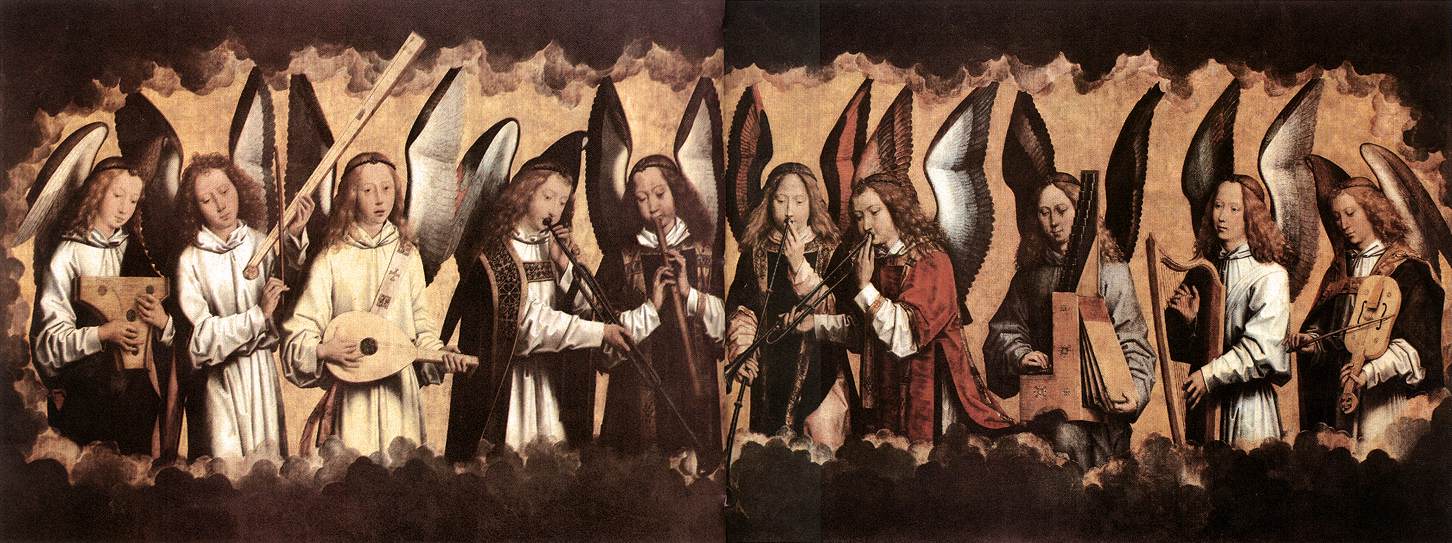
music of angelsSomebody remarked recently that we talk more and more and communicate less and less. The saying of Jesus, “Let your yes be yes and your no be no” (Matthew 5:37) seems forgotten in the torrent of words which people use. Earlier this week I heard a representative of one of the utility companies say on the radio, “We’re working around the proximity of their location”, by which I think he meant, “We’re working close to their homes.” Why do people do it – why do they talk in this convoluted way?

Often it is to obscure meaning, because if they used simple words, people would immediately grasp that something dreadful was going on. Thus we have the “quantitative easing” which means that the Bank of England is printing money: and in the past we’ve been told that that leads to a fatal spiral of inflation. But somehow “quantitative easing” doesn’t sound so awful, if indeed it sounds like anything at all. “Friendly fire” is another one, which means that you’ve killed people on your own side.

Last week a friend who works for a Catholic charity giving advice to women thinking about abortion told me something startling. Some doctors will ask a woman if her pregnancy is ‘wanted’. If the answer is ‘yes’ they then continue speaking about the ‘baby’ which she is carrying. If the answer is ‘no’ then they speak about the ‘foetus’.

This week we’ve heard quite a lot about the abuse of ‘children’. We hardly ever use this word nowadays. It’s ‘kids’ or ‘young people’. Certainly the music and fashion world – “youth culture” – would never use the ‘children’ word, because it wants to project an image of grown-up sophistication for its young customers. ‘Children’ is just not sexy! That is, until these poor ‘kids’ fall into the hands of adults who use and abuse them, and destroy their innocence of youth (what’s left of it) and dump them, probably damaged for life. Then they are children, and apparently they have been ‘let down’ by social workers, police, school …. though we don’t seem to hear much about being let down by parents? Perhaps if we continued to call children ‘children’ until they are ‘adults’ we might be more horrified about how we allow the young to be exploited on a day to day basis long before some dreadful case of abuse hits the headlines.

Posted in Uncategorized | 2 Comments