Know your constituency: just who are you evangelising?

renewal holy spirit

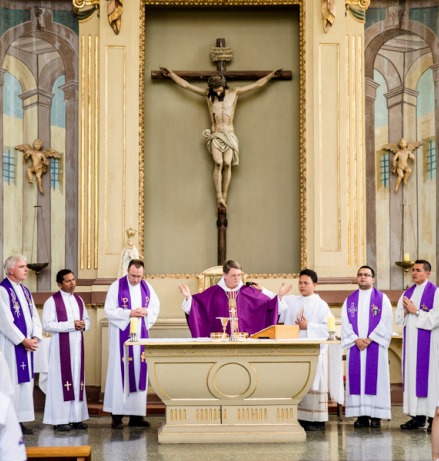
Some years ago a young man in my congregation used the term ‘Hot Muslims’ for some of his friends. Seeing my puzzlement he explained that they were young people who were dissatisfied with the formulaic Islam of their parents. They studied the Koran, kept the fasts and festivals – believing their faith, practicing it and sharing it with others as opportunity allowed. At the time I borrowed the expression, so that it became ‘Hot Catholics’ – those who believe the Catholic faith, practice it in their lives, and share it with others.

I suppose that the opposite of a Hot Catholic is a Cold Catholic: but why should Catholics ever be ‘cold’ and how do you ‘warm’ them up. The process is called ‘renewal’ and ‘evangelisation’ and is the work of the Holy Spirit.

What is soilèd, make Thou pure;
What is wounded, work its cure;
What is parchèd, fructify;
What is rigid, gently bend;
What is frozen, warmly tend;
Strengthen what goes erringly.
priest and people 3

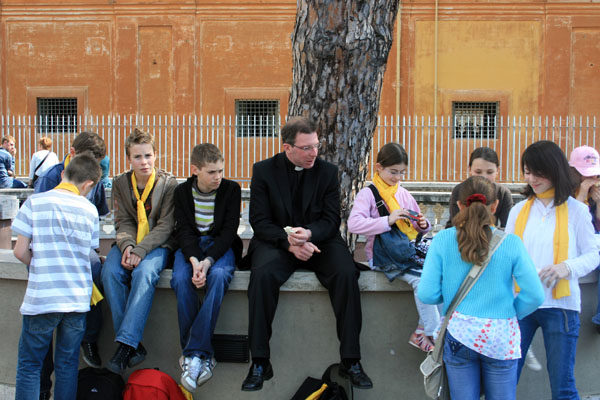
As Catholics in the Ordinariate we shall be involved – within our groups, within the wider congregations and in our daily lives in the New Evangelisation. We have been called by both Pope Benedict and Pope Francis to draw back into the life of the Church the many Catholics who have ceased to take part in Sunday Mass, and to live the Faith in their daily lives. In doing this work of evangelisation, we seek to renew our own commitment. No matter how devout, every Catholic Christian needs repentance and forgiveness, “lest that by any means, when I have preached to others, I myself should be a castaway.” (I Corinthians 9:27)

Why do baptised Catholics lapse from the Faith: we have to know and understand and empathise with the reasons before we can know the best way to bring about their return?

Angry Catholics are to be found everywhere. At the deepest level they may well be angry with God, perhaps after something like a tragic bereavement. Argument with them is not the way, and the evangelist needs to feel their sorrow and their bitterness. A shared experience may help. Some Catholics are angry because of the behaviour of other Catholics: at its worst one thinks of those abused by priests or teachers. The anger may involve misunderstanding of the Church’s teaching on divorce or contraception, and there is no shortage among the articulate, middle classes in the media ready to dismiss their Catholic upbringing as narrow and stupid! It is easy to get drawn into the anger, to return one bitter jibe with another. It is not disloyal to admit where Catholics at all levels have gone desperately wrong; it is important gently to counter false arguments, and to direct attention to the countless millions of faithful and good people in the Church, and to the wonderful and sacrificial work of love done by the Church throughout the world.

9-11

Indifferent Catholics may well be the next generation on. Baptised, Catholic school maybe, they have never really learnt the Faith nor seen it as having any relevance for their lives. They have absorbed the behaviour and beliefs of modern secular society, and their belief in God, if it is there at all, is on the edge of their consciousness. This group is rarely influenced by the clergy, for they just do not meet them. It is Catholic friends and colleagues who are most likely to be their evangelists. But what will they see in them? If it is mere routine or inherited culture which they see, then they will dismiss it as irrelevant or a hobby. An evangelistic Catholic needs inner renewal in the Holy Spirit.

The clergy are likely to meet Cultural Catholics when they bring their children for baptism and First Communion preparation, or when they are pleading (or demanding) a signature on the school form. And it is easy to get frustrated as they sit through your lecture on the importance of Sunday Mass attendance, and it is easy to accuse them of lying through their teeth! Remember that we live in an age where what you want is what you are entitled to, and you get what you pay for. How then, are we to evangelise them? For Cultural Catholics it is often the quality of the Sunday liturgy and the attitudes of the people worshipping around them, as well as the welcome they receive which draw them, little by little to a deeper encounter with the Lord.

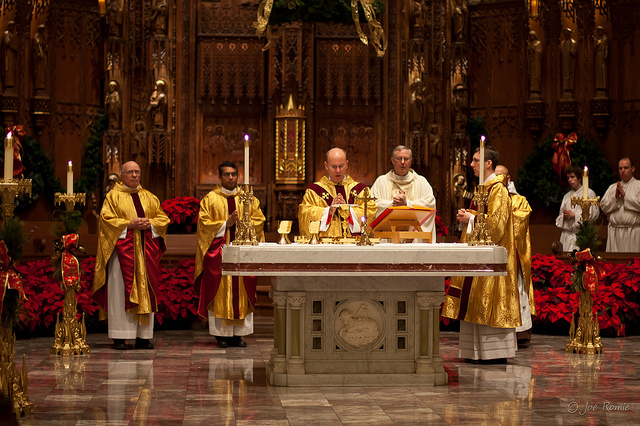
These three groups never, or only occasionally, attend Sunday Mass. Among those who do I want to identify two groups in addition to those I have characterised with the name Hot Catholics.
5299698365_2fefd1aeac_z

Dutiful Catholics make up a significant proportion of our congregations. Now I do not want to be misunderstood. The Christian Faith has a strong element of duty in it. I am reminded of the phrase from the modern Anglican Eucharist, where the Celebrant begins the Preface, ‘It is not only right, it is our duty and our joy.’  There will be dutiful Catholics who come regularly to the Daily Mass, say their prayers, and make their Easter Confession. For them good preaching and teaching, and a warm and affectionate relationship with their priest, are often enough to move them to a stage where duty begins to be infected by joy.

But there are dutiful Catholics at the lower end of this group who are only just there. The arrive late for Mass and leave after Communion. They put a few coins in the collection, and any challenge to this may well give them the excuse to stop coming. In many ways they themselves are the worst evangelists: their friends do not understand why they continue going to Mass, nor do they really understand themselves. Any move for renewal or evangelism in the parish will divide this group: some will respond and others will leave. While respecting their right to be there, the challenge must not be avoided because of the unspoken threat: ‘If you put any pressure at all on me, I shall leave .’
images

In many smaller congregations the Dutiful Catholics are dying out. At the centre of parish life now are to be found the Community Catholics. Warm hearted, happy people, most of them, regular at Mass, they are just the people to whom we turn for the Pastoral Council, the House Group, and anything to do with unity. In fact some of them cast a longing eye at the local Anglican church, and they wonder why we can’t have women priests, and whether the Pope couldn’t relax the no-communion-for-the-divorced rules. They are the generation who grew up with the excitement of Vatican 2, and they have become used to the relaxed and informal style of Sunday Mass. Evangelisation to this kind and well-intentioned group may be difficult, for they see their own needs, but have bought into the your-faith-is-just-your-opinion-but-you-mustn’t-ram-it-down-other-people’s-throats doctrine so beloved by the world. Maybe their own children have become angry Catholics, or Indifferent, but they love them dearly and don’t want to upset the family. What we want to do is to give their deep faith an urgency and an edge. We do not want to make them hard and judging of others, but rather to get them to see that other people are losing out by not being offered the Christian faith in all its fullness. Helping them to understand that the Council Fathers did not advocate the doctrine of universal niceness may be a start. And they may well be challenged by the presence of those who once were Anglicans and can warn them about where unchecked liberalism leads.

care for sick

The children of the Angry Catholics and the Community Catholics may well slide into Indifferent Catholicism, but it is not inevitable. There are those who will be renewed and rediscover their faith. I call them  Hot Catholics. The Catholic Faith becomes the heart of the way they live: it brings them joy and with it a deep desire to share their ‘pearl of great price’ with others. They are evangelical. They are not always easy to live with. They may want to challenge the tired liturgy churned out Sunday by Sunday. They insist on fasting and having large families, and they are the despair of their friends! They are a challenge too to dispirited clergy and older laity who can see nothing but ‘change and decay’ in their Church life. But there are also older (sometimes very old) Hot Catholics. They are people who shine with the light of a life lived close to Jesus Christ: in spite of age and infirmity the Holy Spirit is still young within them. They are full of wisdom. Hot Catholics long for renewal, for themselves, their parishes and for the Church.

Is my analysis a right one? It is only three years from by Reception, and less than eighteen months after my Ordination. I admit that I was much more confident analysing Anglican ‘types’. Criticism (constructive if possible) gladly received.

Posted in Uncategorized | Tagged , , | 2 Comments

The setting of the Liturgy

High Mass in the Chapel at Kelham c. 1965

High Mass in the Chapel at Kelham c. 1965

In the 1930’s the Kelham Fathers built the Great Chapel for their monastery and theological college near Newark-on-Trent in Nottinghamshire. The architect was Charles Clayton Thompson, and to my knowledge he built no other churches. Yet it is one of the most profoundly successful church buildings of the 20th century. It takes to heart many of the insights of the continental Liturgical Movement, and yet is fully provides for the ‘English’ tradition of liturgical celebration. It is contemporary with the ‘back to Baroque’ of the (Anglican) Shrine Church at Walsingham, but has more in common with Eric Gill’s church at Gorleston-on-Sea, which was built around the first central altar in England.

My purpose in this post is to suggest that this building, and the liturgy which is shown in the picture above, gives us pointers now that the Ordinariate is soon to have its official Missal. In the 1930’s some Anglo-Catholics sought to show their ‘Catholic loyalty’ by the uncritical adoption of an already old-fashioned Roman liturgical style. Pope Benedict encouraged us rather to search out our native patrimony, and we may now do so without the lurking fear that it is ‘tainted’ with Protestantism. I hope to show that such a native liturgical patrimony is intelligent, fully in line with the General Instruction which guides Ordinariate celebrations, and is beautiful and dignified. Its gravity and simplicity is much in line with the style which I believe the Holy Father Francis wants to see in today’s Church.

There will be many today who never knew the Great Chapel at Kelham when is was a place of worship: it was closed in 1972 and is now a large ‘function room’ owned by the local Council. A short description of the building will explain the picture above. The choir which can be seen in the foreground was square in plan, about sixty feet in either direction. The walls were of unadorned brown brick, and the floor of black polished tiling. The dark oak stalls provided seating for 150 students (who can be seen wearing the distinctive and very practical blue cotton  scapulars) with returned stalls for the priests and lay-brothers of the Community. At the west end was a narthex and gallery above for lay visitors. At the east end of the choir was a dramatic brick arch (the underside can just be seen) on top of which was the Rood (crucifix) with attendant figures of Mary and John, sculpted in bronze by Sargent Jagger. The sanctuary was paved in green stone, with the same stone being used for the high altar and credence. The altar stood well forward of the apse wall which was finished in a rough grey render. Superb acoustics were ensured by the saucer dome over the choir, and much of the Mass and Office were rendered in English to plainchant, accompanied on the small pipe organ raised in a gallery on the north side.

In the picture High Mass is being celebrated for one of the ‘Green Sundays’ – after the Epiphany or Trinity – what we now call Ordinary Time. The Celebrant has turned to greet the people, perhaps ‘The Lord be with you’ before the Collect. The deacon and subdeacon have moved apart so that there is no barrier between celebrant and people. The ministers are assisted by servers – crucifer and acolytes, thurifer and boat-bearer. All of them wear the alb, full length to the floor, caught at the waist with the girdle. Their amices have a coloured collar attached to them, known as the ‘apparel’ which smartens the neck-line and hides the alb fastening. The acolytes have placed their candlesticks in front of the altar and are standing by them.

The altar itself is very long and raised on three shallow steps. Because of the great width of the sanctuary it is possible to ‘return’ the steps: in most parish churches the steps, except for the footpace or predella, go right across the sanctuary. The arrangement of the steps and the generous space behind the altar would allow in these modern days for the celebrant to adopt either the ‘eastward’ or ‘facing the people’ position for the Eucharistic Prayer. The altar cross is of silver, and bears an enamel plaque of Christ in majesty (because the rood shows the suffering Christ) and is matched by a pair of very solid candlesticks. The short candles are quite deliberate, for the proportions of the altar are horizontal, not vertical. Although the sanctuary is very large, the altar is still dominant and is not overpowered by too many, or too tall, altar ornaments. Further candles are provided by the dark oak standards on the pavement, and three silver lamps hang above,  (Always known as the ‘bombs’).  The altar has no frontal: this is a break with English tradition in which the altar is always vested – though a frontal was used for festivals.

It is worth pointing out that there is no tabernacle on the altar or indeed, within the sanctuary. The Blessed Sacrament was reserved in a side chapel, and although this probably reflected  Anglican nervousness about Reservation, it was in accord with the then current Roman regulations for Cathedrals and churches where the Office was sung in choir.

It seems unlikely that celebrations of the Mass on such a scale will be possible in the Ordinariate, at least for the time being. And where the Groups are celebrating in their local Catholic Parish church, then the alterations of the 70’s and 80’s will probably make anything resembling the above liturgy difficult! But the lessons of proportion, dignity and unfussiness of vesture, grace of movement, and audibility (there was no sound system in the Great Chapel) might well be a small contribution to the renewal and growth of worship among Catholics generally and an attractive feature of the Ordinariate liturgy.

Posted in Uncategorized | Tagged , , , , , | 5 Comments

Alpha for Catholics – be just a bit cautious

Open Sundays sign

Just after Christmas a good friend and member of the Ordinariate wrote this to me: ” We have started Alpha training again, I am not convinced that this is the way to bring lapsed Catholics back to church. I have to resist saying, been there, done that! whilst some are so enthusiastic about things that we tried so long ago in the C of E. Our priest said that we must always make the Mass the centre, starting point, of all that we do. I worry that some members of the Catholic Church might try to ‘dumb down’ worship and look to Alpha, Messy Church etc etc ….. and church just becomes another Social Group, nothing too intimidating and certainly not challenging. ”

It may seem a bit mean to begin a post on Alpha (especially at the conclusion of the Christian Unity Octave) in this way. You can dismiss this as ‘Ordinariate Sour-Grapes” … as “the Traditionalists on the march again”, but hold fire. I’ve been writing for years about convincing and robust approaches to evangelisation; I started going to Church Growth Conferences thirty years ago; I’ve done evangelistic training, and after all this I just want to say that my experience makes me a bit cautious.

Christina Odone in the Catholic Herald asks how she could have been so wrong about Alpha. She points to the joy and enthusiasm of so many who take part in the courses, pioneered at the Anglican church of the Holy Trinity, just behind Brompton Oratory. She regrets that more Catholics are not outgoing and celebratory in their faith, and more impelled to share it with others. I share this longing, absolutely. But is Alpha the answer?

Alpha is now an international phenomenon: indeed I was amused recently to hear that it is such a feature of Church life in France, that many French Catholics think they invented it! But it does concern me that, after decades of Alpha courses in the Church of England, the numbers of people in church on Sunday, and the numbers of those describing themselves as Christian in the census, continues to decline. In 2001 Stephen Hunt wrote ‘Anyone for Alpha?’ His conclusion was that Alpha has been effective in renewing and invigorating the faith of those who were already practising Christians, but much less effective in bringing to faith those who were not!

In 2009, while I was still an Anglican, I went to a parish where the Alpha Course was being run. Now this was unusual among Anglo-Catholic parishes, and I was keen to take part and see how it could be developed. The food was excellent, the fellowship warm and affectionate, nearly everyone had done the course the previous year. We watched the DVD with Nicky Gumbel speaking in Holy Trinity Brompton, and at the end our (lay) leader asked if there were any questions or comments. The following year the same format was repeated. I asked if we could consider members of the congregation speaking instead of the DVD presentation, and I wondered whether the ‘discussions’ were straying rather far from the core topics. The third year Alpha did not happen. Reflecting now I think that an evangelistic and evangelical initiative had been (perhaps unintentionally) hijacked by the liberal agenda of mainstream English Christianity, which is certainly the most influential movement in the C of E. For the liberal Christian evangelism is as best unnecessary, and at worst impossible. It is often embarrassing. ‘Faith’ is a matter for the individual – and each person will discover what is fulfilling for him or her – ‘all faiths and none’ as we hear so often in public prayer and exhortations! But the faith you choose (and you are free to choose as you wish) has little to do with your salvation, your destiny, and what happens to you after death. For universal salvation is now the common belief of the mainstream churches, and if all are saved (providing only that they are true to their own beliefs) what is the point of evangelism? Indeed, if you have rejected any idea of personal existence beyond death, (and it is a publicly held belief now by some influential Anglican clergy) evangelism becomes quite irrelevant.

Archbishop Runcie expressed privately his concern that Charismatic Evangelicalism represented more of a threat to his sort of Anglicanism than divisions over women priests. Indeed in recent years there is anecdotal evidence that young clergy from the Evangelical colleges are being more and more appointed to ‘liberal Catholic’ parishes in the C of E. This has led to the Alpha Course, the worship which goes with it (which in the main is not centred on the Eucharist) and the type of leadership which emphasises ‘ministry’ rather than ‘priesthood’, spreading to many more parishes. But there has been another interesting and parallel change, and that has happened as Evangelicalism has come from the edge to the centre – the liberal establishment centre – of the C of E. Yes, one can point to its Bishops who have taken to wearing the ‘robes’ like the cope and mitre. But insofar as it now has to deal with the Cathedrals, and even more with the ‘State Religion’ so its attitudes on salvation, the uniqueness of Jesus Christ, and personal sin, have all softened. Evangelicals has always been at home among the middle classes, and as their attitudes over moral issues like divorce and homosexuality have ‘liberalised’, so has the face of English Evangelicalism. Since the break with Rome in the 16th century the C of E has been a ‘lay’ Church: it is the attitudes and habits of the lay middle-classes which have shaped the doctrine and moral theology of the C of E. It’s why Anglo-Catholicism for all its achievements, for all the beauty of its worship and the coherence of its theology, could never win.

So, has Alpha a place among Catholics? The great draw back is its attitude to ‘basic Christianity’ which embraces God, sin, redemption, the Bible, and prayer – but regards the Church, Eucharist, Mary, and the sacraments as ‘additions’. For the Catholic the Church is at the heart of Christianity – no Church, no Christian Faith. For the Protestant, a Christian is ‘one who accepts Jesus as personal Lord and Saviour’: for the Catholic a Christian is ‘one who celebrates the Sunday Eucharist where he or she meets Jesus, Lord and Saviour.’ So we cannot have an Alpha with a Catholic ‘add-on’. Catholic Alpha starts with the Holy Spirit and the living Church, moving through the life, death and resurrection of the Son of God, who works today among his people in the sacraments. For Catholics there is in the very teaching of Jesus a call to decision, made in baptism and lived out in Christian life directed towards heaven and the vision of God. Here the Catholic cannot make common cause with the modern liberal.

There is no doubt in my mind that the Catholic Church in this country needs first to renew its people in faith and the Holy Spirit. It then needs to teach them how to evangelise, how to share the Faith and bring those who do not believe to Catholic worship, Catholic believing and Catholic living. Can Alpha do this? I’m not sure, but the question is certainly worth asking. And if not Alpha, then what?

renewal holy spirit

Posted in Uncategorized | Tagged , , , , , | 2 Comments

Back to Church at Christmas: opportunities for evangelisation

christmas-songs-17

There is  a story told of an Anglican priest who surveyed the substantial congregation which had turned up for the Evening Service on Harvest Sunday (it was some years ago when they still did).  Marching up to the tabernacle and opening the door, he said loudly, “Take a look at that lot, Lord, you won’t see them again until next year! ”  Once we thought of this occasional attendance as an Anglican phenomenon, but a new generation of Catholics has abandoned weekly Mass attendance.  They still bring their children for baptism and for First Holy Communion – sitting doggedly through the priest’s lectures about going to Mass every Sunday – and they were probably there for one of the Christmas Masses.  I begin to wonder whether we needed to invent ‘Back to Church Sunday’ (in October isn’t it?) when the time that many Catholics come back to church is Christmas.  Furthermore, it is increasingly the case that those who are not Catholics, but want to begin Christmas in church, will go to the nearest,  which may well be a Catholic Church.

In my experience the Catholic Church in the UK does not handle this very well.  Historically, it is used to putting on ‘Masses for Catholics’ and in the past churches were built where they were needed for the Catholic population.  They were often functional, and not very beautiful.  Surprisingly, not much changed with the Second Vatican Council. A great deal was written about how to present the new liturgy, and a great deal of money was spent re-ordering the buildings.  And music! Lots of it was written – simple to the point of banality – and still not sung by 90% of the congregation.

The temptation is just to assume that this provision of Mass for the masses will do at Christmas.  The people will come because it’s Christmas, and the Catechists will lay on something for the ‘kiddies’ to do, and the adults will look at their shoes while Father has a dig about ‘Christmas only Catholics’ … but will they come back next year?  Guilt (not a strong emotion for most Catholics nowadays) is not enough – and what we present in our liturgy, our preaching, our welcome – and yes, even our carefully worded Communion discipline – must seek to move, challenge, and thrill, if we are to use the evangelistic pull of Christmas. The imperative of evangelisation demands that we use Christmas to bring them to Mass next week – not next Christmas!

It is three years since I left the Church of England and was received into the Catholic Church.  In that time I have experienced and taken part in three  “Catholic Christmases” – all different. It would not be appropriate for me to comment on individual celebrations, and so I make some general points, both positive and negative, in the hope that this will assist us all in reflecting on how we celebrate Christmas in church.

PLANNING BEGINS IN JANUARY

Before the end of this month bring together  everyone in the congregation who has had a hand in the Christmas celebrations: welcomers, children’s workers, musicians, servers and so on. Work out together what was good, what could be improved and what went wrong. Encourage a discerning attitude which welcomes back those who have lapsed, does not judge them harshly, but also longs to see them coming every Sunday to Mass. Make a list of key things for next Christmas, agree a date to meet again, and ask if there is any follow-up of families and individuals which could be done right away.

TIMING OF CHRISTMAS SERVICES FOR YOUR AREA

With fewer priests and smaller congregations there may well be decisions made about when and where Christmas Masses are to be celebrated. But the principle of subsidiarity means that these should be made as close to the parish as possible. It has been suggested that the days of the Midnight Mass are numbered, but if so this may have more to do with the age of the clergy, than the presence of drunks, which seems to me to have diminished over the years. (The number of drunks rather than the age of the clergy, sadly!) My own theory is that, if churches are combined, it is better to have the same time at each church for as far into the future as possible. Regular members of the congregation may  be able to work out that this year St Gertrude’s is a 5pm, Immaculate Heart at 8 pm and St Philomena’s at 9 am Christmas morning – but THINK VISITOR AND STRANGER AND LAPSED … when it all changes around next year they will be standing at the door of a locked and dark church.

Rome-St-Peters-Nativity

‘VIGIL’ OR ‘MIDNIGHT’ – THEY ARE DIFFERENT

More and more the so-called ‘Midnight Mass’ seems to be combined with the ‘Vigil’ Mass. But the ‘feel’ of these two is different. Many more children are likely to come to the earlier Mass: the ‘Midnight’ has a more ‘grown-up’ feel to it. The music is going  to be different, and you should consider a full team of servers and incense at the Mass during the night. There is also the question of readings for those set for the Vigil really do not tell the Christmas story: those for Midnight do, and the Mass of the Day (when children and families may well be present) has the profound meditation by St John as its Gospel. Not for one minute am I suggesting ‘dumbing down’, but rather awareness of who lives in your area – not just Catholics – and who will be present at which of the Masses. ‘Midnight Mass’ doesn’t have to begin at Midnight, as the title ‘Mass during the Night’ in the Missal makes clear. 9 pm might be a good time allowing people to get buses and ‘tubes home – and if anyone comments you can always say that it is Midnight in Bethlehem!

beautiful-cribs-christmas

PREPARING THE CHURCH

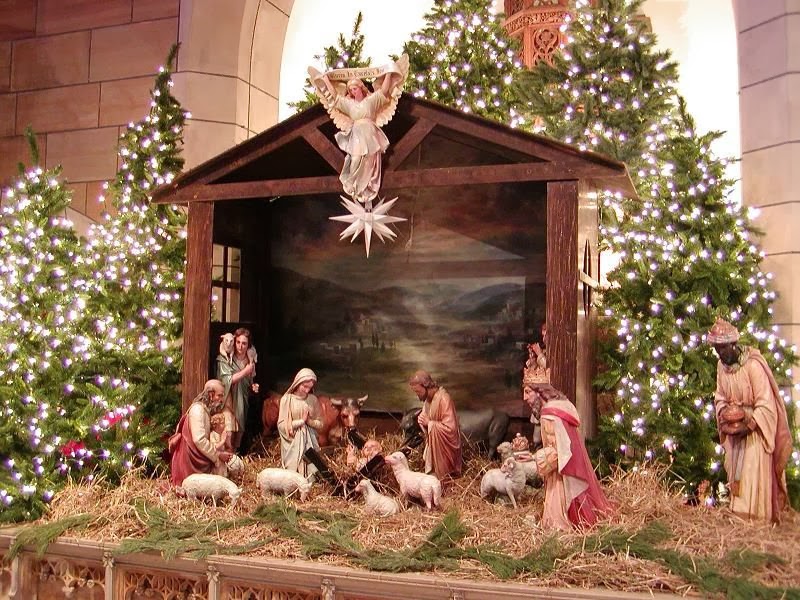
Try to achieve what they call nowadays the ‘wow factor’. The decoration of the church must be simple, unified and with maximum effect. Make sure that access to the Crib is easy, that there are candle stands and prayers provided, and that it is low enough for the children to see it at their level.
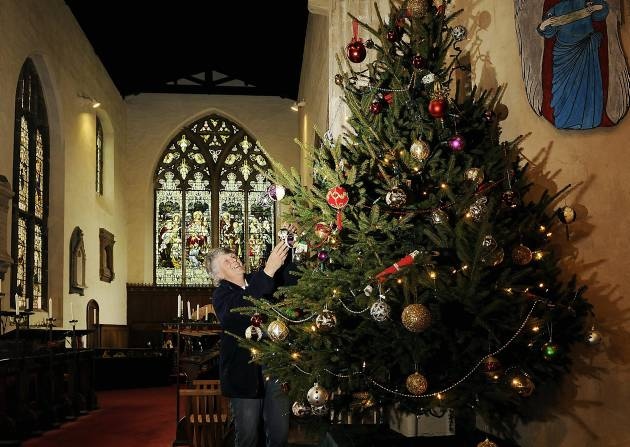
A single Christmas tree as large as you can afford, is effective in the sanctuary with white lights, and then either red bows, red swags, or gold/silver balls. Don’t mix colours, and keep this theme of red and dark green throughout the building. It’s the one time when artificial flowers work: try combining red silk carnations or roses with dark green laurel or pine. No other colours, and no plastic daffodils!!
If at all possible candlelight the church. There is nothing like it for creating the atmosphere of Christmas. If you can’t then get the electrician in some months before to put dimmers on the lighting. If that is beyond you, then just don’t put all the lights on – especially if they are fluorescent.
If the children have done art work during Advent, display it by all means, but don’t stick it to the altar. It looks tacky.


1237574587

WHAT WILL THEY FIND WHEN THEY STEP INSIDE?

Do remember that the times of Christmas Masses need to be obvious – just telling the congregation on Advent 4 that it’s the same as last year won’t do. Spend some money on a decent poster outside the church, and also make sure that you use your main and most obvious entrance – not a side door which only the faithful know about.

The stewards must welcome with a smile and a few words. This is not the time for conversations with their friends. Include some children among the welcomers; they are usually very good at it. Try to stop early arrivals packing out the back seats: it’s nerves and custom. Regular mass attenders must not sit at the back. This forces occasionals to sit at the front and embarrasses them (especially if they are late). Create an atmosphere of reverent expectation. This is where the low lighting helps, and carol singing or a tape/CD as people arrive. Make sure that the regulars don’t chat, and that all is ready an hour before so that no-one is rushing around before the Mass begins. Don’t let the stewards sit down until well into the Mass. They must be there for the latecomers, and help them to seats especially if the church is very full.

5299698365_2fefd1aeac_z

MASS AND MUSIC

Take the time to prepare and print off an order of service. Remember, even those brought up as Catholics will probably not be familiar with the most recent translation. If the children are going to do a presentation, have it at the beginning or end, and not too long! Actions are symbols are more important than words.  Traditional carols are what people expect to sing, and if you have a good organist and choir, do make sure that the Mass setting is congregational. An offertory motet or at Communion, by all means, but not in place of the people’s singing. The organ associates itself in most people’s minds with Christmas: and I may be old-fashioned but carols with a ‘beat’ accompanied by the band just doesn’t do it for me. If you are fortunate and have a good organ and organist, all is well. If not, see if you can pay one over Christmas. But you’ll need to spend some time with him or her: the organist who could accompany the liturgy well is a disappearing breed.

Let’s hope that in a few years time the chant settings from the missal will be second nature for Catholics. Kneeling for the Incarnatus: almost always goes wrong, people miss it, the ‘regulars’ just carry on reciting, and the visitors wonder what on earth is happening. Make it spectacular, with the celebrant and servers coming, in good time, to the foot of the altar (like the Extraordinary Form) from the chair. As soon as (and it has to be quick) you get to the point, the organist plays a fanfare (only about 10 bars) to cover the kneeling, then all recite the Incarnatus – organist straight in with another fanfare to cover the standing up – and the Creed continues. Believe me, it does work.

THE HOMILY

The priest must find time to prepare: and the shorter it is the more time it takes to prepare. Don’t waste the opportunity of a full church. Preach from the heart, but don’t waffle on basking in the sound of your own voice. To make every word tell you will almost certainly need to write down, or to memorise what you are going to say. Tell the people about God’s love for them, shown to us in his Son who comes to live among us and to die for us. Ask them if they will make a response in their own lives to such wonderful love. You can’t say more than this.
MIDNIGHT-MASS-ST-CHADS-CATHEDRAL-2012-CRIB-PIC-ONE-300x282
COMMUNION DISCIPLINE
There will be lots of people there who haven’t been to Mass since last year. Should we say anything? Yes: but don’t nag. In the service order print a simple note at the Offertory, reminding people that Holy Communion is received as a precious gift and sign of unity within the Church. Non-Catholics and those Catholics who do not come regularly may receive a blessing if they wish at the time of Communion. If you read this out, resist elaborating or apologising, and leave the rest to God and his mercy.

AT THE END

Make sure that some of the stewards are at the door to give out to everyone a simple card. This will be overprinted with the times of Sunday Mass, and a space to fill out name and address for those who wish to make/remake contact with the Church. Do not give these out with the service orders which will be left in the pews or the table at the back. Hand them out personally, at the door. The priest is there to greet everyone, and not to get into discussions about whether the date of the next Pastoral Council meeting in February!
t_1925_0


Posted in Uncategorized | Tagged , , , , , , | 2 Comments

Our Church Schools are worth fighting for

Fr%20Lou%20Hearts%20Catholic%20Schools

Why does a section of our society – including some politicians and some teachers – get so angry about Church Schools? Last Saturday’s Question Time had one of the panel asserting that we are a secular society and there is no place for any ‘faith school’. This was received with hearty applause from at least a section of the audience. Jonathan Dimbleby pointed out that the Church Schools are both successful and popular with parents, and it is useful to note these facts. But the justification for our Schools goes much deeper than this.

Forty years ago, when I was doing a post-graduate teaching qualification at St Martin’s College, Lancaster, the College had a twinning arrangement with a similar establishment in Sweden. I recall the constant British amazement at the control which the Swedish State exercised over education: indeed, one lecturer told us that on any day the same topic would be taught in all Swedish schools. At that point the National Curriculum was way in the future of British education.

Most Americans guard jealously the right of parents to educate their children as they think fit. There is a strong home-schooling movement in the States. To a large extent in this country we have accepted that the state is responsible for education, and the Church has been apologetic to those who seek to make all schools secular, and to reduce ‘religious’ teaching to the privacy of the home. Fr D.G. Peck, a young Anglo-Catholic theologian writing in 1940, saw the danger: “Members of the family are sucked out of family life into the vortex of the larger but more amorphous community life. Inroads have been made upon the family’s nurture and education of its children by pre-school services, the school (which tends more and more to be regarded as a self-sufficient social unit) and finally by the new opportunities for education, cultural growth and employment outside the family scope. ”  (Catholic Design for Society – Dacre Press 1940)

As Peck rightly foresaw, the  collapse in western society of the family as the fundamental unit, has been a social calamity.  In the UK the transformation of the building we once thought of as a ‘home’ into an ‘investment’ has put intolerable strains upon the economics of the family. In this social vacuum the school in its various forms (we must include nursery and child minders here) is now seen as taking on responsibility from the first few months, as both parents where there is still a couple, or the single parent through choice or desertion, are desperate the return to work to keep up the grossly inflated mortgage payments. Schools are open from first thing in the morning – providing ‘breakfast clubs’; long after lessons are over, children are there doing what we once called ‘home’ work.

As the social experiments which we have inherited from the 20th century crumble and fail, one might have expected a bit of humility from the secularists. Not a bit of it! Recognising that the Church Schools might be the last place to teach values contrary to the prevailing mix, they have set their sights on destroying them. Christians in this country have gone a long way to accepting without question their analysis of religion as a private add-on. It is nothing of the sort. It is both an all-embracing perspective on life, and a totally embracing way of living that life. And the reason we can  deride (with the greatest of respect, of course)  so many aspects of modern culture, education and ethics is precisely because we view them under the divine light. We subject them to the scrutiny of Scripture and the wisdom of the ages: and we see them to be wanting, and to be failing us all.

Fr Peck, writing in the midst of the Second World War, had had ample opportunity to see how totalitarian regimes of right and left had subverted a generation of young people through seizing control of education. The Church must remain strong and confident in the provision of schools for its children. We suffer from the desperate need for committed Christian teachers – who themselves hold to the ideal of Christian education. And we need parents committed to the nurture of their children and the vital role of the home in education – even where this means accepting the financial constraints where only one parent is working. Nor is the Church School helped when parents opt for it simply on the grounds of good exam results or a ‘caring ethos’. The Church School provides Christian education, and it seeks to subvert the values of a decadent, failing, materialist society. The Church School, like the Catholic home, is a powerhouse of love: it transforms lives for good and for God.

catholic-schools-3

Posted in Uncategorized | Tagged , , , , , , | 1 Comment

Remembering the English liturgy at Thaxted

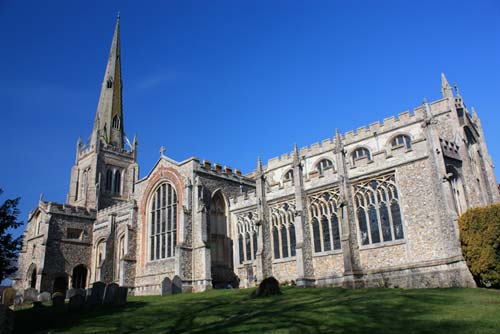
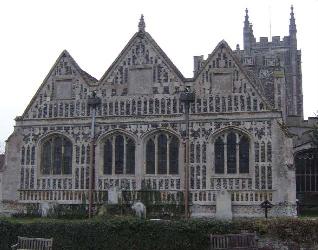
Parish Church of Our Lady, St John the Baptist and St Lawrence, Thaxted, Essex

Parish Church of Our Lady, St John the Baptist and St Lawrence, Thaxted, Essex

In my teenage years in the 1960’s I would go to stay from time to time with my aunt and uncle and cousins who lived on the London edge of Essex. On Sundays we would often visit  churches which I had heard of, which is how we came to be at the Parish Mass in the village of Thaxted, on Remembrance Sunday in the late 1960’s.

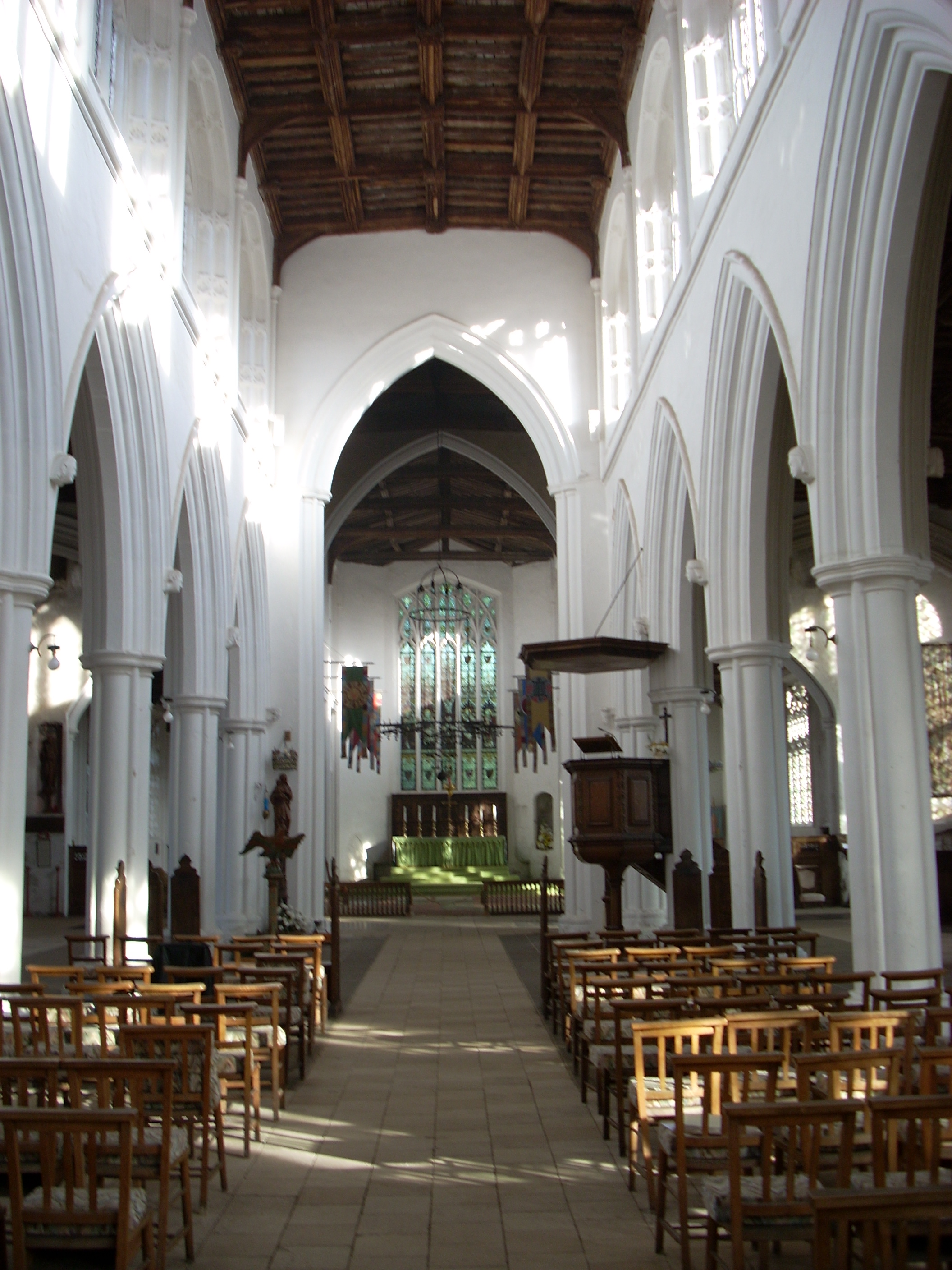
The church building itself is a stunning late-mediaeval creation, on the scale of a small cathedral. Its huge windows flood the white-washed interior with light (for there is little stained glass) and there is space everywhere, largely thanks to the radical transformation when Conrad Noel was vicar between the wars. He cleared it of the dark Victorian pews, and in their place erected chapels, altars and shrines which burst with delight and colour. There is nothing here from the church furnishers, not a ‘correct’ piece of ecclesiastical brocade; the sacristy is a screened portion of the south transept with a thatched roof! Conrad Noel upset the Bishop of Chelmsford with his uncompromising Anglo-Catholicism (street processions for Corpus Christi and the Assumption) and conservative Anglo-Catholics by his unabashed Communism. (The church has a shrine to John Ball, the leader of the Peasants’ Revolt.)

Interior - pulpit and High Altar

Interior – pulpit and High Altar


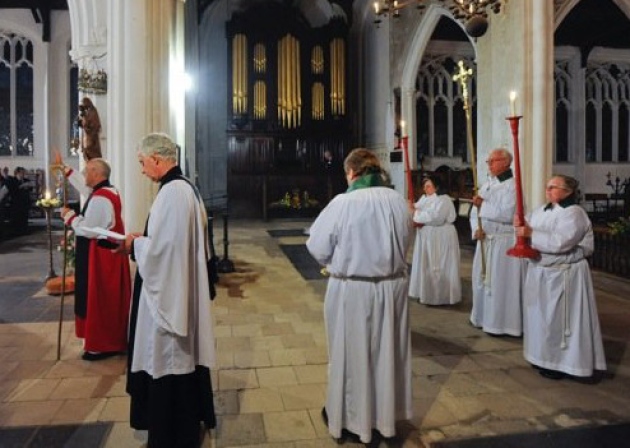
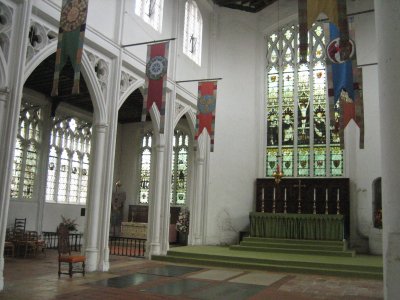
By the time I went there  Fr Jack Putterill (Noel’s son-in-law) was the vicar. He had dropped Russian Communism, with the revelations of Stalin’s purges, and rather taken to the Chinese version. Mass was celebrated with deacon and subdeacon, and a team of servers, all wearing albs with apparels tacked to their amices. They can be seen in the picture below, standing up like coloured collars. The tall red torches were being carried, and the Mass flowed between the High Altar  – which although very distant in the vast building, was brought closer by the clever use of the long banners in the chancel – and the nave with its splendid 18th century pulpit, painted lectern and Jacobean chairs for the sedilia.

image

The Mass rite was (I think) the First English Prayer Book of 1549: certainly we began with the blessing of Holy Water, and then the English Litany was sung while the Celebrant sprinkled the people and the whole building. I was fascinated by the use of a big bunch of greenery instead of the bog-standard wood and brass sprinkler seen everywhere else.

During the sermon, in which Fr Putterill gave a vivid description of  Russian rockets ‘as long as this church’, the elderly gentleman in front of us, who looked like Bertrand Russell, turned to his wife. ‘What’s he talking about?’. ‘Russia, dear,’ she replied and then turned to us apologetically: ‘He’s always talking about Russia.’

Chancel, hanging banners and High Altar

Chancel, hanging banners and High Altar

The Offertory Procession had the Deacon of the Mass bringing the gifts from the Lady Chapel wrapped in the sudary veil – somewhat like the modern humeral veil but narrower and longer. The Consecration Prayer at the High Altar looked like a mediaeval painting, with the clergy and servers in the distance, incense rising to the roof, and the almost complete silence broken by the bells at the Elevations. Modern pictures show the High Altar with a wooden panelled reredos and six brass candlesticks. As I remember it, the altar was surrounded on three sides by curtains hung between riddle posts, themselves topped with candles. On the very long altar itself stood only two candles, and two ‘standards’  on the pavement at the foot of the steps. The present six came, if I remember rightly, from one of the Dock churches in East London (St Luke’s or the Ascension).

The English style of the liturgy was never just antiquarianism, although it was far more ‘Catholic’ than the rather safe liturgies of the Cathedrals under the influence of Percy Dearmer. At times it was outrageous and provocative, though perhaps this had more to do with Conrad Noel’s political views. His transformation of the church would not be possible nowadays, with the combined forces of faculty jurisdiction and the Victorian Society no doubt opposing him. Yet his artistic sense and taste were sure: just to step into the church is to be delighted and uplifted. There is nothing showy or especially expensive, and it is not grand. Yet it has a loveliness, and a remarkable timelessness – for it has not dated, and much of it is still as Noel left it. It has a unique English beauty which makes many church interiors seem dull and lifeless by comparison, and many (though not all, as I shall try to show in a subsequent post) modern churches so desperately ugly.

Posted in Uncategorized | 5 Comments

The music of Advent


untitled (3)

Compared with the carols and hymns of Christmas, the music of Advent is less well known. Yet it is among the loveliest – and most singable – of the Church’s year.  As part of the restrained liturgy of this season, it makes its contribution to  preparation for Christmas, the Festival of the Incarnation.  Here are some of my suggestions.

The use of plainchant during the Advent season is appropriate to the simplicity and austerity of the season.  It goes with the violet vestments and the withdrawal of the Gloria in excelsis at Mass.  The chant settings of the Ordinary – Kyrie, Sanctus and Agnus Dei – which appear in the new Missal could well be learnt at this time, and then put away again to come out for Lent.  The hymn Conditor alme siderum, known in English as Creator of the stars of night (English Hymnal 1) is among the finest, yet simplest and most easily sung, of plainchant hymns.  Sing it gently and lightly, fast enough so that you can do two lines to a breath.  If your organist is uncertain about how to accompany – do without accompaniment – let him/her join with the singers.

Organists sometimes feel that the congregation will only sing with a strong (loud) accompaniment.  They are usually mistaken and end up drowning the attempts of the people.  It may be difficult to persuade them of the wisdom of the Church’s direction that the organ should not be used in Advent and Lent.  But the effect of silence before and after Mass is most impressive.  It may well serve to reinforce the priest’s pleas that people arrive in good time and discourages the chatter and wandering around which have become such a disturbing feature of modern Catholic worship.  In one church I knew of the organist responded to the Advent ban on voluntaries by learning the appropriate Bach chorale preludes for the season and then offering these in place of the Communion hymn.  The priest was, I think, quite right to bend the rules, and the effect was stunning.

The chorale known as Wachet auf or Sleepers wake appears in English Hymnal 12 with the first line Wake, O wake with tidings thrilling.  Clergy shy away from it as too ‘difficult’ to sing.  Here one does need a good organist, capable of playing Bach’s wonderful harmonies.  We should probably sing it faster than originally intended, for letting it drag destroys it.  If the singers can manage the harmonies then a verse unaccompanied is a real treat – otherwise bold unison singing throughout.

O come, O come, Emmanuel is an Advent favourite.  It belongs to the second half of Advent, being a form of the Great O antiphons, based on biblical titles given to the Lord Jesus, and sung before and after Magnificat (at Evening Prayer) between 17th and 24th December.  The lectionary also uses these antiphons at the Masses of these days as the Gospel Acclamation.  The hymn can be successfully adapted by fitting four Alleluias to the chorus instead of Rejoice, rejoice Emmanuel… and singing the appropriate verse each day before the Gospel.

From modern repertoire Graham Kendrick’s hymn O Lord, the clouds are gathering emphasises the themes of judgement, justice and righteousness, and adds a sombre note to this penitential season.  Closer to Christmas Meekness and majesty, another Kendrick, brings home the wonder and humility of the Incarnation.  If you are not familiar with them, go to YouTube.  How great thou art – so familiar at funerals – might well be rescued for Advent, with its verse ‘When Christ shall come, with shouts of acclamation’.  There is a lovely little song in the Liturgical Hymns Old and New, with the verse ‘Come Lord Jesus [3 times] Come again.’  It might well be used at a prayer group, or after Communion at a weekday Mass; or with the children getting them to make up verses e.g. ‘Born of Mary [x3] Come again’ or ‘God’s Messiah [x3] Come again.

If your musical resources are small, but you have a CD or MP3 player (perhaps built into the sound system of your church) then use some of the arias and recits from Handel’s Oratorio Messiah … glorious music, quintessentially English, and to my mind, inseparable from this time of year.

Posted in Uncategorized | Tagged , , , , , , , , | 3 Comments

It’s time to work out what love really means

It is difficult to avoid the issue of child abuse, the reports, analyses, recriminations, apologies.  But then, why should we want to avoid them? Embarrassment, shame, yes – but above all, a sense of powerlessness in the face of something which has been shown to us, but about which we feel we can do very little.

The answer in today’s Britain is more legislation, more laws, more paperwork. This is not surprising, as it is our response currently to  every problem.  The real answer lies much deeper, in the way we live, the way we treat other people, and our own sense of responsibility for the health of society.  But we have lived for too long with the notion that I have the right to decide what I want to do.  Our sense of belonging to a society, a corporate body, guided by a general sense of right behaviour, mixed with plenty of common sense, and  looking out for each other – as this has declined so legislation has increased.

The word ‘community’ is used a great deal nowadays, and most often of ethnic or special interest groups. Thus we have the ‘Polish community’ or the ‘football community’, or the ‘business community’.  There are religious communities too (I don’t mean monks and nuns) so that we have the ‘Muslim community’ – but I can’t remember often hearing the ‘Christian community’ – at least not in this country.  For that, the word is ‘the Church’, often used slightly disapprovingly, unless is it making decisions approved of by the liberal elite!  True, the ‘local community’ features from time to time, though in our great cities it’s hardly clear just who belongs to it.  East Enders, Corrie, The Archers are all struggling with the idea of the ‘local community’.  The only ‘British community’ we hear about lives in Spain, and  attempts to define ‘British values’ clash with ‘multiculturalism’.

Some thoughts then, about a fairly typical report a couple of days ago on the Today programme.  In a sense, the details of the programme do not matter, though it concerned two of our northern cities, and asked what councils were doing to protect vulnerable children.

First, it talked about ‘CSE’. Now with a background in teaching now 40 years old I immediately understood the Certificate of Secondary Education: that’s the problem with initials.  It took me a moment to gather that they were talking about Child Sexual Exploitation. Of course, ‘CSE’ allows them to cram more into a few words, in a short presentation.  It’s quicker and less laborious than having to repeat the phrase ‘Child Sexual Exploitation’ or even think about varying it with ‘the exploitation of children’ or ‘sex by adults with children’. Notice the change too, from capitals to lower case – but has nastiness of what is happening diminished?  Not to my mind. ‘CSE’ means nothing – or in this case it has two meanings, completely different from each other.  But it can be dealt with as something ‘out there’.  It is convenient, it is jargon, it fits in with ‘case conferences’ and ‘reports’.  It has a professional ring… it belongs with the ‘professionals’ whom I can blame.  What are the councils/police/social workers/the Church doing …?

Which leads me on to something which puzzled me: why was there no mention of the parents of the children?  Some children were in care, yes, but why were they in care?  Some children were in the care of a parent or parents.  All of them were born to a man and woman, the people we call their parents.  These people have the fundamental responsibility for the care and nurture of the child born to them.  External factors like poverty, poor housing and lack of work, destabilise the family; so too, do drugs and alcohol.  One or other – or both – parent may have been unfaithful, or they may never have married, or walked out on the family.  The losers, every time, are the children.  Deep down what every child wants and needs is a mother and father, who love and care for each other, and love and care for their child – no matter what.  So let’s hear it for the family, and a bit less about what my rights as an individual are, and a bit more about my responsibilities to my wife, my husband, and my children.

I’ve gone on in other posts about the use of language, and I’m going to do it again.  Why do we use the word ‘child’ of someone aged 15 and, in some cases, 17. The ‘children’ concerned would be furious to be called ‘child’ – and in any case, isn’t it cool to use the word ‘kids’?   ‘Kids TV’, ‘kids clothes’.  We use the word children because it implies someone vulnerable, less than responsible, open to exploitation, easily hurt and damaged.  Yes, and yes again.  This is what ‘young people’, ‘teenagers’ are.  And they need guidance, formation, rules, direction – all that is part of love – and so is time, interest, encouragement, development, from their parents, teachers, group leaders, priests.  And what about their role-models, footballers, for example, or pop stars – and what about politicians and those who form our opinions in the media?  We can’t treat them as ‘children’ in this one small area, and yet as ‘adults’ with all the responsibilities that adult freedom brings, everywhere else.  They are most vulnerable and most easily damaged in the area of their sexuality, most puzzled, worried and challenged by what is happening to them bodily and mentally.  As they try to cope with their emotions they are  likely to mistake exploitation for love.  This will be particularly so for those who have been deprived of love by their parents, or who have seen ‘bad love’ between them.

Where does this treatment of children as if they were adults come from?  It has been driven by commercialisation.  As society has grown wealthier, and so children and young people have been targeted.  They have money to spend.  A world has been created in which they have their own fashion, music, social life, all of which costs.  God help the child with the ‘wrong’ trainers!  Parents feel that they do not understand their children, and that they are shut out from their world.  Of course they are: and the people keeping the door shut are the money-makers.  They are the exploiters, and progressively they have stolen young people from their parents, from their teachers, from their clergy – from any influence which might suggest that spending money on excess is not the road to happiness and fulfilment.  Sexualisation of young people – and the age gets lower and lower – is a prime way of making money out of them.  It’s time as a society we woke up, and said, ‘No’. But while we put the future of our children into a file marked ‘CSE’ we can avoid that daunting task.


Posted in Uncategorized | Tagged , , , , , , , , , , | Leave a comment

Sadly no longer with us

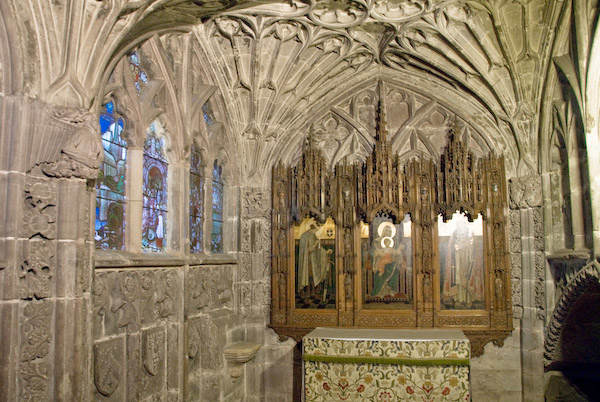
The Lady Chapel (Clopton Chantry) at Long Melford

The Lady Chapel (Clopton Chantry) at Long Melford

I was at St Joseph’s, Weymouth, for All Souls’ Day, and I am indebted to Fr Stephen Geddes, the parish priest of Weymouth, for this reminiscence. He recalled that in the ‘old days’ the one of the three masses was offered for the Pope’s intentions. In England this intention was always for the souls of those who had been deprived of masses and prayers for the dead at the time of the Reformation.

The Clopton Chantry at Long Melford, Suffolk

The Clopton Chantry at Long Melford, Suffolk

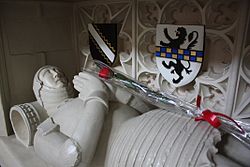
Anyone looking around a mediaeval church of any size in this country will have noticed the chapels built on to the original structure. This has nothing to do with the need to accommodate a small village population for these chapels were ‘chantries’ provided with altars where Mass was celebrated for the dead: either individuals or collectively in the guilds. The chantries were ‘endowed’ with sufficient funds to pay the stipend of a priest, who was responsible for the daily offering of the Holy Sacrifice for the departed donors. Over the years the chantries were given plate and vestments, and the endowments increased by gifts of land and rents. While some chantry priests were wealthy and indolent, it is also true that many more – not being parish priests – provided schools, and taught the local children. In my own former parish of St Mary Lewisham, the school collapsed with the closure of the chantry and the loss of its priest/schoolmaster. Thus the local children went untaught until the refounding of the school by Abraham Colfe, Vicar of Lewisham, some one hundred years later. This school still exists as Colfe’s, though the buildings are now not far away at Lee.In 1545 (under Henry VIII) and 1547 (under his son Edward VI) Chantry Acts abolished the Chantries and disbursed their endowments, lands and buildings to those favoured by the King – or for the replenishing of royal funds depleted by war.

Illustration by Martin Travers

Illustration by Martin Travers

Mediaeval men and women would have been puzzled by the expression so often heard on radio and television when speaking of someone who has died: ‘sadly no longer with us.’ Their world was peopled not only by the living but by the dead too. Earth, purgatory and heaven were close, and nowhere more so than in the celebration of the Mass. Our mediaeval ancestors had no easy assurance that when they died they were ‘going to a better place’. The rich particularly were deeply concerned, as they grew older, with their eternal salvation. Their wills provided for the poor, for hospital and alms houses. Those who had enjoyed this world’s riches and its comforts sought to avoid the fate of the rich man in the parable of Dives and Lazarus. But knowing that in purgatory they could do nothing for themselves, the aristocracy and the nobility provided for the offering of the Mass and the prayers of the faithful after their deaths.

The Stanford Chantry at Hereford

The Stanford Chantry at Hereford

Further down the social scale, men and women bound themselves together, contributing to the provision of Masses and prayers. The Bidding of the Bedes (a form of the modern Prayer of the Faithful) at the High Mass on Sunday was of importance, for it included the names of the departed. Each Guild kept its Bede-Roll in which were entered the names of departed members, so that they could be prayed for on the anniversary of death, and at All Souls-tide.
The shock in every parish community at the abolition of the chantries – and Archbishop Cranmer’s liturgical reforms which abolished prayer for the dead altogether in 1552 – cannot be underestimated. For centuries the living and the dead had been bound together in prayer and worship. With such prayer abolished, the dead disappeared from the remembrance of the living. The faithful in this world might no longer pray for the forgiveness of the departed, and very soon any notion that the dead need such forgiveness disappears, too. Their memorials now list their good deeds, with the implication that God will wish to reward them for their virtue. Death becomes but an extension of the English class system, in which the wealthy still come out on top! How different from the mediaeval understanding. And how clearly we see now that the abolition of the dead from the consciousness of the living, leads inevitably to the abolition of God himself from the lives of the English.

The Church's offering for the living & the departed

The Church’s offering for the living & the departed

The recovery of prayer for the dead was one of the first – and among the  most controversial – acts of the Oxford Movement. The Guild of All Souls is the oldest of the ‘Catholic Societies’. And in the aftermath of the ‘War to end all wars’ prayer for the dead became an accepted part of the Anglican practice. Except that this never really happened. The Evangelicals managed to exclude such prayers from the Eucharistic revision called ‘Series 2’ and even in the funeral rites, weakly worded prayers are still to be found only in an appendix. Thus the funeral becomes a service of prayer for the mourners, to which may be attached a panegyric listing the good deeds of the departed. We are but one step from the ‘Celebration of the life of X’ which is the normal way today of marking the ‘passing away’ of our friends and family.

Perhaps the Ordinariate might take on this concern for those who were deprived of their right to prayer after their death by the Reformation. Is it happening already? Many of us older priests in the Ordinariate have no altar of our own (as have parish priests) and are perhaps concelebrating most days at our local church. We have the privilege of (con)celebrating each Mass with our own intention, and perhaps some interested lay-people might investigate the local chantries and bede-rolls, and we might begin again to offer the Mass for them. In this way history comes alive again and we link our present Catholic life in the community with those who went before us. As we have been glad to re-enter Catholic Communion, so by our prayers and offerings for the dead we are able to put right another of the wrongs of the Reformation in our country.

Posted in Uncategorized | 1 Comment

Our Lady St Mary

Oxford: Archbishop Laud's Porch

Oxford: Archbishop Laud’s Porch


In the Book of Common Prayer of the Church of England (1662) the place of the Blessed Virgin Mary in the scheme of Redemption is commemorated in the Collect and Preface of Christmas. There are Propers for the feasts of the Annunciation and the Purification (Presentation) but not for the Conception, Nativity and Visitation, though these commemorations are in the Calendar.

Her place in the private manuals of prayer is relatively small. There was a fear, born of the Protestant Reformation, that extravagant honour given to the Blessed Virgin might detract from her Son. There was, moreover, doubt over whether it was possible – or permissible – to address any in prayer but God himself. Thus the small but rich vein of prayer from the 16th-18th centuries praises God for Mary, for her life and exaltation, but does not address her directly. The poetry of the period is addressed to Mary – whether the authors intended it as prayer is another matter.

For Catholics the matter is settled: the Church decided that Mary and the saints could be invoked and their prayer sought, within the Communion of earth and heaven. This is done without detriment to the worship due to God alone, or to the place of Jesus Christ as sole Mediator before the Father. Yet there will be those who find these restrained devotions from Anglicanism conducive to prayer, and others who might find themselves easily adding, ‘Pray for us’, in this short and beautiful litany.

O Lord, I praise and magnify thy Name
For the Most Holy Virgin-Mother of our God
Who is the highest of the Saints
The Most Glorious of all Thy Creatures
The Most Perfect of all thy works,
The Nearest unto Thee, in the Throne of God.
Whom Thou didst please to make
Daughter of the Eternal Father –
Mother of the Eternal Son –
Spouse of the Eternal Spirit –
Tabernacle of the Most Glorious Trinity –
Mother of JESUS –
Mother of the Messias –
Mother of Him who was the Desire of all Nations –
Mother of the Prince of Peace –
Mother of the King of Heaven –
Mother of our Creator –
Mother and Virgin –
Mirror of Humility and Obedience –
Mirror of Wisdom and Devotion –
Mirror of Modesty and Chastity –
Mirror of Sweetness and Resignation –
Mirror of Sanctity –
Mirror of all Virtues.

Thomas Traherne (1637-74)

Source: 15 Devotions of Our Lady from Anglican Writers of the 17th century. Edited by the John Barnes SSPP 1973

Posted in Uncategorized | Tagged , , , , , , , , , , , | Leave a comment