How Newman speaks to us

Blessed John Henry Newman

Blessed John Henry Newman

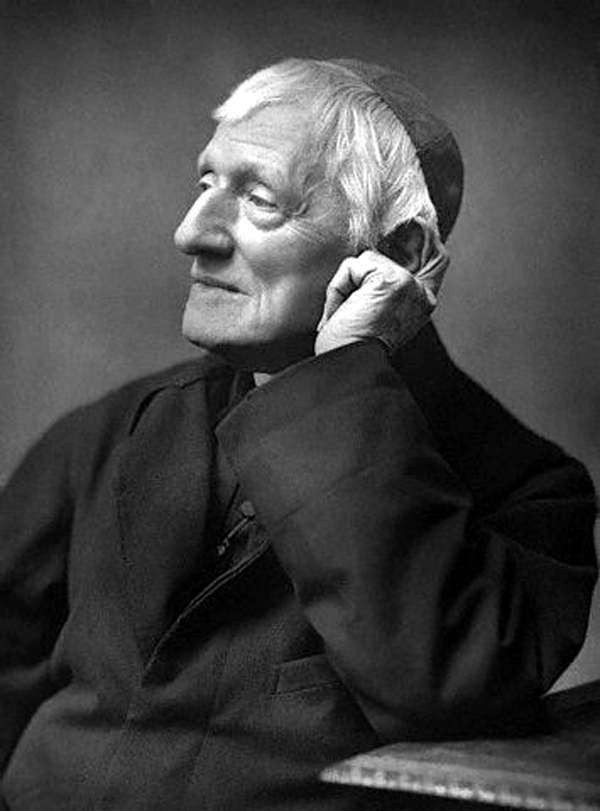
‘ “God has not appointed us unto wrath, but to obtain salvation through our Lord Jesus Christ, who died for us, that whether we wake or sleep, we should live together with Him.” Let us seek the grace if a cheerful heart, an even temper, sweetness, gentleness, and brightness of mind, as walking in His light, and by His grace. Let us pray him to give us the spirit of ever-abundant, ever-springing love which overpowers and sweeps away the vexations of life by its own richness and strength, and which above all things unites us to Him who is the fountain and the centre of all mercy, loving kindness, and joy. ‘

The warmth, affection for people, and sheer confidence in the loving power of God to change human hearts, shine forth in this quotation from our Patron, Blessed John Henry Newman. A truly lovely man.

Posted in Uncategorized | Leave a comment

Celebrating the Ordinariate Use

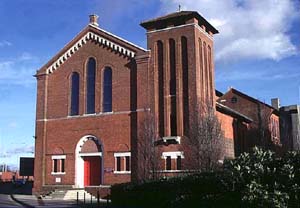
St Agatha Portsmouth Exterior

St Agatha Portsmouth
Exterior

An invitation from my family to join them for the day took me down last Saturday to Portsmouth. St Agatha’s Church were celebrating their Patronal Festival, and I was interested to see how the Ordinariate Use might be presented. St Agatha’s, Landport, is part of that now fading Anglo-Catholic history on which many of my generation were brought up and inspired. Father Robert Dolling had the church built in the dock slums of Portsmouth, but eventually resigned over a dispute with his Bishop concerning prayer for the dead. Indeed, the Abbot of Farnbrough who was the preacher, referred to this in a thoughtful sermon. He pointed out to us that this and other controversies within the Church of England are only now seen to be resolved when Anglicans return to fullness of Communion with the Bishop of Rome. The priest and congregation at St Agatha’s have done this via a time as a ‘Continuing Church’ i.e. those Anglicans who left the Anglican Communion in protest at the growing liberal stance of parts of the Communion, notably America.

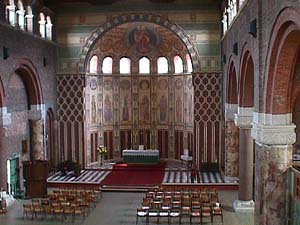
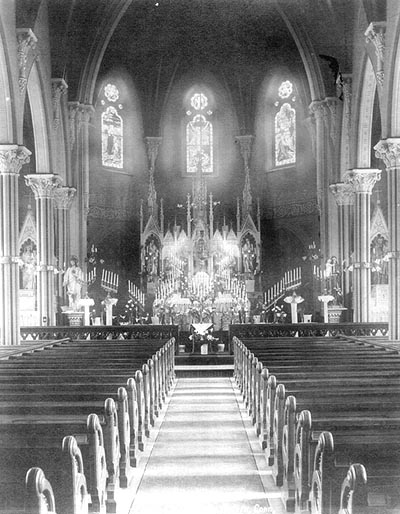
The church building itself was closed after the Second World War, as the parish it served had been largely destroyed in the bombing of Portsmouth. Converted into a naval store, it was more recently recognised for the architectural gem that it is. A trust was set up to restore it, and the Ordinariate congregation meets there for Sunday and weekdays Masses. I last saw the building some twenty five years ago, and the restoration has been impressive. The interior is dark and austere, a brick basilica with a wide and open sanctuary. The murals around the apse by Heywood Sumner are particularly fine, and are very visible without the baldachino (which must have been very splendid).

St Agatha Portsmouth Interior

St Agatha Portsmouth
Interior

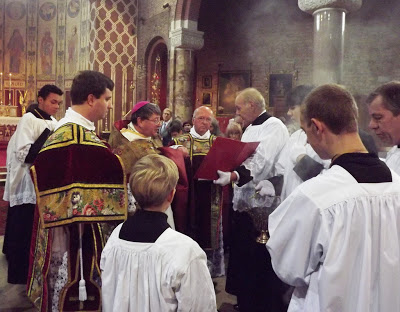
The use of the Ordinariate form in St Agatha’s has been described as ‘the Extraordinary form in English’. My interest then, was to see how this was worked out, in contrast to our own practise at Most Precious Blood, Borough, where the Ordinariate Use (Thursday evening’s) is based on the Ordinary form of the Roman Mass. The Mass was celebrated by three priests – a celebrant, deacon and subdeacon, and there were two laymen who also wore dalmatics (but not stoles or maniples) one of whom carried the processional cross and the other sat with the Abbot.
St Agatha Portsmouth Procession

St Agatha Portsmouth
Procession


Like the Procession at the beginning of the Mass this owed rather more to English mediaeval ceremonial than to the Roman Rite. Nonetheless, the High Altar with its numerous candlesticks, the lace albs and birettas, and the heavily embroidered vestments gave the feel of 19th century Anglo-Catholicism, rather than 18th century Belgium or France. The Mass Rite was the Ordinariate Use, with the ministers and servers saying the Preparatory Prayers before the altar while the choir sang. The Mass setting was Mozart’s Credo Mass (with orchestra) and all the movements including the Creed were sung by the choir. After the Blessing the Last Gospel was read by the Celebrant, followed by the Angelus, Salve Regina and Prayer for the Conversion of England. The First Reading (or Epistle) was sung facing the people, and a procession for the Gospel went into the nave (not facing north as in the EF). The Mass was long (five minutes short of two hours) even though some time was saved by the Celebrant beginning the Eucharistic Prayer (Roman Canon) while the Sanctus was being sung. One notable departure from the Extraordinary Form was the recital of the Institution Narrative in a clear voice for all to hear.

I present this description of the Ordinariate Use celebrated in this particular way for comparison: you might like to read my earlier post of our practice at Most Precious Blood.

St Agatha Portsmouth Visit of the Ordinary

St Agatha Portsmouth
Visit of the Ordinary

Posted in Uncategorized | 4 Comments

A Tale of Two Ordinariates

I have been really grateful to those people who have sent me in short descriptions of the life and mission of their Ordinariate groups. What it reveals is what I have suspected: that there are significant differences between England and America. There is no conspiracy here, and neither side of the Atlantic has ‘got it wrong – or right’. Rather, everything that is different about our two countries including their size and history, both secular and ecclesiastical, has led to these differences. Difference sometimes makes people nervous, but understanding difference often leads to enlarged experience and fresh growth.

CHURCH PLANTING – AN AMERICAN PHENOMENON
Thirty years ago some friends of mine went to live and work in the United States. I was fascinated by their stories of the Episcopal congregation they joined. It had been founded only the previous year, in a new area, with a priest and a group of people who had previously travelled to various other places on Sundays. The deal with the Diocese was that the priest’s stipend was paid for out of diocesan funds for five years, after which the congregation must be self sufficient. If neither numbers nor finance had grown sufficiently then the mission would be closed, and the people rerun to their previous parish(es).
When I read the accounts of Ordinariate congregations in the USA it is this model to which they aspire: church planting and church growth. It is a model which most English people from the mainline denominations hardly grasp. This is especially true among Catholic and Anglicans (though for different reasons) and the established Free Churches find themselves challenged by the newer and ethnic Christian congregations, who are greatly influenced by American models and style.
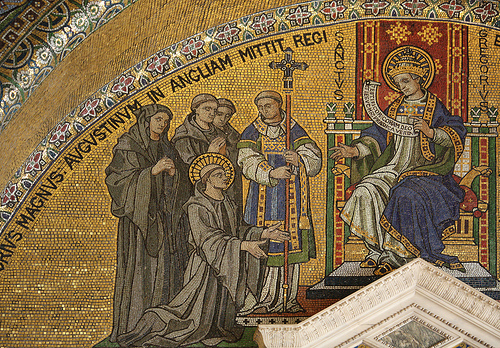
england - augustine
THE HISTORY OF THE CONVERSION OF ENGLAND
The reason for this difference lies in the history of Christian mission to our respective countries. The mission of St Augustine to Great Britain took place 1,400 years ago. Indeed there is evidence that Christianity arrived in our land in Roman times, and that Celtic missionaries from Ireland had established the Faith in the north before the arrival of Augustine. Once the country as a whole had converted to Christianity it became a ‘Christian country’. The Faith was not challenged but passed on from one generation to another. The land was no longer to be ‘converted’ but the Christian population, i.e. everyone, had to be pastored. This was done by setting up geographical parishes which covered the whole country, with a parish priest who celebrated the sacraments, taught the Faith to the young, and maintained Christian discipline through the confessional. The success of Augustine’s mission established firmly the authority of the Pope and brought these islands into close unity with Europe.
Even with the Protestant Reformation the pattern of a single Church remained. In the 17th century, the Stuart monarchs and the Caroline Bishops of the Church of England all struggled against religious pluralism. And this pluralism finally happened only as a political solution imposed by Parliament.
american catholic traditional
THE EVANGELISATION OF AMERICA
Contrast America which is a young country. It has never known anything but religious pluralism, and indeed many of its founder groups were escaping from Europe in order to worship as they themselves chose. No ecclesial body has ever been established, and there is strict separation of Church and State. Yet American remains more overtly religious that Britain and western Europe. Americans are still interested in religion, and ready to ‘shop around,’ to find that expression which appeals. The British are bored by religious faith and the younger generation know little about it: what little publicity the Church is given is usually bad or mocking. Public figures do not ‘do religion’ and celebrities and their fans regard it as distinctly uncool! Why then does Britain still have as Established Church? The reason is probably laziness on the part of the legislators, and the desire to keep at least one body of Christians safely under the thumb of Parliament. (Look at the reaction of MP’s to General Synod’s failure to approve women bishop legislation for the C of E, and Synod’s climb-down a year later.)

The UK Ordinariate is small in lay terms, though it has a substantial number of priests. Its groups are mostly not large enough to pay their priest’s stipend, and certainly not to raise the capital for their own church building. The capital reserves of the Church of England (often referred to as the Church Commissioners’ money) provided enough income to pay all the clergy salaries even when I was ordained in the 1970’s. It has been a long struggle for Anglicans in the UK to raise levels of giving. My impression is that giving is much higher in US congregations. Catholic giving in this country is not high: viability in Catholic parishes is only possible because one priest may be ministering to a congregation of 800 – 1,000 in one building.
england - anointing
A CHURCH GEARED TO PASTORAL WORK – NOT EVANGELISATION
The Church of England has inherited the parish structure of the Middle Ages, hugely expanding it in the 19th century, but still basing it upon the theory that it must pastor everyone within its parish boundaries. It is nonsense in urban parishes of 20,000 people, but the C of E still clings to the theory – that it is there to provide a place for two Muslims to be married (and they have a legal right to do so) should they wish, rather than evangelising them to become Christians. Catholic parishes by and large minister to Catholics, building and closing churches as the Catholic population of an area rises and falls. Anglicans have by and large, kept open enough churches to mean that those who choose can walk to church. In the cities this is usually true for Catholics as well. So, for example, from where I live in South London I can walk to three Catholic churches, with a choice of five masses every day, and sixteen masses on Sunday. Can we begin to see why the Ordinariate in the UK has been slow to open ‘new’ churches? For there must surely be a serious question about the wisdom of yet more church buildings and congregations in this country.

RELIGIOUS PLURALISM
I have never been to the United States, but friends have described how one may drive along a main road, passing buildings belonging to every known denomination and more besides. In parts of London this is now truer than it was fifty years ago, and posters advertising this or that ‘Community Church’ often meeting in schools or factory units appear frequently in some areas. But the English have an aversion to this sort of pluralism which Americans seem not to have in the same degree. There is a memory here of the time when the Church was one, and since the beginning of the Oxford Movement in 1833 Anglo-Catholics have prayed and worked that she might be One again. The Ordinariate is for us part of Pope Benedict’s vision for unity – a daring and controversial plan to break out of the ‘ecumenical winter’.

The martyrdom of Margaret Clitherow

The martyrdom of Margaret Clitherow


THE MEMORY OF THE RECUSANTS
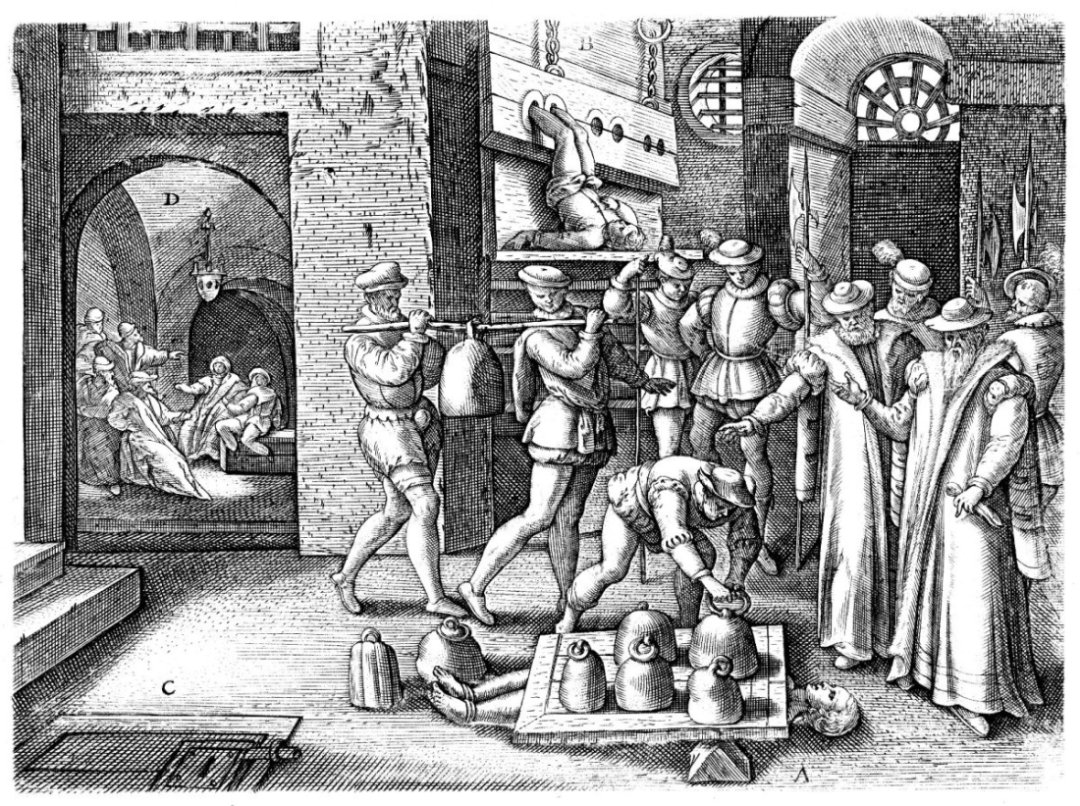
In England Catholics who refused to conform in the 16th century were subject to bitter persecution. Their civil liberties were curtailed right through until the 19th century, long after those of the Protestant Dissenters. Anglo-Catholics have a deep respect therefore for the Catholic Church in this country, into which through the Ordinariate they have come into communion. They hope to bring gifts and charisms to enrich the Church, but they are certainly not here to ‘show Catholics how it’s done.’ The task of restoring England to the Faith is far too important to allow for petty squabbles between one group of another within the Catholic Church.
modern anglo-catholic worship

modern anglo-catholic worship


OUR DIFFERENT LITURGICAL INHERITANCE
Finally, let me say something about the difference in the liturgical inheritance and more recent traditions which the English and American Ordinariates have. In England Cranmer’s Prayer Book was regarded, even by the High Churchmen living less than a century after him, as in need of reform. Attempts to change it were blocked by Parliament, for the Church of England itself had no independence in these matters from the State.
By contrast the American Episcopalians took their liturgical books from the Episcopal Church of Scotland, a free and largely High Church offshoot of Anglicanism. In the 19th century Oxford Movement the Prayer Book became the standard of Evangelicals in the C of E, while Anglo-Catholics sought to go behind Cranmer’s Calvinism and the controversies of the Reformation, to restore a much older (and Catholic) pattern of liturgical worship and belief in the sacraments. Importantly, American Anglo-Catholics came to associate traditional language (thee/thou forms) with orthodox belief, and modern English with the liberal interpretation of theology which was overwhelming the Episcopal Church. This association was never made in the UK. Indeed in many cathedrals and parishes where the clergy (both male and female) held advanced liberal views, the Prayer Services of Morning and Evening Prayer and the Communion were regularly held. By contrast orthodox Anglo-Catholics began to adopt, in part and after 1992 in whole, the use of the 1970 Roman Missal. Many in the Ordinariate under the age of fifty have no experience of services from the Book of Common Prayer. It has been said that the use of the Missal convinced Pope Benedict that he was dealing with people who held to Catholic belief about the Eucharist although outside the fullness of the Church.

My hope is that this analysis, subject to correction and discussion which may well come in comments to the blog, will help to identify diversity within the Ordinariates, and enable us to understand that there is no ‘one size fits all’ mission to which we are called.

Posted in Uncategorized | Tagged , , , , | 1 Comment

Chaplains to the faithful – or missionaries to convert England?

Derby Ordinariate Group

Derby Ordinariate Group

“The Ordinariate will grow – God willing.” When someone said this to me recently I reflected immediately that, of course, God wills it to grow! To put it round the other way, could God ever will his Church and his Kingdom to decline? So with God pouring his grace into the Ordinariate, as a movement within modern Christianity for renewal, unity and growth, what has the Ordinariate and the wider Catholic Church to do to ensure that God’s will is fulfilled? To be sure, God is not going to force his Church grow if it has become lazy and cynical; he surely expects us to read the signs of the times we live in, and to plan effectively to proclaim the Good News. He want us to live it out and to use every opportunity to share the Faith with those who know nothing of his love and his salvation.

As the Ordinariate has stabilised over the past two years no one pattern of group life has appeared:  I have been able to locate at least four models. It is worth identifying these and thinking about the way they work (their dynamic). If there are others and if I am mistaken – especially about the groups of which I have no experience – then I hope to provoke others to show the contrary.

The ‘Once a month’ Group

An Ordinariate Group (former Anglicans, now Catholics, with their Priest-pastor) meets once a month on a Sunday. They meet in a Catholic Church where the Parish Priest is prepared to accommodate them, but at a time which fits in with the pre-existing ‘parish’ masses. This may mean 12.30 pm when most people are thinking about lunch or 4 pm when in winter it is rapidly getting dark. The Group members may well be travelling some distance (up to 50 miles in some rural areas). The nearest parallel as we try to think about this model is not the Congregation (the Group is too small and doesn’t meet every Sunday) nor yet the House Group (right size, most of them, but not frequent enough). It is rather the ‘special interest group’, like the Mother’s Union when we were in the C of E, or the Catenians in the Catholic Church. I know the Ordinariate is unlike both these groups in all sorts of ways – but the dynamic of the group (the way it functions) will be that of the monthly meeting of a special interest group. For a start, everyone coming will have been to Mass at their local Catholic Church on the three previous Sundays. They may well have started to get involved in their parish especially if they have made friends there. There may be discouraging noises from some in the Catholic community who ‘disapprove’ of the Ordinariate and want to see all former Anglicans ‘assimilate’ into the existing structures. What then, will make them go, once a month, to their Ordinariate Group?

Just going to Mass is not enough. It is early days yet for the Ordinariate Use, the special form of the Eucharist, and we cannot yet know whether it will become popular – and more important whether it has ‘pulling power.’ If it is just presented as an English version of the Extraordinary Form then one must ask: will people who like the old ways not just go to the ‘real thing’?  No, much more care and thought is needed to present the Ordinariate Use as a genuine part of the Anglican Patrimony rather than a re-creation of Congress Anglo-Catholicism. If the group is only meeting once a month then some time needs to be given to the gathering, and resources and preparation are vital. The presentation of the Mass needs to be appropriate to the numbers attending (otherwise it can come over as rather pathetic) and should be followed by rather more than tea and biscuits. Let the group sit down for a meal together. (If you have to celebrate at 12.30 pm, you’ll all need it.) Each member of the group needs to take responsibility for another so that people do not lapse unnoticed. The continuing formation of the group in the Catholic Faith cannot be met by a 10 minute homily, and confidence is needed so that everyone can argue for the Christian and Catholic Faith with their neighbours and colleagues. So after the meal the pastor must teach – or he must arrange for good and enthusiastic teachers to join them for an hour. This is not a ‘discussion group’ let alone a ‘little talk’, though there needs to be time for question and answer and that vital business of chewing over what has been given. Evening Prayer (Evensong) said prayerfully or sung to simple plainchant is probably best to end the day – a day which has been worth coming to once a month.

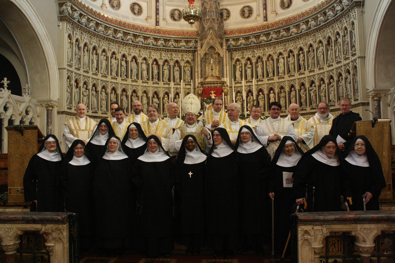
Our sisters

Our sisters

The ‘Once-a-week Group’

This Ordinariate Group meets every Sunday i.e. for everyone in the Group it is their Sunday Mass. It is celebrated in a Catholic Parish Church with the agreement (and one supposes, the sympathy) of the Parish Priest and presided over by a priest of the Ordinariate. Its time will be by arrangement with the Parish, which in a busy one may mean 12.30 every week – hardly the best time to attract people? It may be that the Parish Priest is prepared to countenance one of the regular Masses (say Saturday night) going to the Ordinariate, but then he may not want them to use the Ordinariate Form of Mass (and this may be important to some groups, though not to others).

In this situation it is important to identify the relationship of the Group to the Parish. It may be ‘Separate Identity’, rather along the model of a Polish or Nigerian Group which meet to celebrate a Mass in their own language, and where the priest is a ‘visitor’. On the other hand it may be ‘Close Relationship’ where the Ordinariate priest works with the Parish Priest on a part-time basis and the Ordinariate members are involved in the life of the Parish. This is a mutually enriching arrangement, and could well mean that the Bishop in the future wishes to give the parish into the care of the Ordinariate. It is also possible that the Group, in the future, may become assimilated into the Catholic Parish, especially if their priest moves away.

The ‘Ordinariate Church’

In the early days of the Ordinariate it was believed that whole congregations of Catholic-minded Anglicans would wish to enter the full communion of the Church. It was thought that the Anglican authorities might be able to ‘release’ these church buildings from their parish system, allowing them to be quasi-independent Ordinariate churches situated in Catholic parishes, but with a status rather like a monastic conventual church. In the event nothing like this happened. Even with the ‘majority’ Ordinariate Groups, there was still a rump left behind: the Anglican dioceses made it quite clear that the one Christian group they would never share with was the Ordinariate; and the Catholic hierarchy for various reasons seemed not keen on any sharing arrangement.  No group had the funds (or the confidence) to buy a redundant church (a Methodist chapel, for example). So in the UK we have little experience of how this model might function, but what of the theory? The Ordinariate Group and their Pastor will be large enough to function as a congregation, and financially viable. They will be able to find the skills, energy and enthusiasm both for maintenance and for mission. It is the priest who must hold the vision and be strong-willed enough to pursue it, while ready to listen and to enable the gifts of others. Such a vibrant congregation is likely to attract strong personalities. The priest must be able to help such people be part of the vision without dominating or insisting on their own interpretation of ‘how things should be done.’

young catholics

The Ordinariate Church will be strategically placed on good transport routes so that it can be a centre for individuals and for smaller groups. It will build up a library and catechetical centre both for the Ordiariate and for the wider Catholic Church. It will pioneer welcome and formation groups (‘Ordinariate Alpha!’) and work to keep open (from our side at least) the relationships with Anglo-Catholics still in the Church of England. This may not always be easy, as the ‘Christian Unity Movement’ has become stuck and complacent, and there are even some within our own Catholic Church who see the Ordinariate as a threat to this. The  worship must be a model – not necessarily elaborate or expensive – in its noble simplicity of the English tradition of liturgy. It must avoid eccentricity and fussiness. The younger men, who sometimes have a hankering for a past they never knew, need good formation in the principles of liturgy. Preaching must be of the highest quality.

The ‘Ordinariate Parish’

Soon after joining the Ordinariate I wrote an article for the ‘Catholic Herald’ in which I suggested that Ordinariate Groups should become ‘church-planters’ – i.e. core groups of dedicated people sent into decaying Catholic parishes at the agreement of the local Bishop and the Ordinary, to revive, renew and build up such parishes. I still believe that this model is the most appropriate for the U.K situation. Those Catholic bishops who have taken the risk have not been disappointed. This model has not led to ‘assimilation’ as was feared. Even where the standard liturgy is not the Ordinariate Use but rather the Ordinary Form of the Roman Mass, nonetheless Catholic parishioners seem quite clear about the many things the Ordinariate brings, and they like them.  What will happen to these parishes in the future? Some think that once they are going concerns, and the Ordinariate priest moves away, that the Diocesan Bishop will move the Ordinariate out. Does this happen with Religious Communities which run parishes? I think not. Some of our bishops may be cautious about the Ordinariate, but they are pragmatists. If their brother bishops give good reports of the Ordinariate, if the parishioners are happy, if the numbers are growing – then no Bishop is going to destroy this.

southwark2011riteofelection02

Each of these models functions differently, and for the foreseeable future we are going to have all of them. What is destructive is the failure to recognise the dynamic of the Group, to hanker after being something different, and to try to function and do things which are completely inappropriate for the size and situation of the group. Do very well what you are capable of; do not make a hash of what you clearly cannot manage!

Posted in Uncategorized | Tagged , , , , , | 22 Comments

Longing for God

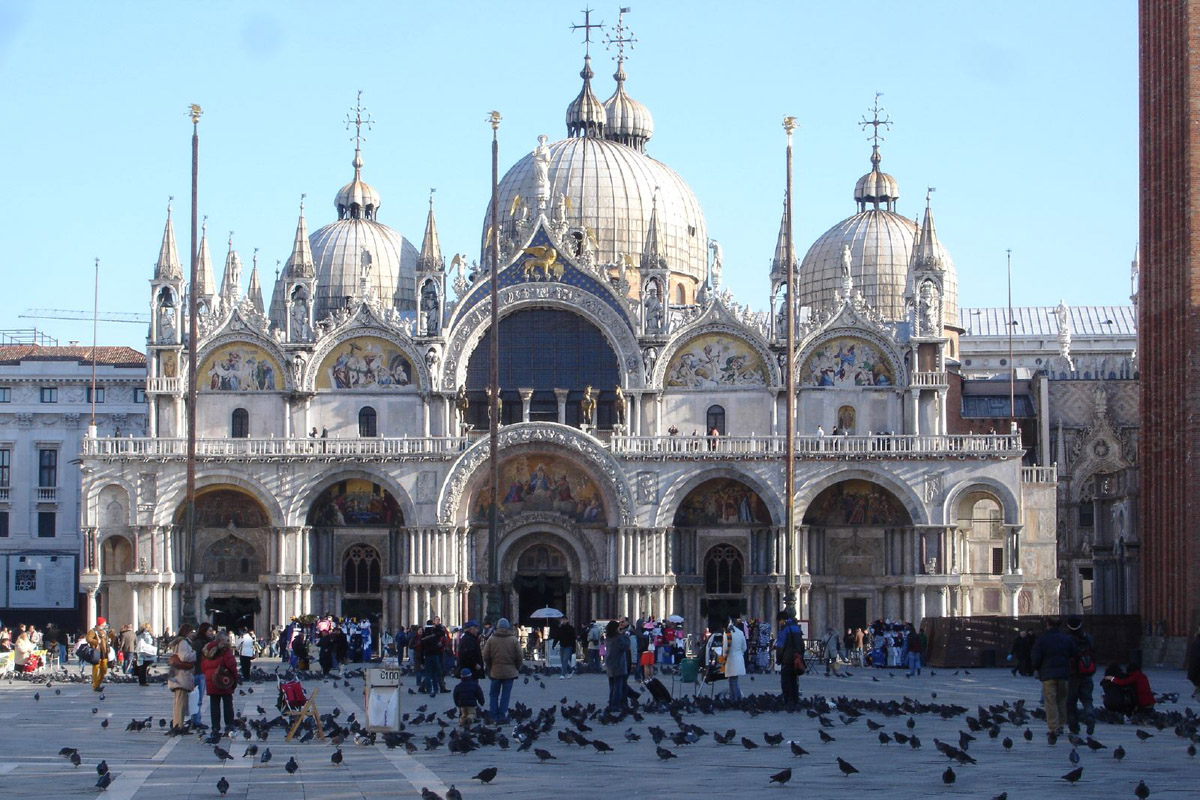
St Mark's basilica Venice

St Mark’s basilica Venice

It puzzles me that so few of our modern fictional heroes have any religious faith. My good read over Christmas is likely to be P D James,  (creator of Adam Dalgleish,) or Ruth Rendell (Chief Inspector Wexford) or more likely Donna Leon with her Commissario Brunetti set in Venice. (I picked up two I hadn’t read in a charity shop last week).  All of them have an, at times, very intense nostalgia for a past world which has slipped away from them, a world which was kinder, more courteous and more ordered. Yet their attitude to religion is the unquestioning modern stereotype: that it is something we can longer believe in, that it was and is irrelevant at best and corrupt at worst.

Here is Brunetti’s wife Paola, talking of her relationship with her students at the university where she teaches English literature. Like her husband she has long since rejected the Catholic faith in which she was brought up.

‘Why is it so bad all of a sudden?’ Brunetti asked.

‘It’s not really all of a sudden. It’s more that I’ve become aware of how bad it’s become.’

‘Give me an example,’ he said.

‘Ten years ago, I could force them (her students) into accepting the fact, or at least giving lip service to the idea, that the culture that formed me, and those books and ideas that our generation grew up on – Plato, Virgil, Dante – that it was superior in some way to whatever fills their lives. Or, if not superior, then at least interesting enough to be worthy of study…. but that doesn’t happen any more. They think, or ay least they seem to think, that their culture with its noise and acquisitiveness and immediate forgettability is superior to all of our stupid ideas.

‘Like?’

‘Like our no doubt ridiculous idea that beauty conforms to some standard or ideal; like our risible belief that we have the option to behave honourably and should take it; and like our idiotic idea that the final purpose of human existence is something more than the acquisition of wealth.’

Donna Leon –  Wilful Behaviour – p.68  (Arrow Books 2003)


Posted in Uncategorized | Leave a comment

The Sisters of the Blessed Virgin Mary: the praying heart of the Ordinariate

This past week I have been on retreat at the Convent of the Sisters of the Blessed Virgin Mary at Maryvale on the edge of Birmingham. I hope that many other priests and laity will go there, now that the Sisters are more settled, and find as I did, a place of prayer, warm Benedictine hospitality, and profound quiet.

sbvm 2I went with a priest friend of many years standing; we agreed our pattern of silence, walking and recreation, and both took to read Evangelical Catholicism by the American writer, George Weigel.

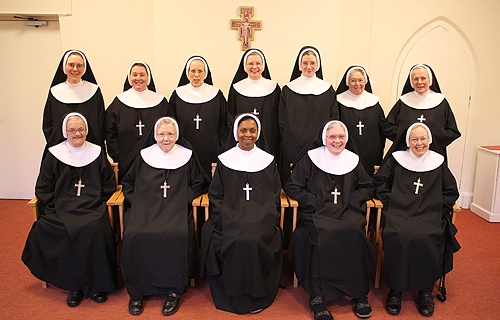
Many of you will know that our Ordinariate Sisters came from the Anglican community at Wantage, founded in 1848 by W J Butler, Rector of Wantage. The Community was part of that rebirth of Catholic life and spirituality which we call the Oxford Movement. It is not surprising that, with the marginalisation of the Movement within the C of E in recent years, the majority of the Community (including Reverend Mother) decided to enter into the full communion of the Catholic Church. Twelve Sisters were received, and constituted by the Ordinary, Mgr Newton, into the Community of the Sisters of the Blessed Virgin Mary.  On leaving Wantage they found a temporary home at St Cecilia’s Abbey on the Isle of Wight, and then came to their present home at Maryvale in Birmingham.

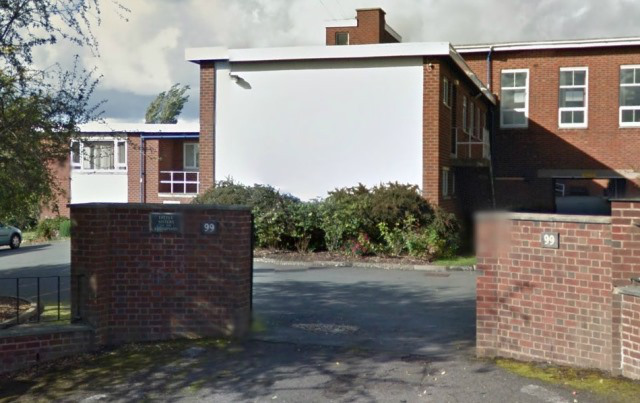
Outwardly the new Convent is very different from Wantage. It looks like a Junior School from the 1970’s as you approach it. It is plain, functional, warm but not overheated, comfortable but not luxurious. It has no Gothic cloisters, no turrets or pointy windows. The chapel is extremely simple, with a small choir for the sisters behind the plain altar. It is not romantic, nor even very beautiful, yet it is one of the most profoundly quiet and prayerful places I have ever been. It is hard to believe that the Community has only been
there a matter of months. SBVM 1

The Wantage Sisters had a significant reputation for their work in researching, printing and singing plainchant to English texts, using the forms and melodies from the pre-Reformation Church in England. This has much in common with the chant known by Catholics throughout the world, but with fascinating variants and differences. The Sisters at Maryvale are working hard to rebuild this tradition, with great success. The four day offices are entirely sung (in English with the Gospel Canticles and their antiphons in Latin) and they plan to introduce the Vigil Office (best known to most of us as the Office of Readings) very soon.

We received a wonderful welcome from the sisters, and had the great privilege of celebrating and concelebrating at their daily Mass. Everything had been thought of, the food was plentiful, and there was discrete help at first in finding our way around the office books. Just to sit and absorb psalm, canticle and scripture as the Community prayed them, was worth coming to Birmingham for.  I think we in the Ordinariate should be deeply grateful to Mother Winsome and the Sisters for their brave faithfulness to Pope Benedict XVI’s call to Anglicans to re-union within the worldwide Church. It has not been an easy journey for them, and they want to be of service to us.

So two very grateful priests of the Ordinariate commend the Community to your attention and to your prayers. Above all, go their on retreat and find it, as we did, a place of blessing.


Posted in Uncategorized | Leave a comment

Celebrating the Ordinariate liturgy – some initial thoughts

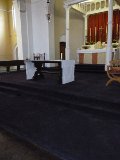
The season of Advent has been marked by many Ordinariate groups in the UK beginning to celebrate Mass according to the Ordinariate Use. We were no exception in the Ordinariate Parish of the Most Precious Blood at Borough, in South London. The Ordinariate Group has sung Evensong and celebrated Mass for some time on Thursday evenings, and it seemed therefore a most appropriate time for the new Mass.

Fr Christopher Pearson, our parish priest, presided, and Fr Peter Andrews and I concelebrated with him. We left the sanctuary as it was, with the Celebrant facing the people across the altar. The ceremonial followed the GIRM except where the rubrics of the new Use specifically state another practice. One example would be the Celebrant’s genuflexion both before and after the Elevation of the Host.

Sanctuary at Easter Most Precious Blood Borough

Sanctuary at Easter
Most Precious Blood Borough

For those of us over a certain age the language and the texts of those prayers from the 1662 Prayer Book which have been included are all familiar: one has to watch out for the slight changes! But even for me it involves reaching back quite a long way. By the time I left home to train for the priesthood in 1968 Series 2 was in use; apart from a year and a half at the beginning of my second curacy when we still used a book called the English Missal I have experienced only modern English rites; from 1994 – along with most Anglo-Catholics – I used the modern Roman Rite of the 1970 missal (very occasionally in latin).

I struck me  forcibly that I had never imagined using these prayers within the Catholic Mass. In the 1960’s it was the Prayer Book liturgy which united Anglicans across the spectrum, but which divided us most clearly from the Catholic Church of the West.

After the Introductory Rite (we avoided the option for the lengthy Prayers at the foot of the altar) the readings followed from the Catholic RSV. I doubt if any of the laity noticed as it was a weekday. The Penitential Rite included the clear direction ‘meekly kneeling upon your knees’, together with the long confession composed by Archbishop Cranmer when English was first introduced into the Mass in the reign of King Henry VIII, and after the break with Rome. For the Offertory the familiar prayers slightly recast into traditional English, and then the Eucharistic Prayer. A traditional language version of Prayer Two in the Missal is provided, but for this first celebration we used Prayer One – the Roman Canon. In traditional language it sounds rather fine (one person suggested better than in the Ordinary Form of the Mass). The Agnus Dei we sang to Merbecke’s setting, recited the Prayer of Humble Access and said ‘Lord, I am not worthy’ three times before Communion. A little uncertainty about whether the people should answer ‘Amen’ to the longer Communion formula, ‘The Body of our Lord Jesus Christ which was given for thee…’.

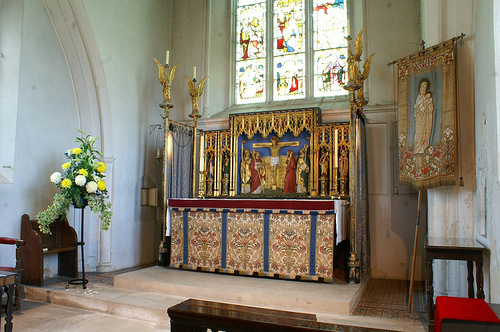
english altar 2

Communion over, we then prayed together what was the alternative prayer after Communion in the Prayer Book. One person praised it as a profound thanksgiving, though I do wonder if it will bear repeating at every Mass and said by all together; one wonders what was in the minds of those who devised the liturgy at this point. We did not use the option of the Last Gospel.

We celebrated with modern ceremonial, a moderately conservative and careful use of the Roman Missal rubrics, such as has been common among Anglo-Catholics for a generation. I wonder whether this quite fits? I know that there are some who would like to see the Use celebrated as a sort of ‘Ordinariate-Extraordinary-Form-in-English’, to give it the look of ‘Pictures of the English Liturgy’ with the Travers drawings. My own feeling is that this is now a bit decadent, with its faded baroque vestments and furnishings. In its heyday in the 20’s and 30’s of the last century it was designed to make the Anglican Communion Rite look as un-Anglican as possible! Is that what we are trying to do now?

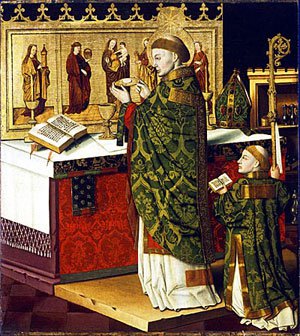
Mass of St Martin

So perhaps a third way is what is needed, with dignified ceremonial, vestments and furnishings drawn from the English tradition, as might have been seen in the cathedral and parish churches up until the 1970’s. We shall see.

Posted in Uncategorized | Tagged , , , , | 18 Comments

A N Wilson brings realism, sadness – and a little hope

A N Wilson

A N Wilson

The newspapers have just loved Dr George Carey’s recent intervention over the future of the Church of England. But of note is the article by A N Wilson in the Daily Telegraph, occasioned by the Carey sermon.

http://www.telegraph.co.uk/news/religion/10460230/Lord-Careys-vision-for-the-Church-might-kill-it-off.html. I suggest that it is well worth reading for a realistic assessment of where Christianity – not just the Church of England – is in Britain. Wilson argues that  two attitudes are now so deeply entrenched in the majority consciousness that they are hardly questioned. The first is the acceptance of sexual relations at whatever point in a relationship two people want it. This is so far from the Church’s teaching that the sexual relationship belongs only within the married life of a man and woman, as to make the moral position of Christians incomprehensible to the modern mind.

There is a second attitude and Wilson considers it fundamental to the Church’s difficulty in engaging with this generation. This is the widespread inability to believe in the supernatural.  In a poem once widely read in schools and at Carol Services, the late poet laureate, John Betjeman, summed up Christmas:

    ….   that God was Man in Palestine/and lives today in Bread and Wine …

Incarnation – Eucharist – incomprehensible without belief in the power of miracle – and therefore incomprehensible, and largely irrelevant, to the secularised society of western Europe.

There is a certain wistfulness, even sadness, towards the end of Wilson’s article. Indeed, he compares the loss of religious faith with its habits of prayer to the enjoyment of classical music which, we are told, is catastrophically on the wane in Britain. This is no trivial comparison, for the music of centuries of great composers and performers is an integral part of the civilisation of Europe and the movement of its people from darkness to light. To lose such music from the common experience would be to return to the Dark Ages. And the demise of Christian belief, morality and practice, would that also be a return to the darkness?

Like Wilson, I too am 63. The loss of the religious experience of life, like the loss of classical music to ordinary people, has largely happened in my lifetime. How have we allowed such a disaster to befall our age and time? I take this question to be one for society, and not just for the Church.

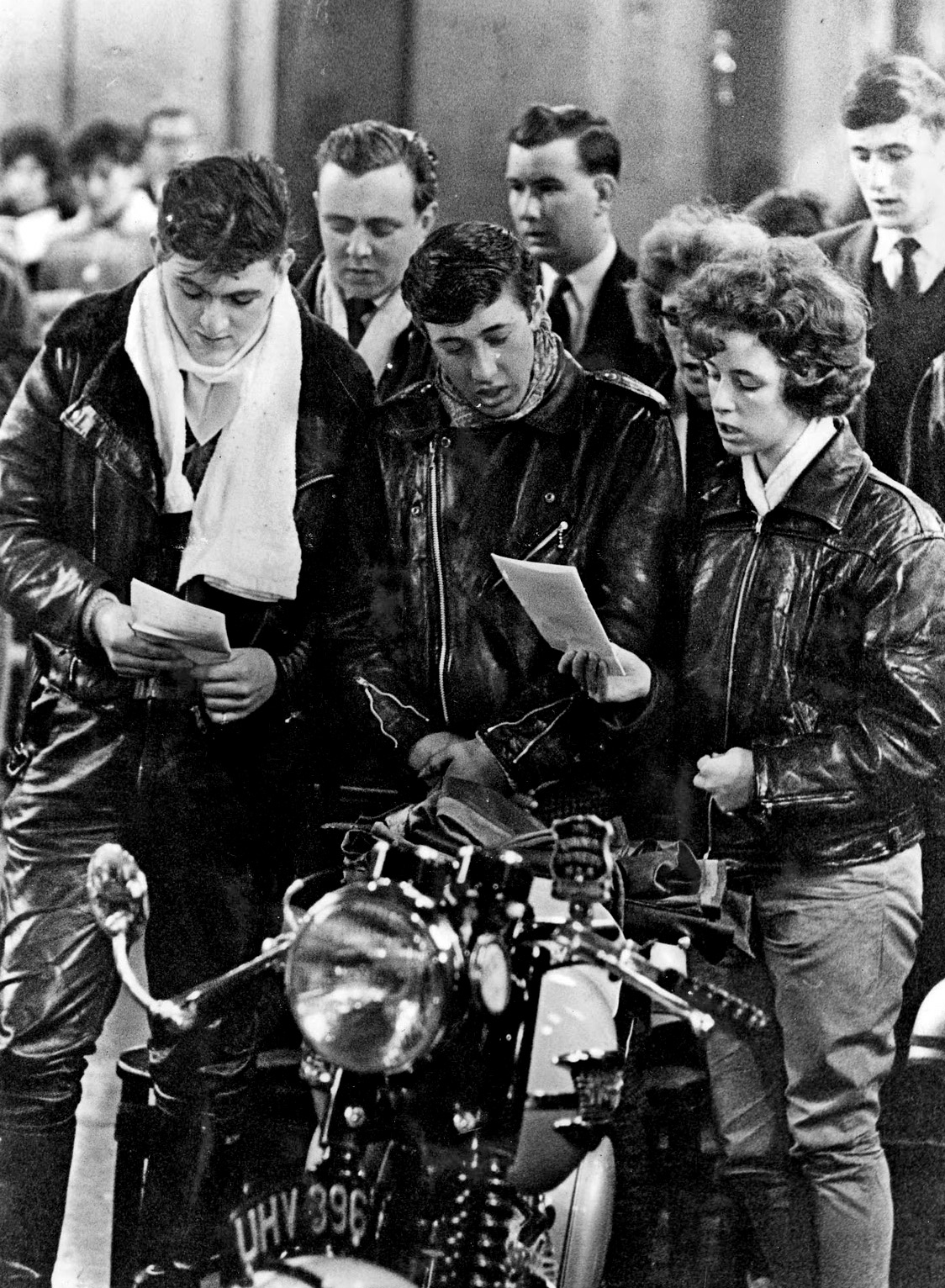
59 club service in the 1960's

59 club service in the 1960’s

Some years ago my connections with the 59 Club led me to ask what happened to the highly successful church-led youth clubs of the fifties and sixties. I came to the conclusion, as I wrote then that   “the young people of this country were not so much lost to the Church as stolen from her, and that by the forces of an aggressive commercialisation of music, fashion, and interests.”  It was vital, in order to relieve impressionable adolescents of their money, that they should be separated from the wisdom and influence of older people. Institutions – schools, the Church, parents and family, politicians, the police – which might advise caution or a longer term view were lampooned and ridiculed in the creation of a ‘generation gap’ which was now under the control of the exploiters.

The painful results of fifty years of such exploitation is now becoming clear: the breakdown of the family and  loneliness in later life which stems from  divorce, the loss of the fun and innocence of childhood, the banality and ugliness of so much supposedly ‘popular’ music, drunkenness and drug taking, and the evil of abortion. There is widespread cynicism about politics and the people who engage in it, and little vision for the future.  A world of celebrities is paraded before us, grossly overpaid, loud-mouthed and protected from criticism by the deference of the media. Their opinions are sought and their life-style imitated. And behind them, pulling their strings – the money makers.  We believe ourselves to be free, and yet we are continually manipulated. We hear constant calls for openness and transparency, and yet those who would call us to a better way of life and to a fuller way of living are ignored and silenced.

A N Wilson is right to be sad for a lost way of life. The recovery of a better way , of something lovelier and truer, will be very difficult.  Just as it is unthinkable that the music of the ages should be lost to the trivial racket pumped out over the loudspeakers in our supermarkets, so it must be unthinkable that the wisdom of two thousands years of Christianity should be given up without a (spiritual) fight.

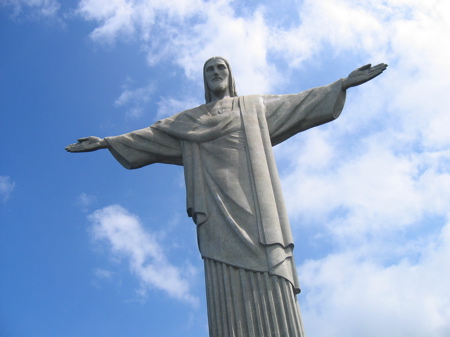
Christ our Redeemer and King

Christ our Redeemer and King

An American writer, Francis Kelly, comments  “We have undergone a major cultural shift in this (past) century, and it has left a profound impact on society and therefore on the Church. It is pastorally crucial to acknowledge and to accept this changed … context … and to see it as a pastoral challenge…. The new sociocultural situation needs to be faced with tranquillity and with a spirit of discernment. As in the past, it is filled with positive and negative factors, opportunities and perils.”             F D Kelly – The Mystery we proclaim – p.31

Posted in Uncategorized | 1 Comment

The Church of England decides

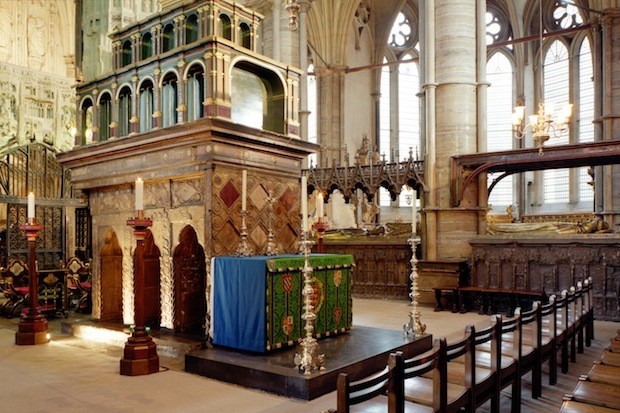
Shrine of St Edward the Confessor Westminster Abbey

November seems to be the month for the Church of England (or at least its General Synod) to make momentous decisions. By the end of the day we shall probably have heard that its members have voted in sufficient majority to proceed to the ordination of women to the office of bishop in the Church of England. It has been pointed out many times that the C of E, in ordaining women to the priesthood after 1994, did not produce a clear theological statement of what this priesthood was. Perhaps it did not dare to do so, for it would have revealed only that the C of E has some who believe their priests offer the Mass for the living and the dead (and there are some women clerics who believe this) and others who believe their vicar is  leader, preacher, and teacher. (And indeed, very many who think he is a state official living in a large house, doing very little but available to marry them, christen their children, and press the button at their funeral).

The Bishop of Rochester, speaking to the Today programme this morning, remarked that ‘ a bishop is a bishop is a bishop.’ Well, yes, but it does not tell us what a bishop is. The British State which appoints the bishops of the Church of England regularly appoints bishops who disagree fundamentally with their predecessors (as in the case of the Bishop of Rochester) and does so because it keeps the National Church indefinite and arguing among itself. Thus it poses no challenge to the political establishment. The one thing the Bishop did make himself clear about was jurisdiction: women bishops must exercise it without challenge throughout their dioceses. Now whether jurisdiction is more important than the teaching ministry of the bishop, or as the centre of unity, is questionable. The Bishops of the Church of England do not in fact have very much jurisdiction, for they are limited by Parliament above them, and by the independence of the parochial clergy below them. If we are to understand jurisdiction as the power to make people do things, then C of E bishops have had little of it. Would it be unfair to say that the male bishops want more jurisdiction and now see a way to get it? Certainly many of them think the C of E would be a more successful church if they had the power to organise their dioceses. The evidence of the last fifty years does not support their view.

In fact, the C of E has, by default, worked out the answers to a number of  fundamental questions about its life, notably whether it is Catholic or Reformed, where it stands in relation to the State, and what pattern of ordained ministry it holds.

Looking back to 1992 it is clear now that the Synod rejected a Catholic understanding of ordained ministry. For some this vote was deliberate; others had no idea that they were playing with theological fire. They felt that somehow it was only right that women should do all the things men did. They had been told that the only thing that was being ‘denied’ to women was the ‘right’ to ‘say the magic words’ in the Communion Service. Well, if that was all, then surely …

Now I don’t mean for one moment that there are not people in the C of E (including my women priest friends) who hold a Catholic understanding of priesthood. But in the aftermath of 1992 vote it was clear that we were going to submit what we had done to the judgement of the wider Church, for what was called ‘reception’. Such reception never came, and both the Pope speaking for the Catholic Church, and the Ecumenical Patriarch, speaking for the Orthodox world, gave their clear reasons why the priesthood could only be conferred on men. This was the judgement of the whole Church on what a ‘part of the … Catholic Church’ (which is what the C of E claims to be) had done.  For those who had believed that the C of E ordained deacons, priests and bishops of the Church of God and within the historical succession there was now a major crisis of conscience. (I guess it’s why so little objection was raised to the decision of the Holy See to ordain unconditionally those who entered the Catholic Church through the Ordinariate) For those who believe that the C of E has always had its own ministry (and that a Reformed one) there was no problem. The C of E was now ordaining (and had always done so) ‘Church of England priests’. And increasingly the word ‘priest’ was dropping out of C of E vocabulary, even in its official reports on ministry, with ‘ordained ministers’ being preferred. The C of E was now coming into line with what most people thought when they told us, ‘I thought priests were Catholic and we had vicars in the C of E.’

Although the question of the ordained ministry had not been tackled head on it now became an inevitable choice. Like it or not – and many on both sides of the argument about women’s ordination did not want to make this choice –  the Church of England was choosing its Reformed heritage over its Catholic roots, and to have ministers of the word, not priests celebrating the sacraments. Having distanced itself from the great Communions of East and West, the C of E has moved rapidly to align itself with the Lutheran churches of Northern Europe, and with the liberal Protestant bodies in this country. Local ecumenical projects and co-celebration at Holy Communion services,  and the breakdown of any discipline regarding the sharing of communion, make this the practical conclusion for most Anglicans who do not read Synod reports!

Finally over the last twenty years we have seen the C of E arguing for its continuing position as the ‘established’ church of the nation. On the Sunday programme, the spokesman for ‘Watch’ said that we must remember that the nation as a whole, not just the church, was looking forward to women bishops. And in part the haste to bring forward this new legislation has been in deference to the hostile reaction of MP’s last year: reaction from what someone naughtily called ‘the shallow end of Parliament’. It is important to remind ourselves that it is this risky business of embracing the political establishment which has put the dampers on re-union with the Catholic (and Orthodox) Church, at least as much as the ordination of women. The Church of Sweden, established like the C of E, gave way to a Parliamentary command to ordain women, saw itself weakened by secular control, then dis-established any way: as a force for the evangelisation of Sweden it is effectively dead.

In the aftermath of the 1992 vote, when many Anglo-Catholics were distressed and bitter against the church of their baptism, a wise Catholic priest said this to me: ‘It is of no advantage to us Catholics to see the Church of England collapse: we could not take its place in the life of this country.’  I believe he is right in the first half of his advice. There is absolutely no place for spiteful remarks or crowing about ‘We told you so.’ Certainly the history of the last twenty years must not be re-written, and we may insistently point this out. (The Watch spokesman needs reminding that the 1992 compromise – priests, not bishops – was the only way of getting the change through). Those who made promises that these changes in our National Church would bring the people of England back to Christianity must be held accountable. But I believe the second half of his sentence cannot any longer be true. Those of us in the Ordinariate have come to the Catholic Church, and one of the things we bring is a sense of mission to the people of this land: primary evangelism, not just the recovery of the lapsed. The Ordinariate is at the moment much too small to launch such a campaign.  But perhaps we may do something to inspire and give confidence to the Catholic Church in our country to speak the fullness of the Gospel, without fear or compromise, so that men and women may be brought to repentance, forgiveness and new life.

Posted in Uncategorized | 1 Comment

Remembrance Sunday 2013

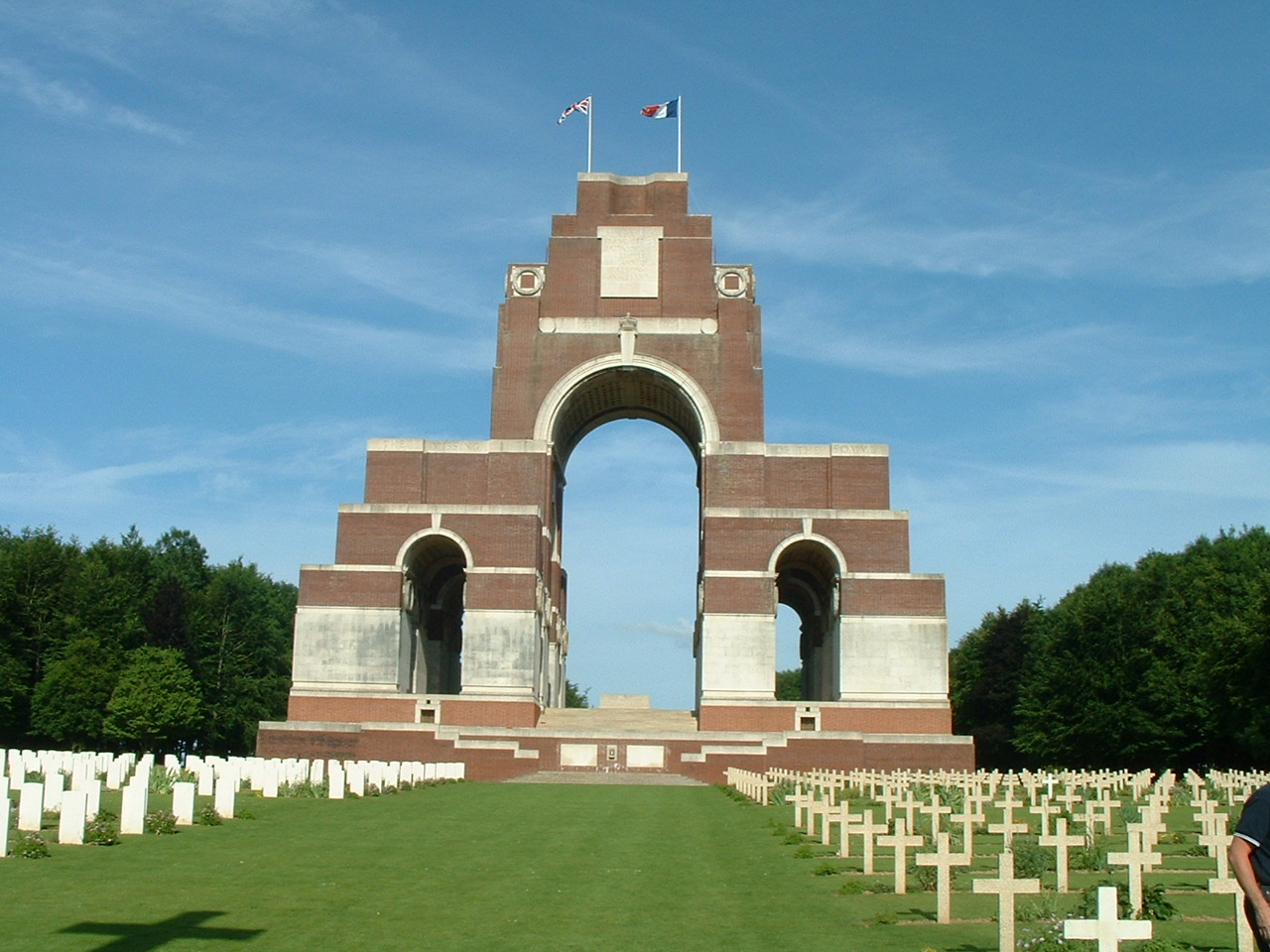
The Memorial to the Missing of the Somme at Thiepval. (Architect: Sir Edwin Lutyens)

The Memorial to the Missing of the Somme at Thiepval. (Architect: Sir Edwin Lutyens)

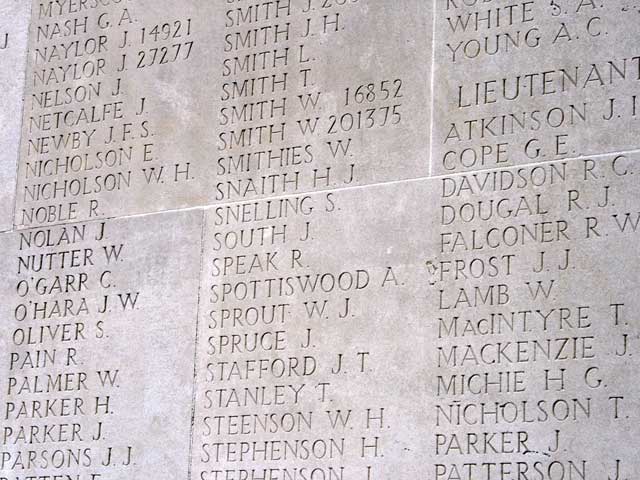
Northern France, which I have come to know well over the years, is dotted with the cemeteries of the First World War.  The great memorial  at Thiepval to the dead of the Somme battles, rises atop the ridge – sixteen great square pillars supporting its arch.  These huge pillars are constructed of fine brick and Portland stone. As you approach it dawns on you that the stone has names carved into it, column upon column, line upon line…. Well over 70,000 names, and these of  soldiers who fought in the battles of the Somme, but who have no known grave. Their bodies were never recovered, having been blown to pieces or lost in the mud.

Names of the dead on the Thiepval Memorial

Names of the dead on the Thiepval Memorial

At the heart and centre of this memorial is a stone in the shape of a great altar, a poignant symbol of the offering of life. And beyond the arch is the cross, so familiar to us from the many war memorials up and down our own country. The altar and the cross, stand in quiet witness to the dead, and point us to the sacrifice of Christ, to the offering of his life so that we might have eternal life.

The Cross of Sacrifice

Looking back now from the 21st century the endless slaughter of not one, but two, world wars is heart-breaking.  In addition to the death of soldiers in the Second World War, the murder of civilians – most particularly the six million Jews who perished in the Holocaust – is a terrible blot on our civilisation. We must never forget what we human beings have done to each other, lest in forgetting we are doomed to repeat the horrors of war.

In ‘The Church in the Modern World’ the bishops of the Second Vatican Council said this:

 ‘Peace is not merely the absence of war. Nor can it be reduced solely to the maintenance of a balance of power between opposing forces. Nor can it arise out of government by tyranny. Instead peace is rightly described as ‘the effect of justice’.  A peace of this kind cannot be obtained on earth unless the welfare of individual persons is carefully protected and unless men are prepared freely and trustingly to share with each other the riches of their own minds as well as their talents. A firm determination to respect the dignity of other men and other peoples, as well as a deliberate practise of fraternal love, is absolutely essential if peace is ever to be achieved. Hence peace is also the fruit of love, because love goes beyond what justice can provide.  ‘Church in the Modern World. ‘

poppy 2

And here are the words of some school children, which they wrote on the four petals of the Remembrance Poppy.

Understanding: I think we can make peace. If we understand one another we will care about each other, so our world would be more peaceful.

Fairness     Treating others how we wish to be treated ourselves by being fair: this would lead to peace.

Love   By loving one another and God’s creation our world would be peaceful and loving

Forgiveness   To forgive and not hold grudges is very important, especially to make our world peaceful.

Both the majestic words of the Bishops, and the simple words of the children, hold true for us and for our world today.

Posted in Uncategorized | 1 Comment